Why is the patterns voice called Sedef?
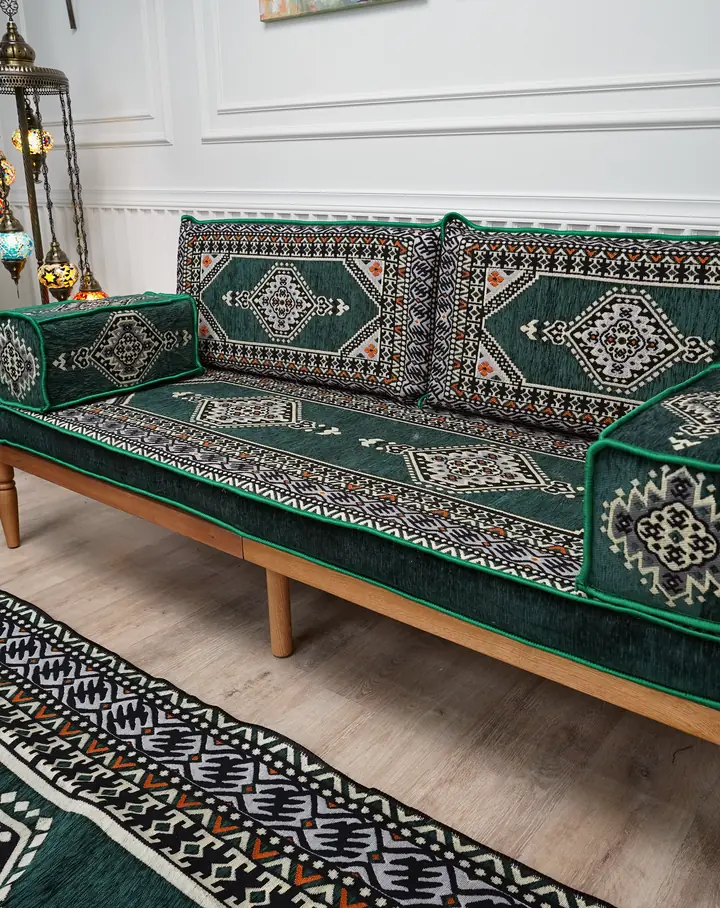
Pages in this voice look at a pattern the way the eye meets it: border and repeat first, then the strongest color, then the story behind the motif. In Turkish, sedef means mother-of-pearl, and Arabic shares the word; the inlay work it describes appears in the woodcraft of both Istanbul and Damascus.
Which motifs, fabrics and colors does Sedef cover?
- Pattern origins and motif vocabulary: palace symmetry, the tulip, Anatolian village rugs, Andalusian trellis, damask and Afghan medallions
- Fabric character: velvet, chenille, jacquard, linen blends, cotton mixes and outdoor weaves
- Color and light: how a color reads by a window, in afternoon sun and under an evening lamp
- Matching rugs, kilims and cushion covers to a majlis
- Color palettes for walls, floors and seating
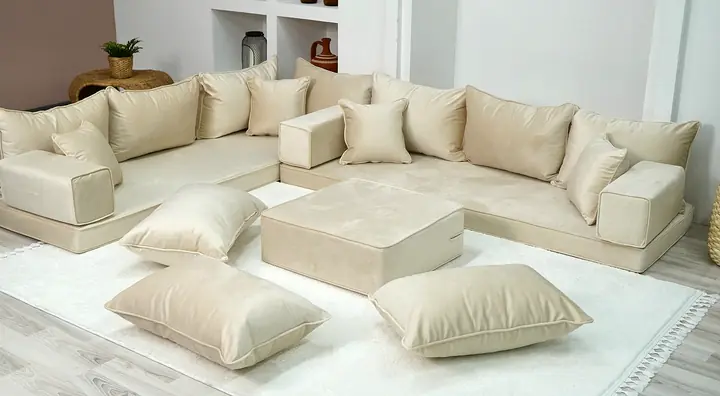
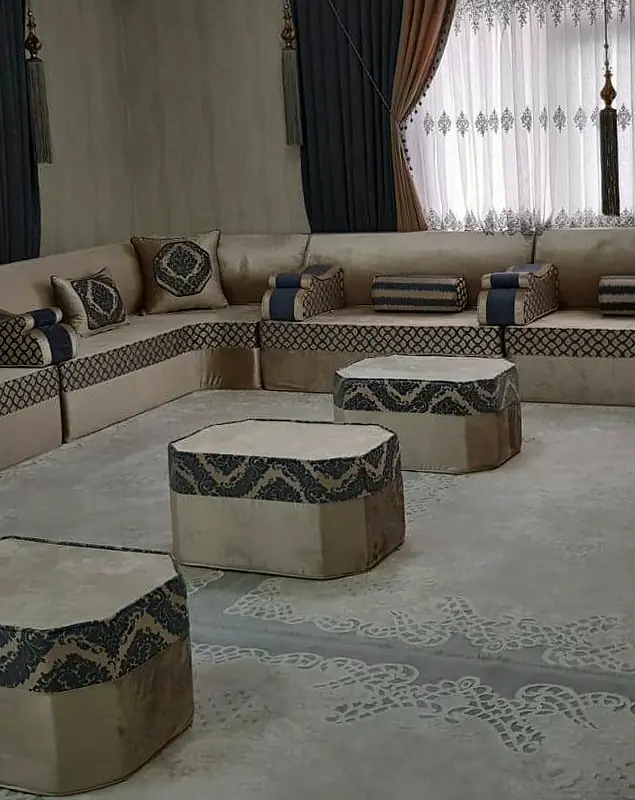
- Reading a majlis photo: proportion, border, ornament, color and the one idea worth copying
- Accents: mosaic lamps, pillows, throws and tea-table textiles
- Telling motif stories honestly, as inspiration rather than provenance
How does this voice read a pattern in a real room?
The right pattern depends on where it will sit and how the light falls there, and the story of a motif deserves an honest telling. The writing is warm and visual, moving from window light to lamp glow and from thread to border. Labels that cannot be documented stay off the page, and a motif is described as inspired by a tradition rather than copied from one.
Who handles fabric questions and quotes?
Fabric questions, quotes and orders go to our team, and the persona answers none of them. For a side-by-side look at velvet, chenille, linen and kilim weave, see our guide to majlis fabrics; the Oriental Sofa editorial policy describes how each page in this voice is drafted and reviewed.