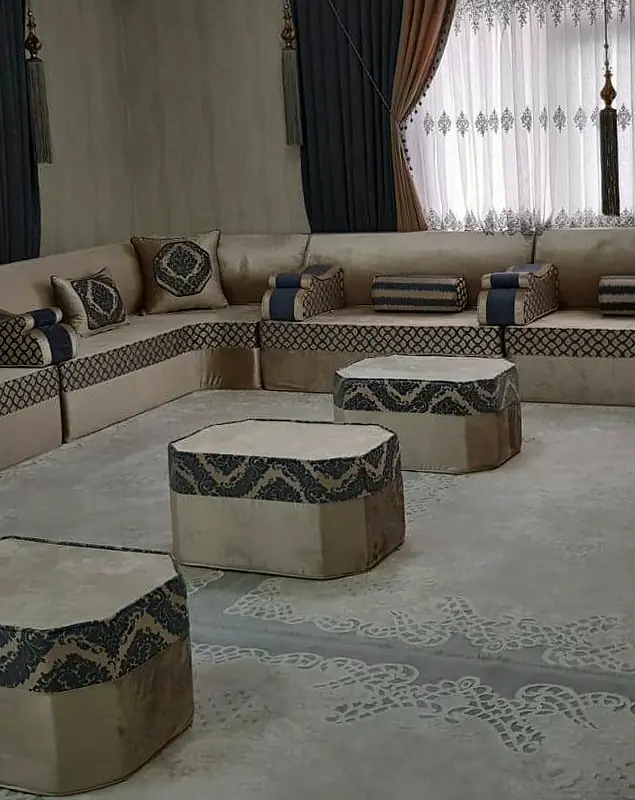
What counts as decoration in a majlis room, beyond the seats themselves?
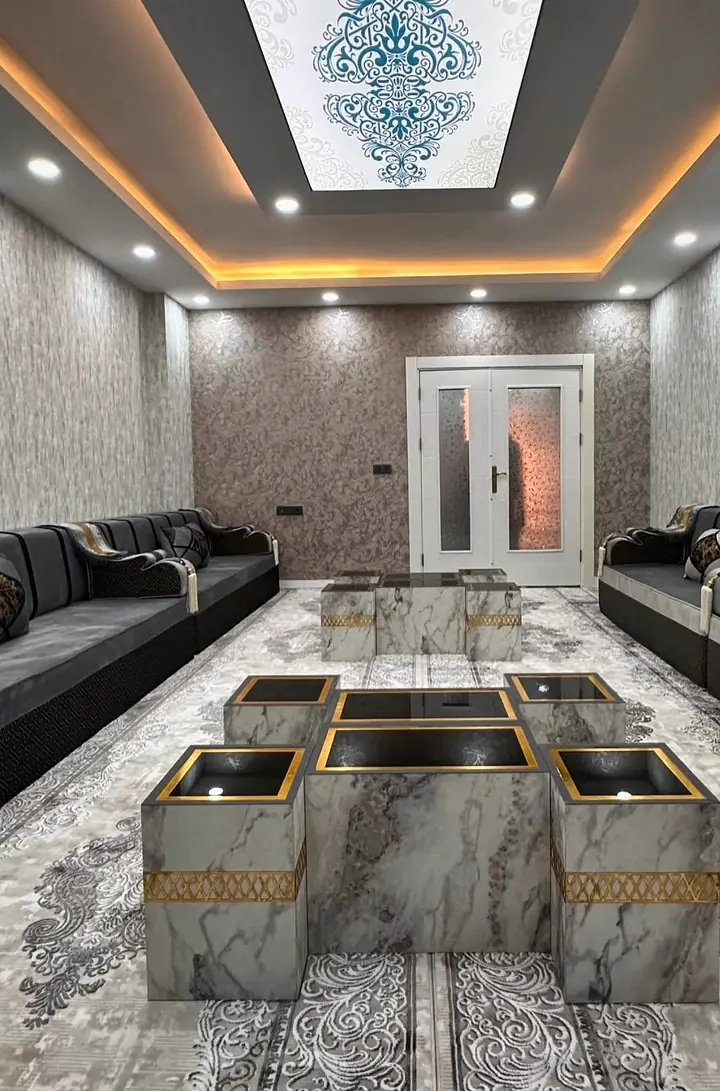
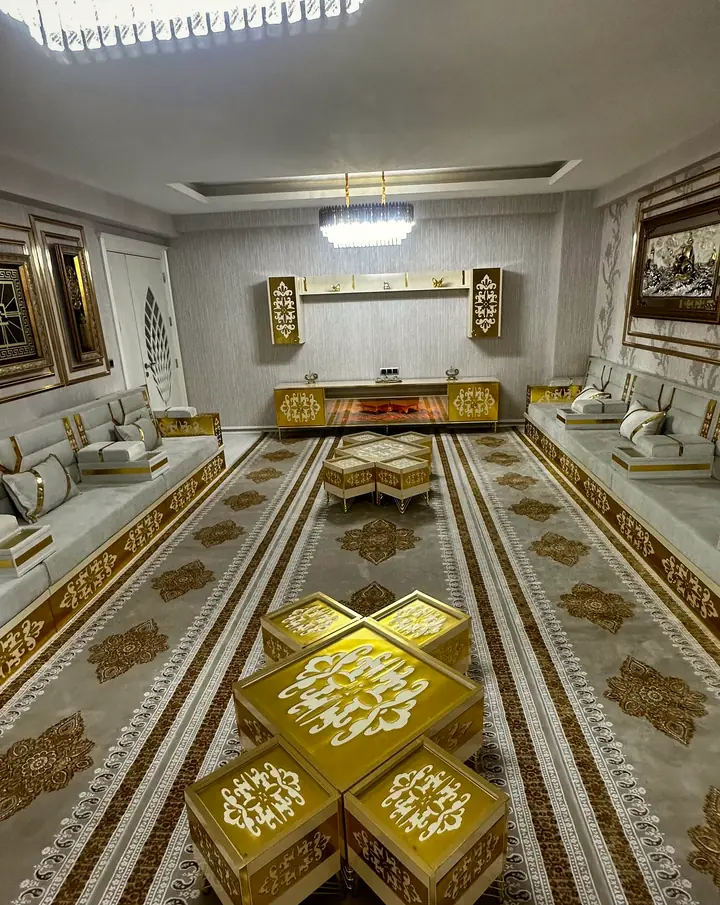
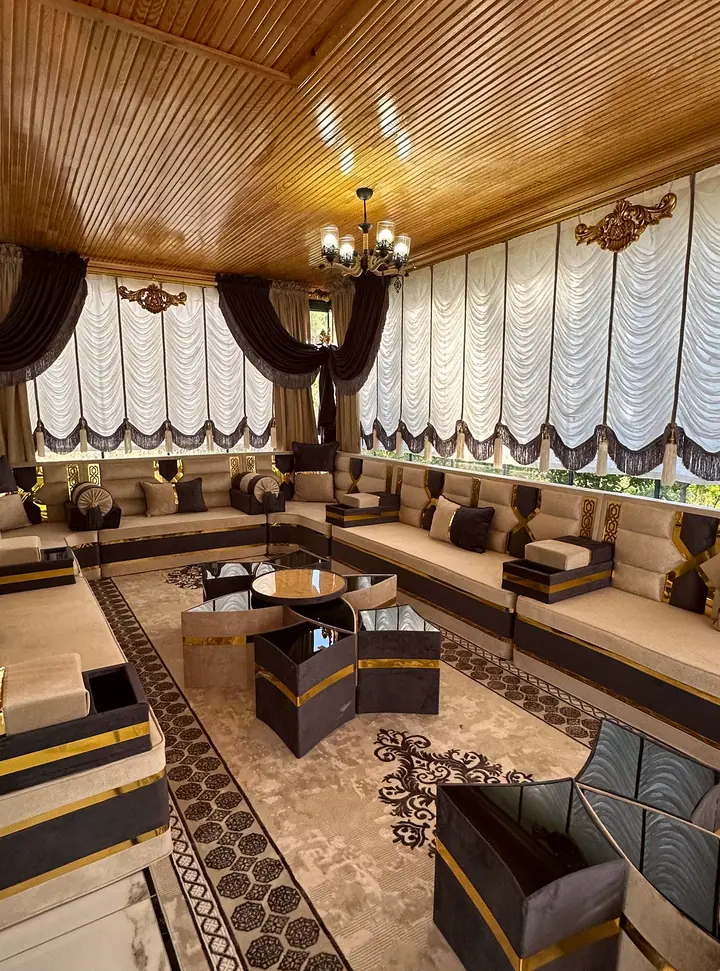
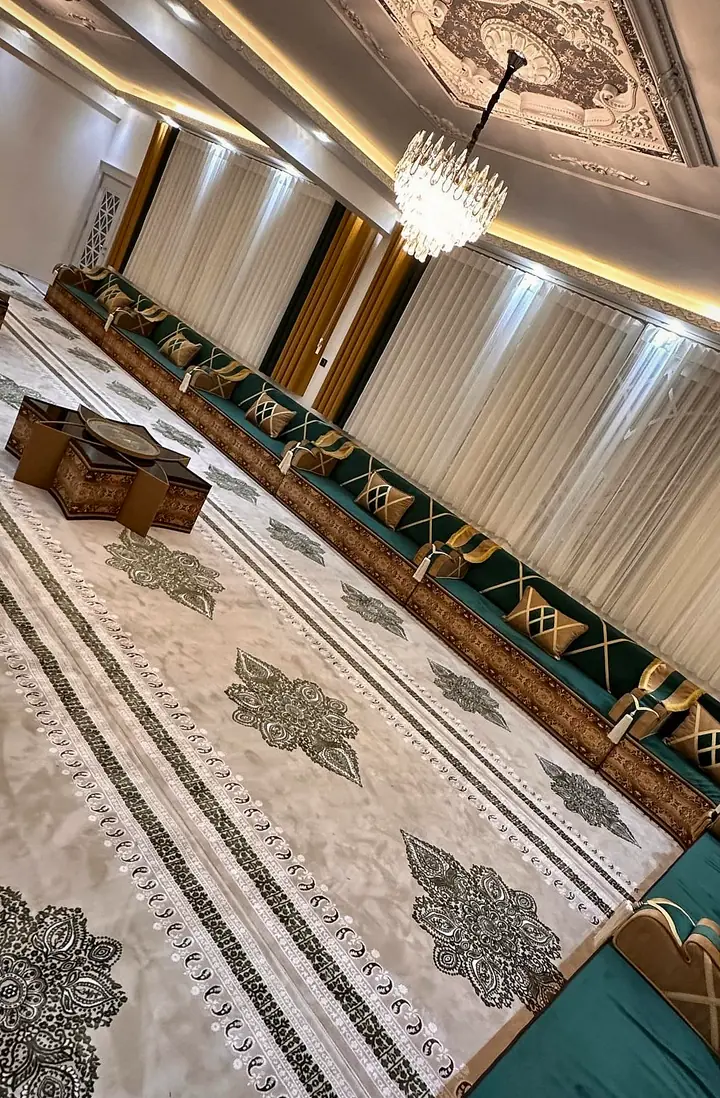
In a majlis the seating is already most of the furniture, running along the walls on low cushions with backrests leaning behind them, so decoration means everything the eye meets around that line: the wall above it, the curtains beside it, the rug in front and the lamps, trays and plants that share its low level. The parts themselves, from seat cushions to armrests, are named in a plain guide to what a majlis is. A tall sofa can hide a weak choice behind its back. Floor seating cannot, because the whole room is seen from just above the floor.
From the atelier
Questions buyers ask
- What extras can I add to a majlis to complete the whole room?
- Dining tables and dining sets are not part of the range, because the workshop concentrates on majlis and floor seating. Common additions are a foam ottoman table, a wooden coffee table set, a matching kilim, pouf pillows, extra armrests and mosaic lamps, ordered in coordinated colors, and any of them can be left out.
- Can I get one quote for the seating, rug, curtains and tables together?
- A whole majlis room can be planned as one order, with seating, rugs, curtains and a table set in one color scheme. Send the wall lengths for the seats, the width and drop of each window and the floor area for the rugs. Each item has its own line in the quote, so any of them can be dropped.
What can the Al Sadu palette teach about choosing majlis colors?
Al Sadu, the Bedouin weaving tradition, is usually described as working in a short palette of black, white, brown, beige and red, laid out in narrow bands of triangles, diamonds and other geometric shapes. That restraint is worth borrowing for a whole room. One ground color, one dark accent and one warm red read as calm even when every cushion carries a motif, while six unrelated colors make a room feel busy before anyone sits down. I tend to fix the wall color and the darkest accent first, then choose a seat fabric that sits between the two. Textile traditions like this one are a regular thread in our journal of craft and custom.
Al Sadu weaving is usually described with five colors: black, white, brown, beige and red. A majlis room reads calmer with a palette just as short.
Why settle the walls and windows before the cushions?
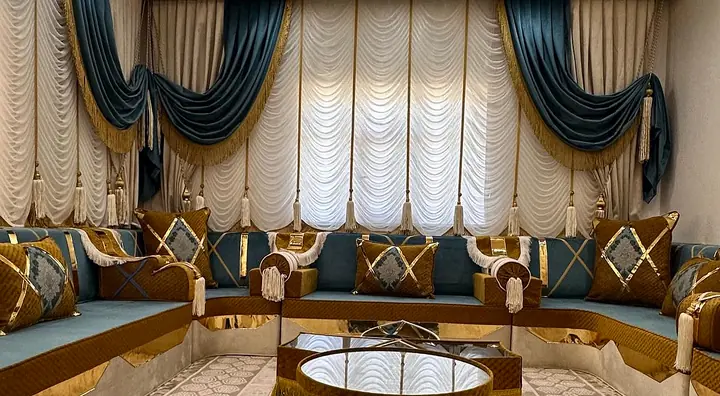
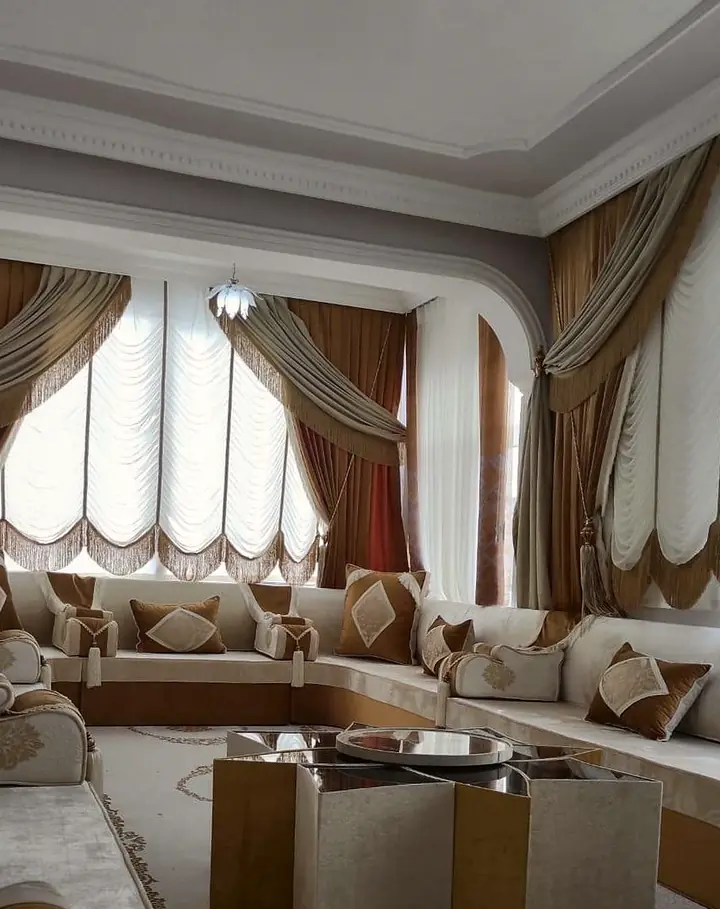
Seating in a majlis is planned from the walls inward, so the walls and windows are decided before any fabric is cut: which wall the seating follows, whether a window sits above a backrest, and what color the long stretch above the seats will be. A plain, light wall gives a patterned seat room to stand out, while paneling or printed wallpaper asks for a calmer seat. Curtains belong to this round too, in the same eyeline as the backrests. Matching curtains are made to measure for each window, floor-length or stopping at backrest height, with up to three layers: a sheer, the main color and an optional decorative top, each on its own ceiling track.
Where should the lamps stand before anything else is bought?
Seating that lines the walls also covers the lower strip of wall where most sockets sit, so the lamps have to be planned before the seats arrive. Mark the corners and run ends that will hold a lamp, check that a socket or a cable route reaches each one, and keep a side table's width free there. A room planned this way has light at seated height from the first evening, instead of one ceiling fixture and an extension cord across the rug. Warm bulbs also make the later fabric choice easier, because the swatches are judged under the light the room will really have.
Why does a flat kilim sit better in front of floor seating than a deep pile rug?
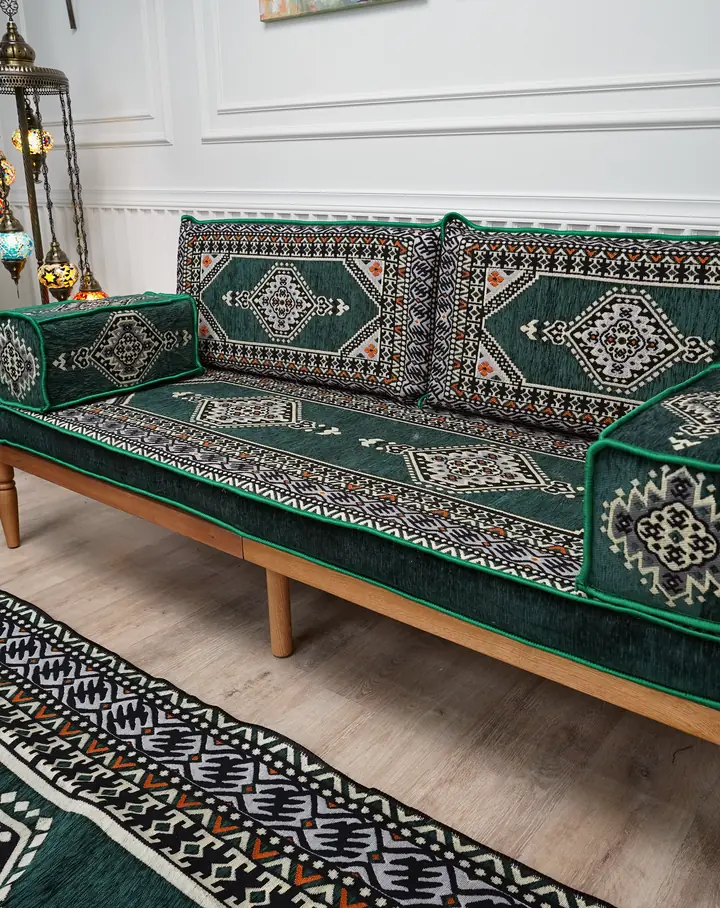
A kilim is usually described as a flat, tapestry-woven rug with no pile, and in the slit-weave technique the weft turns back at each color boundary, leaving small vertical slits and crisp geometric edges. Lying flat, it lets trays, poufs and the ottoman table stand level, and its pattern stays sharp when seen from a seat just above the floor. The matching rug made with our sets is a flat-woven kilim style as well. I look for one clear border and a quiet field, so the rug frames the open floor instead of filling it. Pick the rug first or pick it last, but never pick it in a hurry.
How low should art hang above a majlis?
Galleries tend to hang pictures near the eye of a standing visitor, and over a majlis that habit has to move down. A backrest stands 16 in (40 cm) tall on a seat of 4 in (10 cm) to 8 in (20 cm) in a classic floor room, so its top sits about 19.5 in (50 cm) to 23.5 in (60 cm) above the floor, well under the 36 in (91 cm) at which a chair rail is usually set to protect a wall from chair backs. Art that clears the backrests by a hand's width and stays within the seated eyeline belongs to the room. Hung at gallery height, it floats away from the people beneath it.
Plants, poufs and the tea tray: what goes in last?
The last round is the one most rooms start with, and it is the easiest to get right once the walls, lamps, rug and seats are settled. Pouf pillows and an ottoman table repeat the seat fabric at a lower level, small throw pillows add one accent color, and a tea tray on a low table gives the middle of the room a purpose. Plants work best in the corners where two runs of seating meet, in pots that stand on the floor rather than on a cushion, and a tall palm softens a corner that a lamp leaves dark. Two or three objects on a side table are plenty.
Which measurements keep a dressed majlis room easy to move through?
Each seat cushion runs to at most 75 in (190 cm) and takes two backrests of 37.5 × 16 × 4 in (95 × 40 × 10 cm), with a 23.5 × 16 × 4 in (60 × 40 × 10 cm) corner backrest where two runs meet. Seats reach about 27.5 in (70 cm) into the room on floor sofa sets and 29.5 in (75 cm) on custom majlis, and a 23.5 × 23.5 × 8 in (60 × 60 × 20 cm) ottoman table and 27.5 × 19.5 in (70 × 50 cm) pouf pillows are what most often crowd the floor in front of them, which is why they come in last.
- Choose the wall color and plan the curtains for each window.
- Place the lamps where people will sit, near a socket.
- Lay the kilim on the open floor, with an even gap to the seats.
- Pick the seat fabric against the wall and the rug.
- Add the pouf pillows, the ottoman table and a few small throw pillows.
- Finish with plants, art and the tea tray.
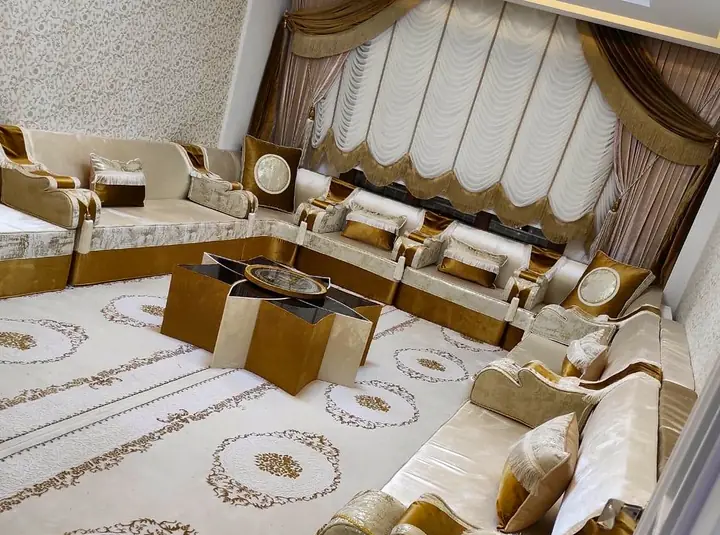
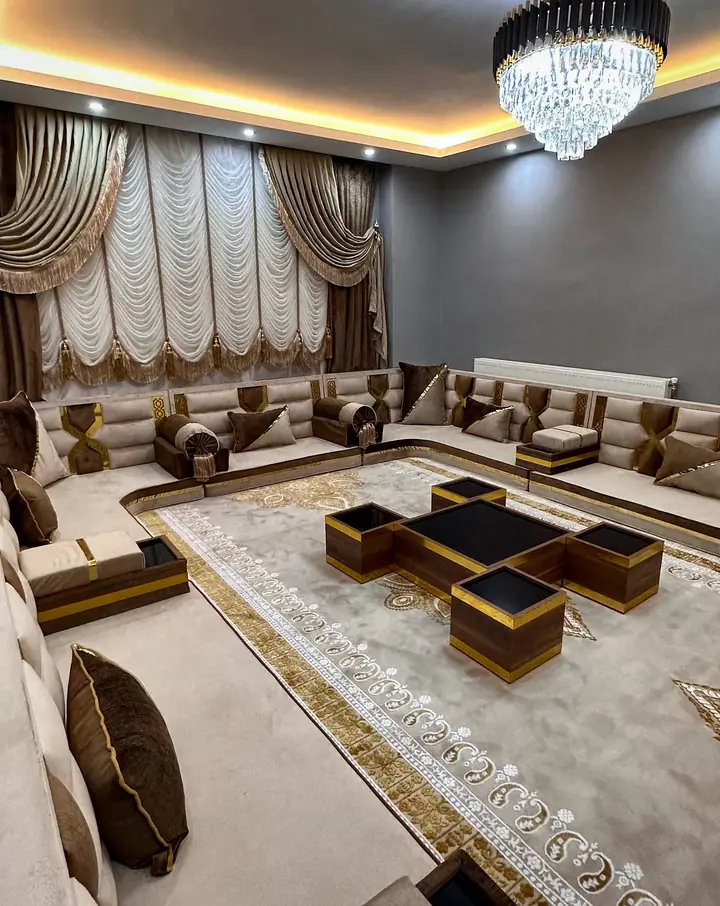
For the floor itself, our flat-woven kilim rugs come in designs that pick up majlis colors, and majlis layouts from a single wall to a full room show how much open floor each shape leaves.
When it works, the room reads in one glance from the door: a calm wall, a low line of seats, a rug with a clear border and one lamp already lit in the corner. Nothing on the floor asks to be stepped around.
Frequently asked questions
Can house plants sit right next to majlis cushions?
They can, as long as the pot stands on the floor or a side table rather than on a seat, with a saucer underneath so water never reaches the fabric. A corner where two runs of seating meet suits a tall plant best, because it blocks nobody's view across the room.
What is the most common decoration mistake in a majlis room?
Choosing the cushion colors before the walls, curtains and rug are settled. The seat fabric then has to fight everything that arrives after it. Deciding the large surfaces first, and the small pillows and tray last, keeps one or two colors in charge of the room.
Is a ceiling chandelier enough light for a majlis room?
A chandelier is useful for cleaning and for busy evenings, but hung high over low seating it leaves faces and fabric in its own shadow. Pair it with low lamps on side tables or the floor, and put it on a dimmer so the lamps can carry the room at night.