Rooms & Design
Kuwait's Diwaniya: How a Reception Room Became a Habit
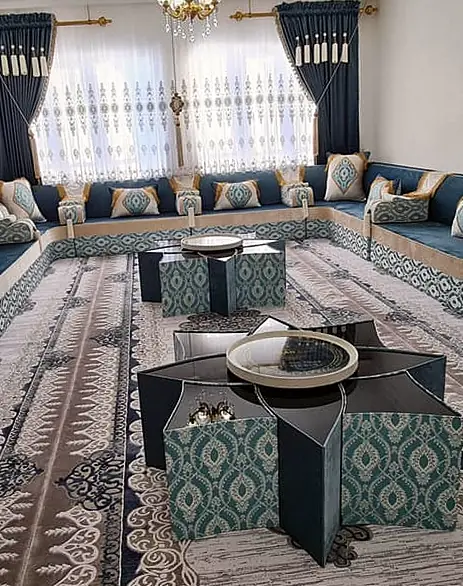
Kuwaiti diwaniya: a guest room that is also a regular gathering, its Persian roots, a 2011 study on women's diwaniyas and how wall seating is planned.
The Atelier Journal is where the Oriental Sofa atelier writes about majlis culture: the customs, guests, crafts and rooms that grew up around low seating along the walls. Stories sit under six topics, from hospitality and craft to homes abroad and family occasions, each written in one of the atelier's editorial voices.
From the atelier
One story
Two stories
Majlis seating for homes and venues around the world · 77 places
· 6 min read
· 4 min read
· 5 min read
· 6 min read
· 6 min read
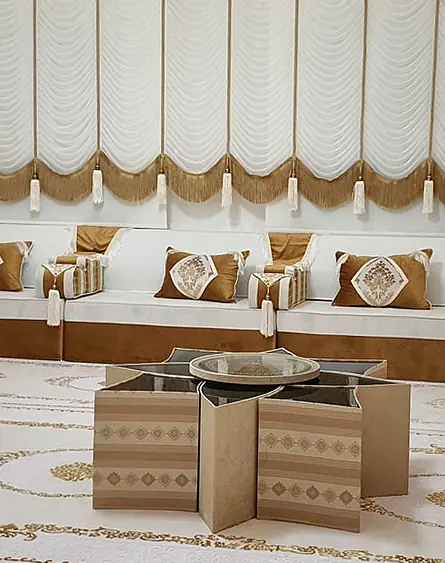
· 6 min read
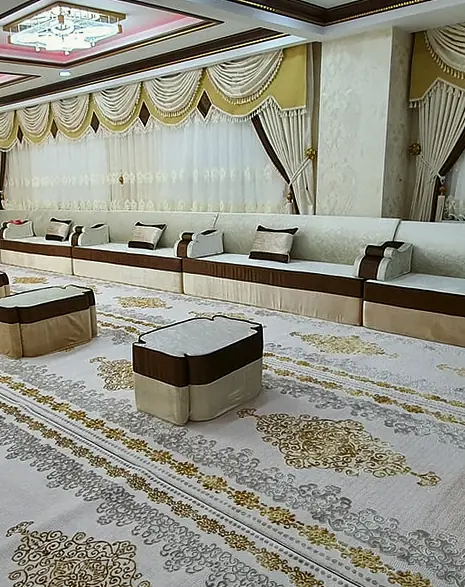
· 4 min read
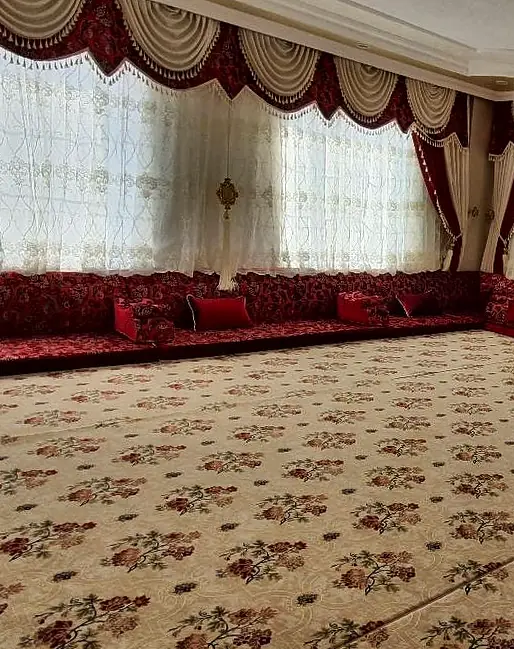
· 5 min read
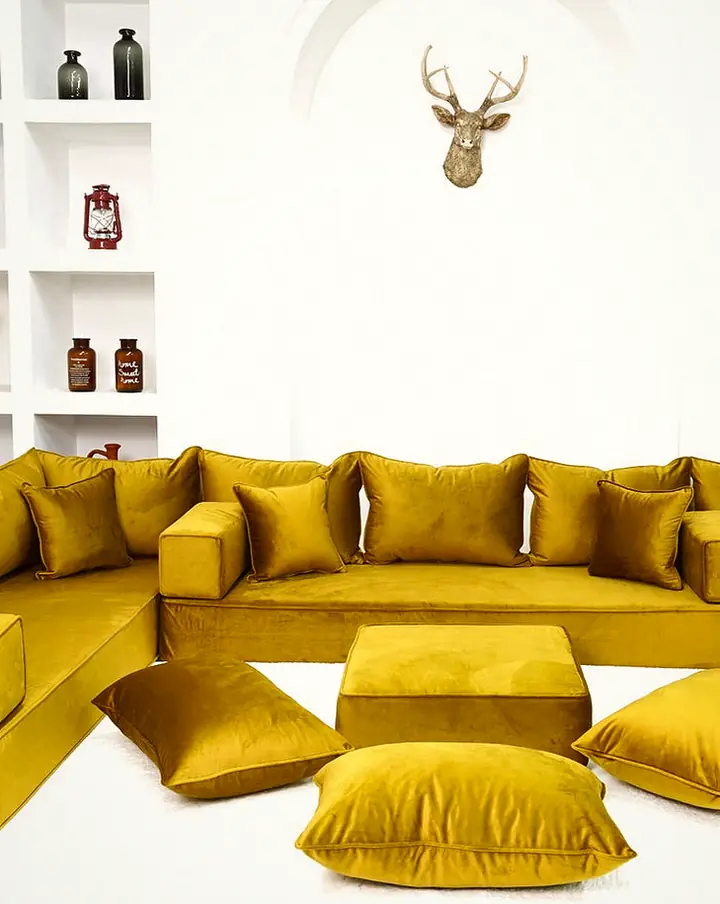
· 4 min read
· 6 min read
· 5 min read
· 6 min read
One story
3 stories
Kuwaiti diwaniya: a guest room that is also a regular gathering, its Persian roots, a 2011 study on women's diwaniyas and how wall seating is planned.
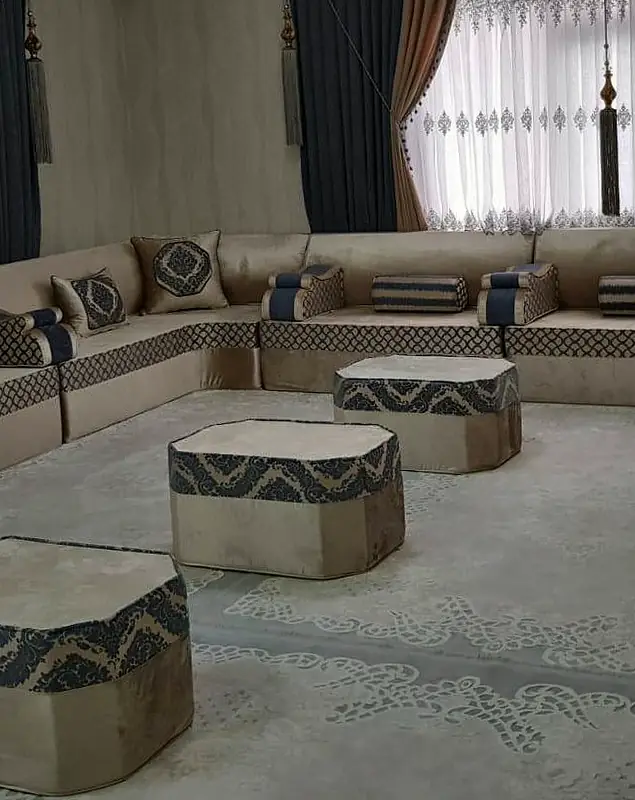
An Arabic sofa statement piece leads with color or pattern while walls, rug and curtains stay quiet.
Rugs, light, walls and plants
4 stories
How Families Prepare the Majlis for Visitors
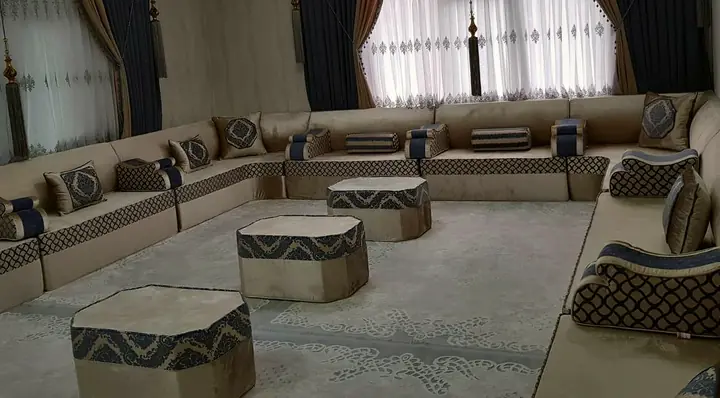
Plan a Ramadan majlis for iftar and suhoor nights: a U-shaped floor set seats eight to nine guests, with a sufra, low tables and lamplight in between.
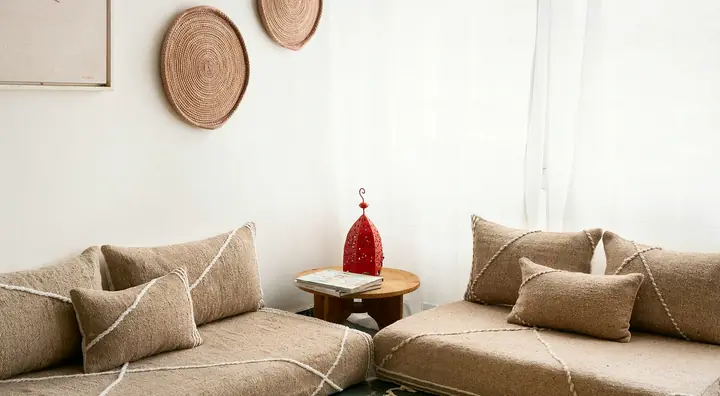
A fanous Ramadan lantern pairs tin with colored glass and is tied to a Cairo legend of the tenth century.
How Gulf Families Host Ramadan Nights
Practical guides before you order
Learn the names of majlis parts, regional seating terms, fabrics and measurements in English and Arabic, with a glossary to help describe the set you need.
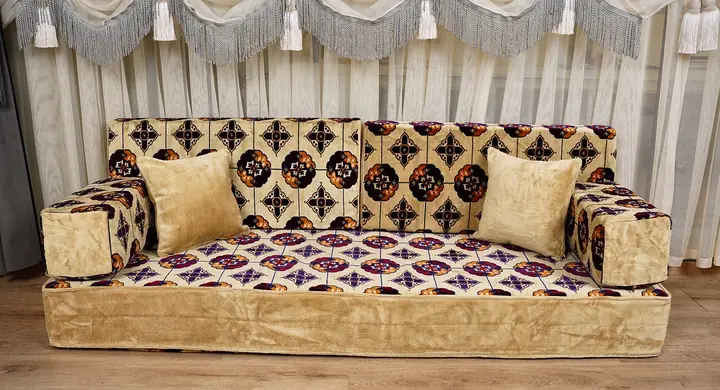
Single, L and U floor sofa sets count 10, 14 and 19 pieces.
Order replacement majlis covers for your existing foam.
Check majlis cushion sizes for seats, backrests, armrests and ottomans.
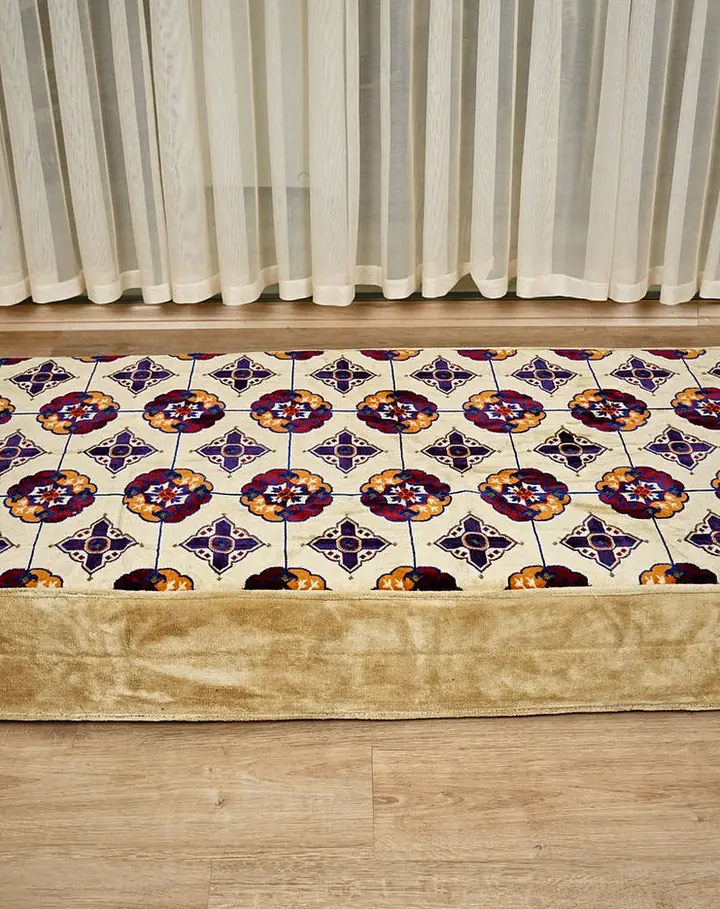
Measuring for a majlis: one floor-level tape run per seating wall, a unit on each number, doors and vents sketched.
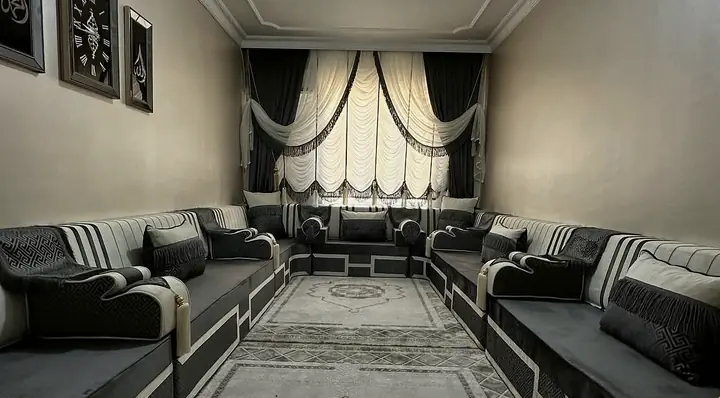
Find a majlis layout for your room by comparing seated walls, corner overlaps and open floor.
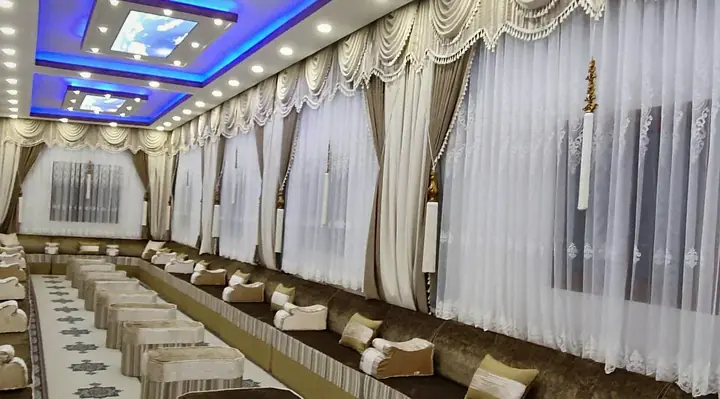
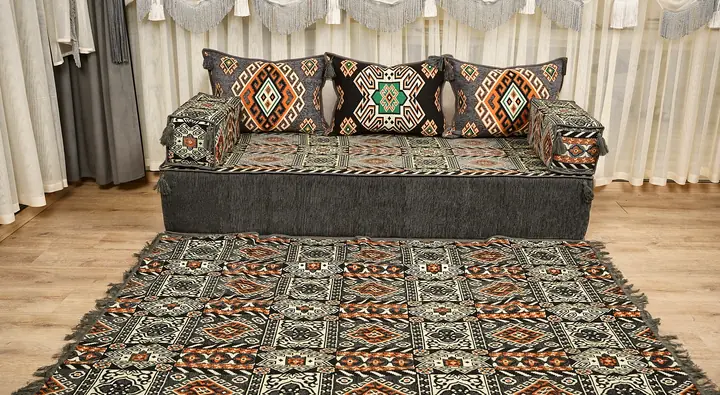
The journal follows six threads, and every story belongs to one of them, from the first cup poured for the eldest guest to the weave of a kilim backrest. Earlier pieces live here too, among them the practical notes on hosting guests and meetings in a majlis room.
| Topic | Typical question | A practical measure it leads to |
|---|---|---|
| Culture & Traditions | What is this seating called, and where did it come from? | Seat heights of 4 in (10 cm), 8 in (20 cm), 12 in (30 cm) or 16 in (40 cm) |
| Hospitality | How are coffee and tea served to guests? | Seats about 29.5 in (75 cm) deep for long evenings |
| Homes Abroad | How does a majlis fit a house built without one? | Cushions up to 75 in (190 cm) long, split to fit each wall |
| Craft & Materials | What is inside a seat, and how is it covered? | Backrests 16 in (40 cm) tall and 4 in (10 cm) thick |
| Rooms & Design | How do color, light and layout work together? | Foam that forgives about 2 in (5 cm) at each wall end |
| Occasions | How should the room be ready for Ramadan or Eid? | A 12 in (30 cm) or 16 in (40 cm) seat for older guests |
A majlis is more than its cushions, and the families who order one often arrive with a story already in mind, a grandmother's guest room, a set of finjan cups brought from home, a room that fills with cousins on an Eid morning. The journal keeps those stories close to the practical side of the work, since every custom majlis is cut, sewn and finished to order in Istanbul for one particular room. I find that a reader who knows why the eldest guest sits where they do also plans the corner seat with more care. Hospitality is a habit before it is a room.
Stories are written in the editorial voices of the Oriental Sofa atelier, each with its own field, such as culture and traditions, care, color or room planning. Every voice has an author page, and a story that cites history or figures lists its sources at the end.
Each regional word is written in Latin letters and glossed in English the first time it appears, so terms like majlis, jalsa, sedir or diwaniya read clearly without a dictionary. The glossary gathers these words with their regional names and the parts of a set.
The journal is written for homes well beyond the Gulf, and its topics take in the Yemeni mafraj, Moroccan salons, Afghan toshak rooms and Ottoman sedir rooms. Homes Abroad follows families who keep a guest room in North America, Europe and Australia, often in houses never built with a majlis in mind.
Send your wall lengths and a photo of the room, and ask for a quote.