What is a backyard majlis tent, and how is it different from a party tent?
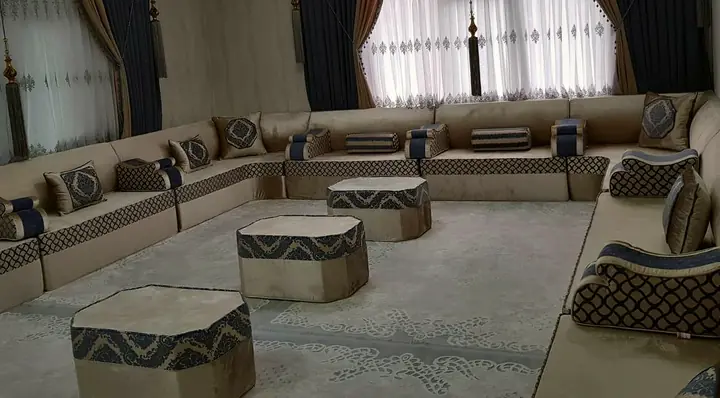
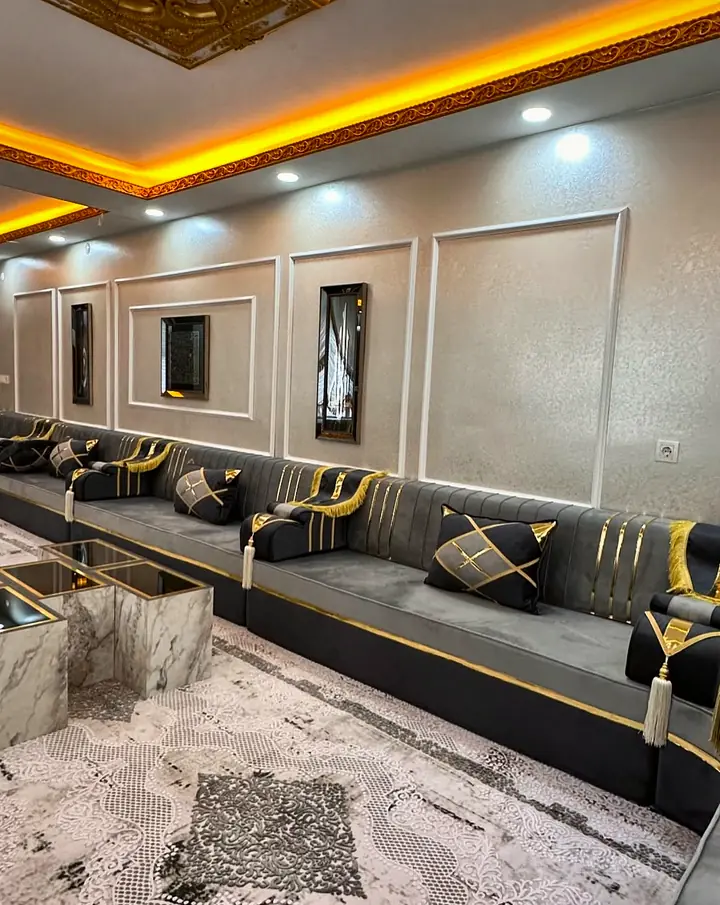
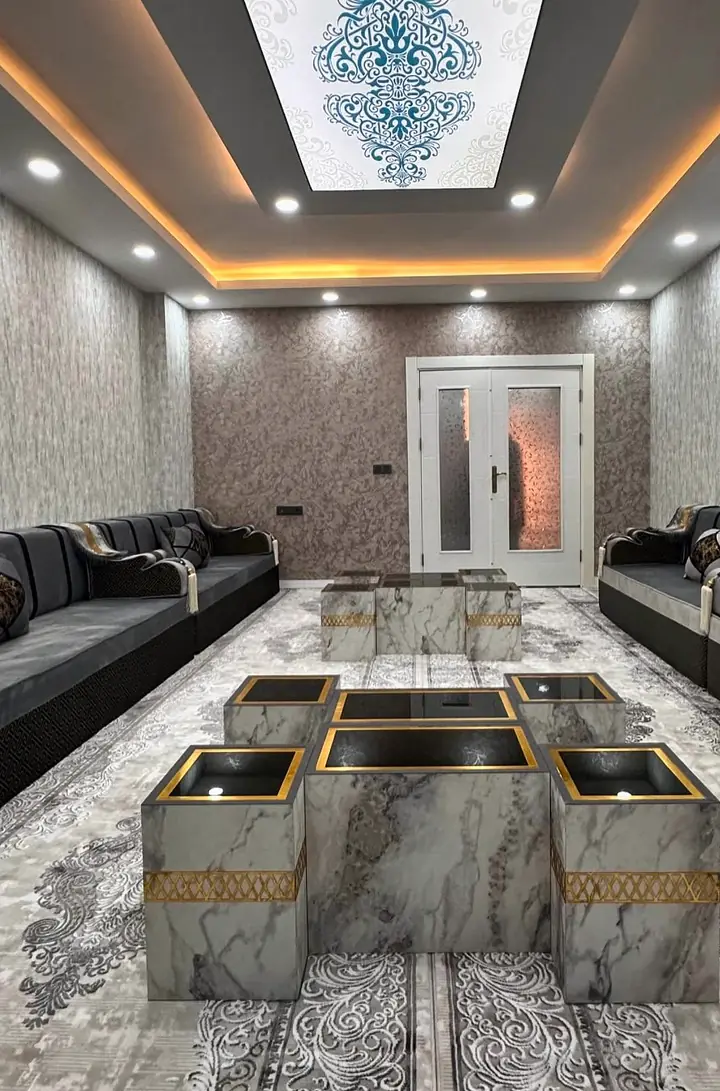
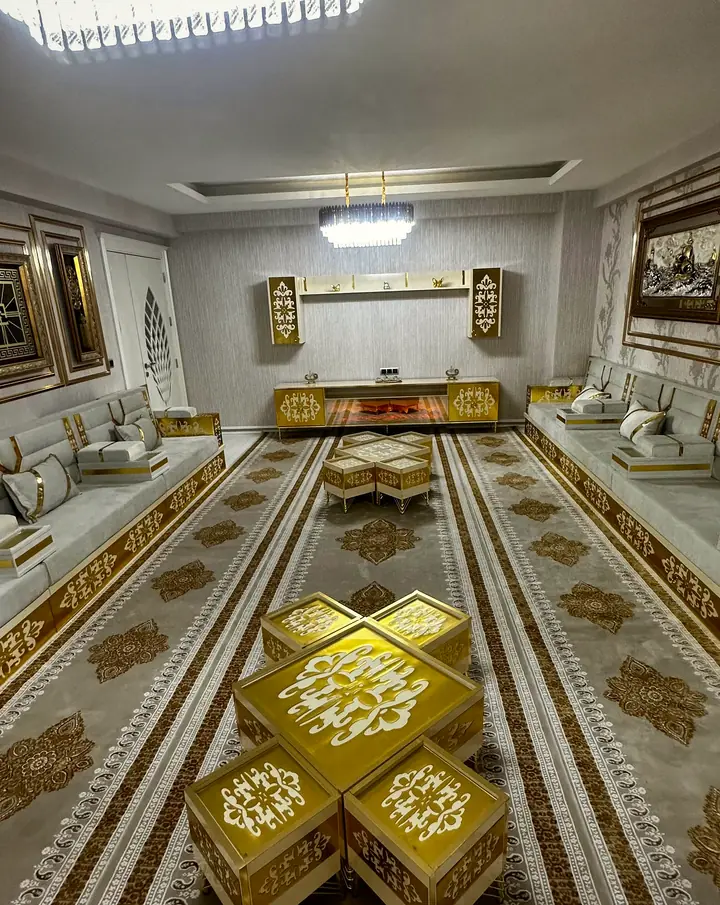
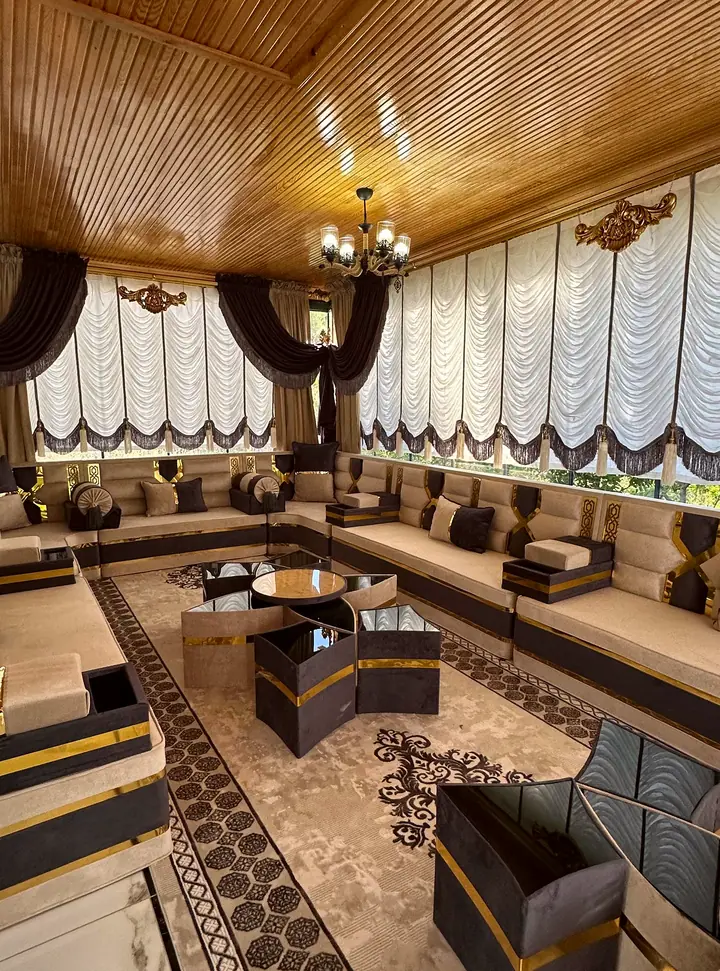
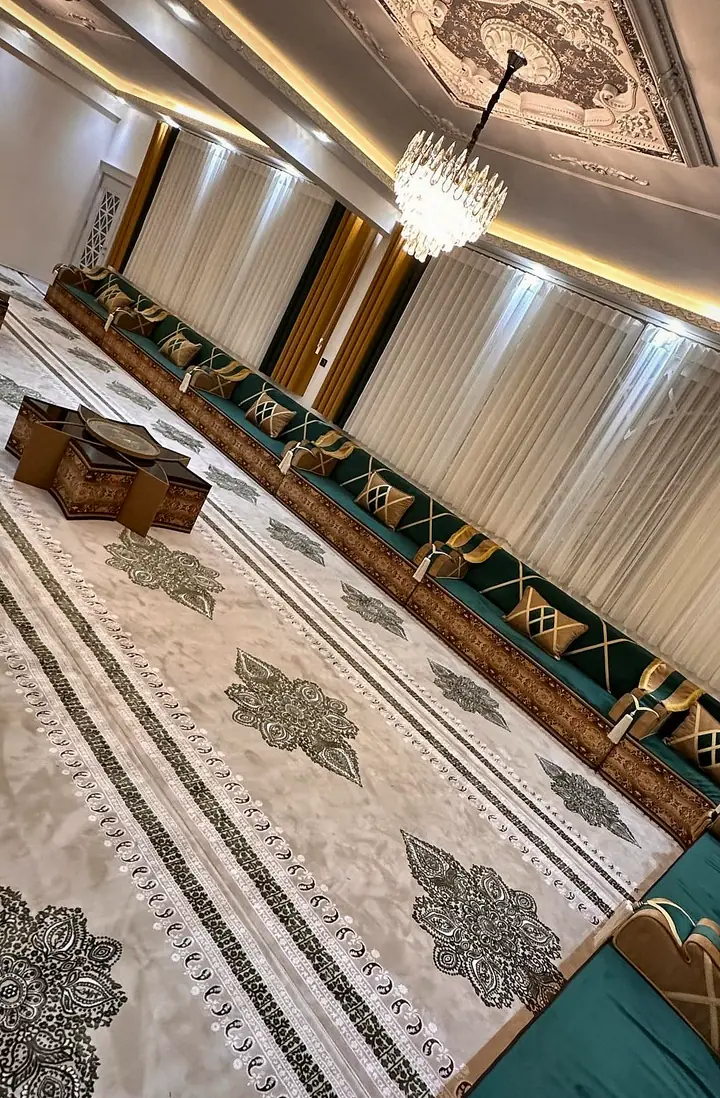
A party tent is planned around tables and chairs. A majlis tent is planned around its edges. Low seating runs along the sides, and the middle stays open for trays, coffee and people moving about.
The Arabic word majlis (a sitting room set up for guests) names both the room and the habit of sitting together in it. What a majlis is is worth a quick read if the word is new. In a backyard, the tent gives that habit a roof for one afternoon or one evening.
From the atelier
Questions buyers ask
- Do floor seat backrests need a wall behind them inside a tent?
- Yes. Floor sofa backrests lean on a wall or another firm surface, and a canvas sidewall or an open side is neither. For a tent, ask us about metal back supports, which are available on request for freestanding layouts. Send the tent's floor size and which sides stay open, and the designer plans the runs around them.
- Can I roll the cushions up again for storage after the party?
- Not back to shipping size. Cushions are pressed, rolled and vacuum-sealed for shipping, and they spring back to full size once opened. They cannot be re-compressed at home, so plan a dry closet or spare room where they can lie flat, with the covers washed and fully dry first.
How did Bedouin tents use woven dividers and floor pillows?
The idea of seating under cloth is old. UNESCO inscribed Al Sadu, the traditional weaving of Saudi Arabia and Kuwait, on its Representative List of the Intangible Cultural Heritage of Humanity in 2020. The craft is usually described as producing Bedouin tents and their colorful dividers, along with floor pillows, carpets and mats, from camel hair, goat hair and sheep wool.
UNESCO describes the majlis itself in plain terms: carpets on the floor, cushions against the wall and, usually, a stove or fire for coffee and other hot drinks. A yard tent can keep the floor, the cushions and the cloth walls. It has to leave the fire outside. More threads like this run through our Atelier Journal.
UNESCO inscribed Al Sadu, the Bedouin weaving behind tent dividers and floor pillows, on its heritage list in 2020.
Which occasions fill a backyard tent: Eid mornings, Ramadan evenings or graduations?
Start with the busiest minute. On an Eid morning, many families receive visitors in waves, and the first ten minutes decide whether a guest finds a seat or stands holding a cup. A Ramadan evening runs the other way, filling slowly after iftar and emptying late. A graduation party sits between the two, with relatives who stay for hours and often a sound system. Seat the elders near the door and keep the speakers far from them.
A tent adds one thing to all three: a roof and a doorway you control. Arabic sofas for Ramadan meetings covers the indoor version of the same evenings. Planning around Ramadan, Eid or a wedding? Tell us your date when you ask for a quote and we'll confirm what's achievable.
Does a backyard tent need a permit?
It can. Section 3103.2 of the International Fire Code requires a permit from the fire code official for any tent larger than 400 sq ft (37.2 m²). Recreational camping tents are exempt. A 236 × 354 in (600 × 900 cm) tent, the size used in the layout below, covers 581 sq ft (54 m²), so it is past that line unless an exemption applies.
The fire code official is usually a local office, and local rules can differ from the model code. I make that call before anything is rented or ordered.
Why do charcoal, gas heaters and candles stay outside the tent?
Because a tent holds smoke and gas like a small room. The U.S. Consumer Product Safety Commission puts it flatly: never burn charcoal inside homes, vehicles or tents. Charcoal gives off carbon monoxide, which has no smell, and the commission also says not to use a charcoal grill for heating inside a tent.
The CDC lists generators, grills, camp stoves and other gasoline, propane, natural gas or charcoal-burning devices as things that should never be used inside a home, basement, garage or camper. Gas heaters are gas-burning devices too, and I treat a tent with its sidewalls down the same way.
Candles need their own rule. NFPA advises keeping them at least 12 in (30 cm) from anything that can burn and never leaving them unattended, and it suggests flameless candles. In a tent, almost everything within reach can burn. So the coffee station moves outside the entrance, well clear of the canvas, and insulated flasks do the pouring inside.
What goes under the seating on grass or a deck, and how does it pack away?
I start at the ground. On grass, a plain ground sheet goes down first, then the rug, then the seating. On a deck, I check the boards for raised nails and splinters first.
Fabric is the next question. Standard upholstery fabrics are made for indoor rooms, not for outdoor or wet conditions. A separate water-repellent outdoor fabric range exists, mostly in plain colors, but water-repellent is not impervious: the seating still comes indoors when the weather turns.
Packing up is its own job. The covers unzip, and a gentle 86°F (30°C) machine cycle with a mild detergent cleans them; avoid heat, which can shrink them. Let every piece dry fully before it goes into storage.
How do you plan a majlis tent: seat counts, rows and a clear middle?
Take a 236 × 354 in (600 × 900 cm) tent with straight sidewalls and run seating down both long sides. Each 354 in (900 cm) run is cut into five equal pieces of 71 in (180 cm), because no seat piece goes past 75 in (190 cm). Confirm the guest count for those custom-length seats separately when reviewing the layout.
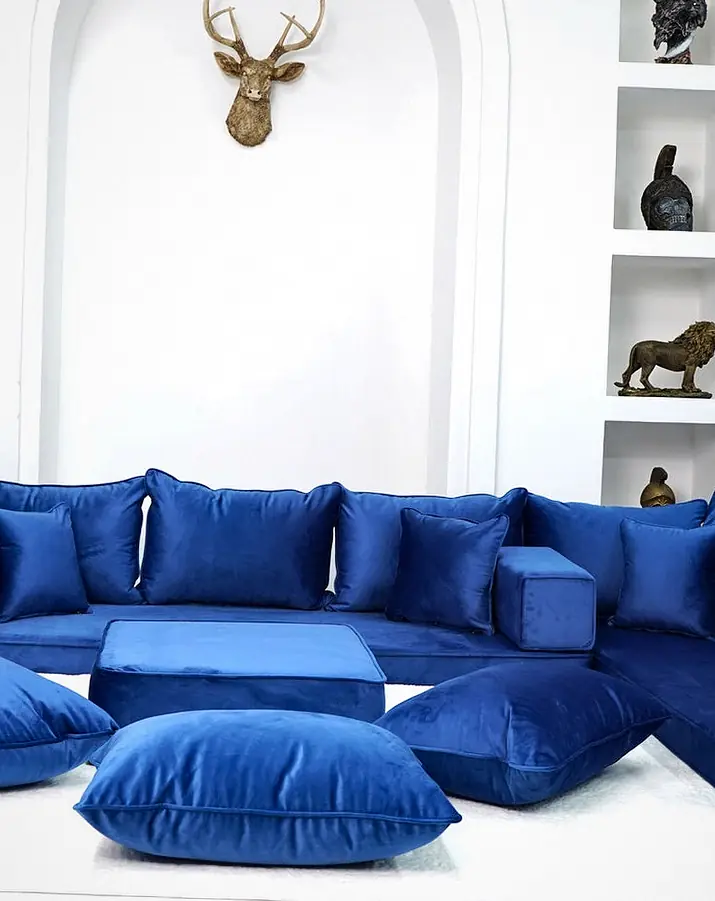
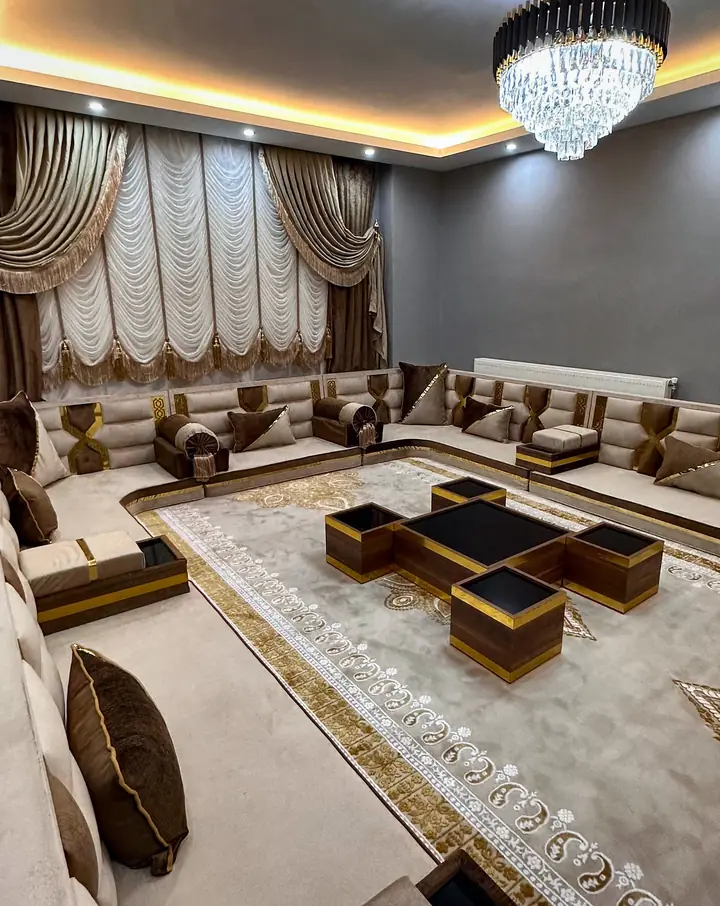
Floor sofa seats are about 27.5 in (70 cm) deep, so the runs leave 181 in (460 cm) clear down the middle. That is room for a line of ottomans as low tables, with a path along both sides for the tray. A third run across the far end would make a U. The corner rule then shortens one arm at each inner corner by one seat depth, and the U-shaped layout guide works through the pieces.
- Backrests: two per seat piece, each half the piece's length and 16 in (40 cm) tall. Canvas will not hold one up, so ask about metal back supports for any run without a wall.
- Low tables: ottomans of 23.5 × 23.5 × 8 in (60 × 60 × 20 cm) in a line down the middle.
- Seat height: 12 in (30 cm) or 16 in (40 cm) when older guests are coming, 4 in (10 cm) to 8 in (20 cm) for a classic floor look.
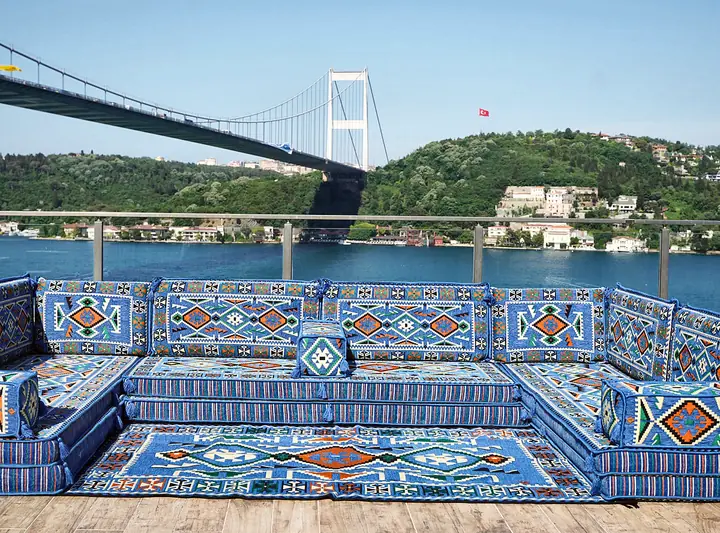
Seating for terraces and patios is gathered on our out-door sofas, benches and mats page. Send the tent's floor size and which sides stay open, and the designer can lay the runs out with you.
Last, stand at the entrance and walk to the farthest seat, slowly, the way a guest would.
- At the door: a spot for shoes and a clear first seat with something firm behind it.
- Down the middle: ottomans in a line, with no rope or cable across the path.
- Along the sides: every backrest stands upright and nobody leans on canvas.
- Outside the entrance: the coffee station, well clear of the canvas.
Frequently asked questions
Can a gas heater or a charcoal fire go inside a majlis tent?
No. The Consumer Product Safety Commission says never to burn charcoal inside a tent, and the CDC lists gas, propane and charcoal-burning devices among those never to use inside a home, basement, garage or camper. For a cold evening, plan blankets and an earlier start instead of a flame.
Which backyard tents are exempt from a fire-code permit?
Under the International Fire Code, recreational camping tents are exempt, and so are tents open on all sides up to 700 sq ft (65 m²) that meet the code's listed conditions. A tent with sidewalls above 400 sq ft (37.2 m²) needs a permit, and local rules can differ, so ask the fire office.
Where does the coffee go if the fire has to stay outside?
Put the coffee station just outside the entrance, well clear of the canvas, and carry the first round in insulated flasks. Guests inside get their cups at a low table, so nobody leaves a seat.
Sources
- International Code Council, International Fire Code, chapter 31: Tents and other membrane structures
- U.S. Consumer Product Safety Commission, Charcoal grill safety tips
- CDC, Carbon monoxide: clinical guidance
- NFPA, Safety with candles
- UNESCO, Traditional weaving of Al Sadu
- UNESCO, Majlis, a cultural and social space
- Wikipedia, Al Sadu