What is a ghabga, and when does the night begin?
The ghabga, also spelled ghabqa, is a gathering held late at night after iftar, in homes or in a majlis. It is not held every night. The National Museum of Qatar describes gatherings that typically follow the taraweeh prayers, between about 11 pm and 2 am. Hosts therefore plan for guests who arrive when most of the evening is already behind them. Other family gatherings are collected in the Atelier Journal.
From the atelier
Questions buyers ask
- Can a venue or community hall specify made-to-measure seating for a gathering?
- We furnish event venues and community halls with made-to-measure floor seating, alongside restaurants, cafés and coffee houses. Identify the seating runs and the chosen arrangement in the enquiry. Keep the requested specification for that venue separate from a ready-size home set or a cultural description of the gathering.
- How big are the backrests for a night that runs past midnight?
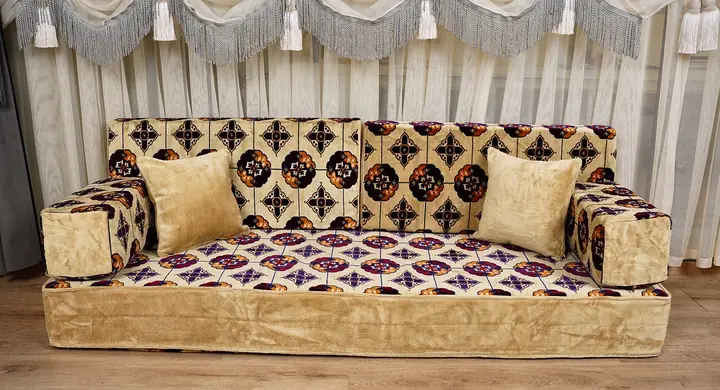
- A standard long backrest measures 37.5 × 16 × 4 in (95 × 40 × 10 cm). This identifies that particular piece, rather than a fixed size for every custom seating run. Check the itemized dimensions for the selected seating before arranging the guest area; custom pieces and different builds need their own confirmed specification.
How do you set a majlis for a night that runs past midnight?
Plan the room for the last hour, not the first. A long sit asks different things of a majlis than a short call, and these are the checks I run before the guests arrive:
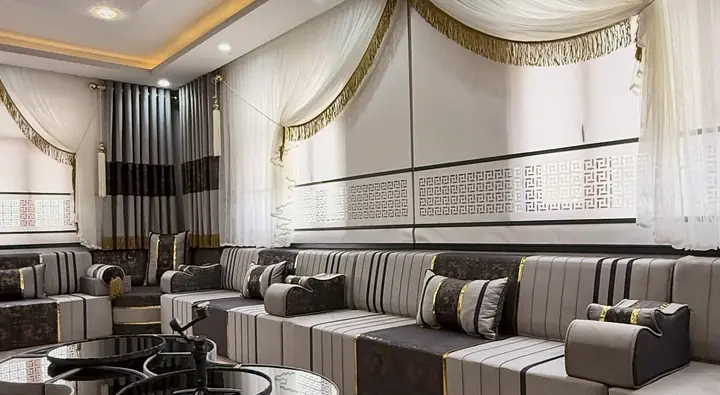
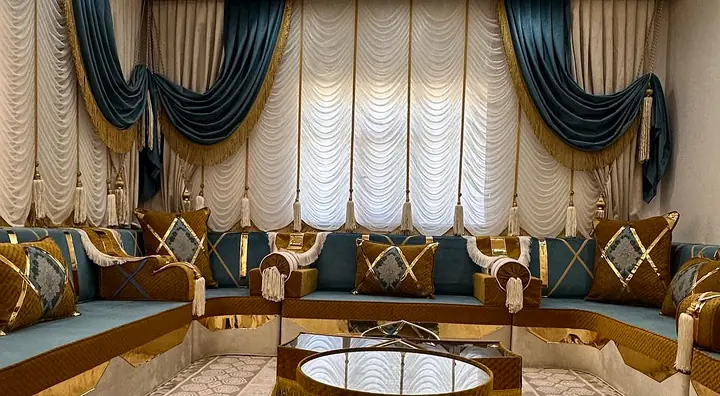
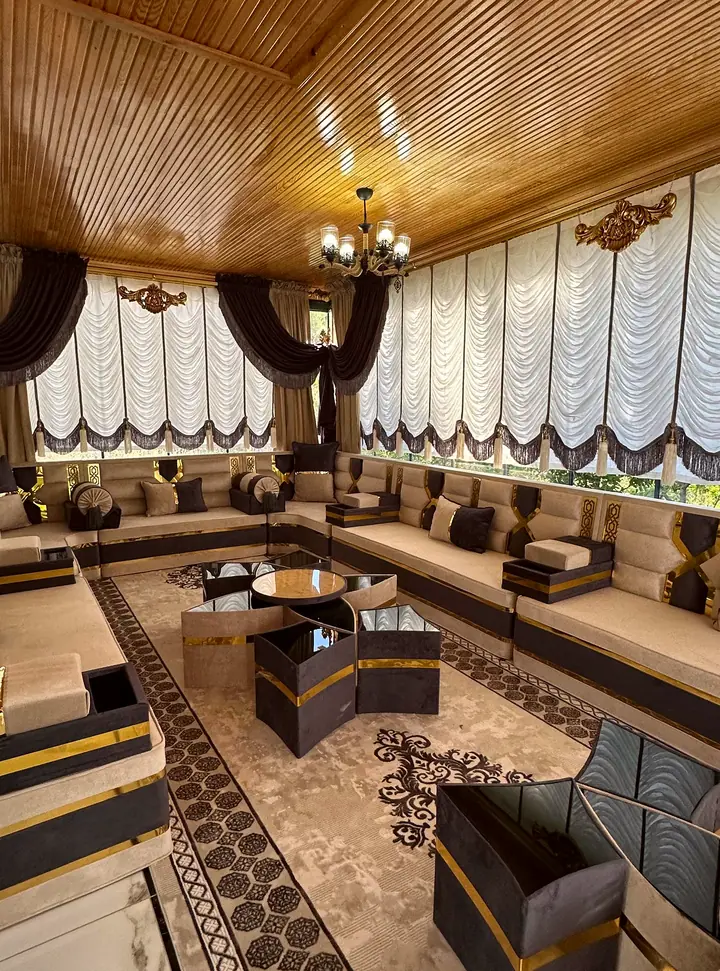
- A backrest stands behind every seat, so nobody perches on the edge of a cushion at one in the morning.
- Glasses and cups have a surface within reach of every seat, so nothing stands on the rug where a foot can find it.
- The route from the kitchen to the middle of the room is clear, because plates keep arriving long after the first guests sit.
- The oldest guest has the seat closest to the exit, so leaving never means climbing over cushions.
Garangao falls on the 14th night of Ramadan, when Gulf children go from house to house for nuts and sweets, so keep the entrance clear and a bowl of sweets in reach.
What is served at a ghabga, and where does it all go?
Visit Qatar lists harees (pounded wheat and meat), thareed (bread in broth) and luqaimat (fried dough in syrup) among the traditional ghabga dishes. Savory plates and sweet ones come in turn, so the table has to take bowls, trays and glasses at once.
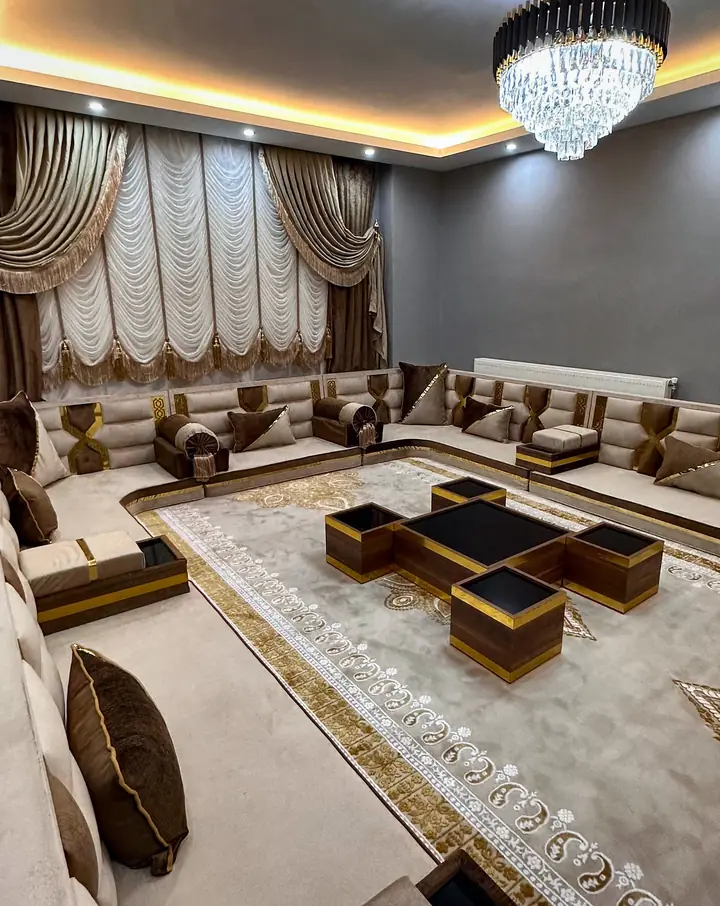
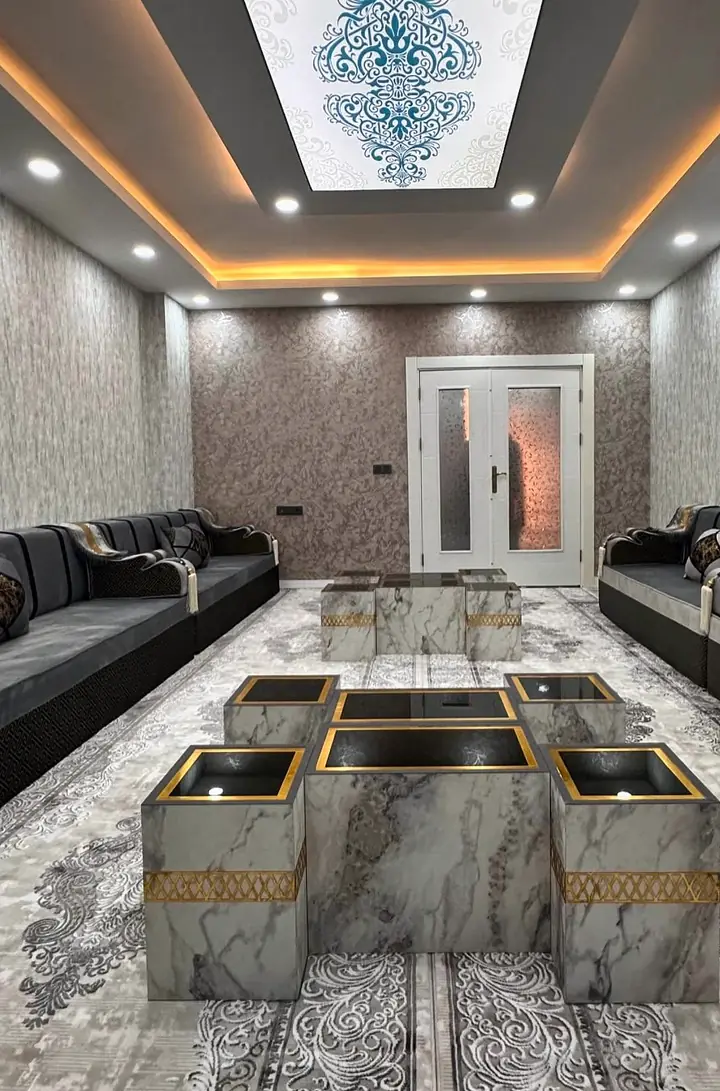
Low tables carry that load. A table should match the seat it serves: the ottoman stands 8 in (20 cm) high beside standard sets, and taller tables belong with a raised majlis. For a long room, a nesting set of five, seven or nine pieces puts a landing place at every elbow.
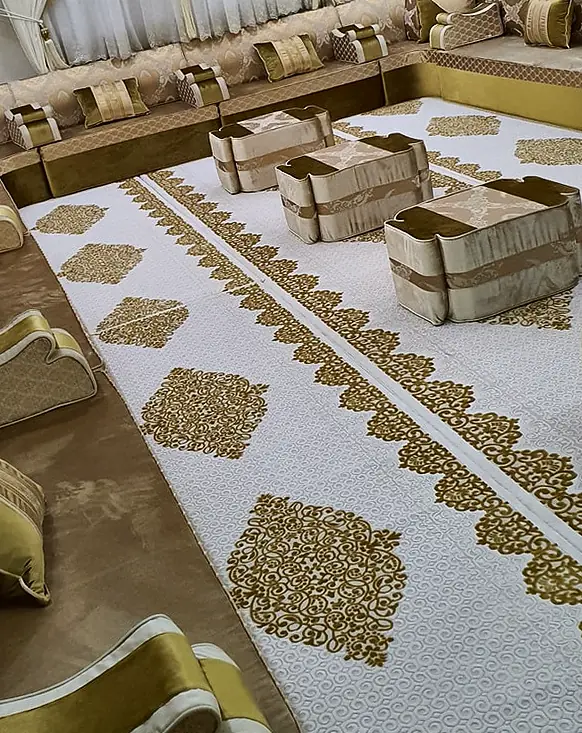
Which seats stay comfortable at one in the morning?
I would give the oldest guests the tallest seats in the room. A raised majlis at 16 in (40 cm) sits about as high as a regular sofa, which makes it the easiest seat to leave after a late meal. A classic 4 in (10 cm) to 8 in (20 cm) floor seat is lovely for a short call and tiring at hour three.
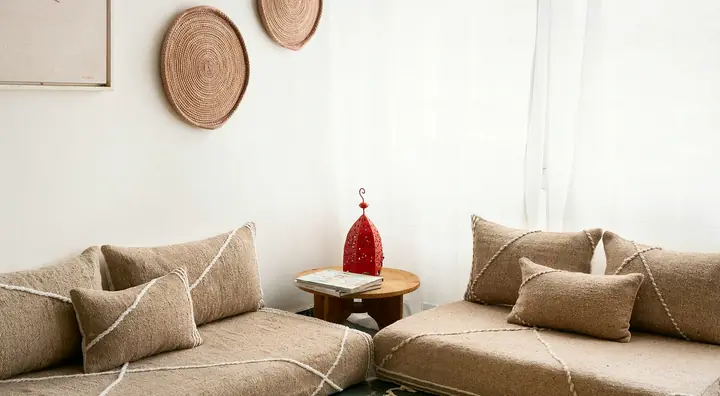
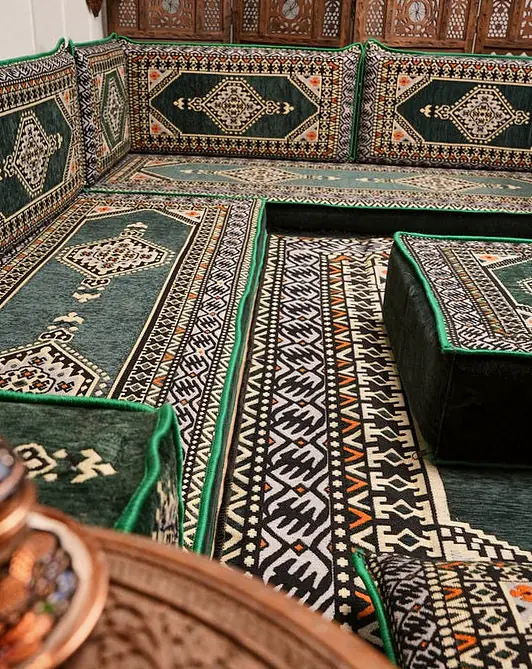
Underfoot, the matching rug is a flat-woven kilim style rather than a deep-pile carpet, which suits a floor that carries trays and glasses.
How many guests can the room hold, and where do the low tables go?
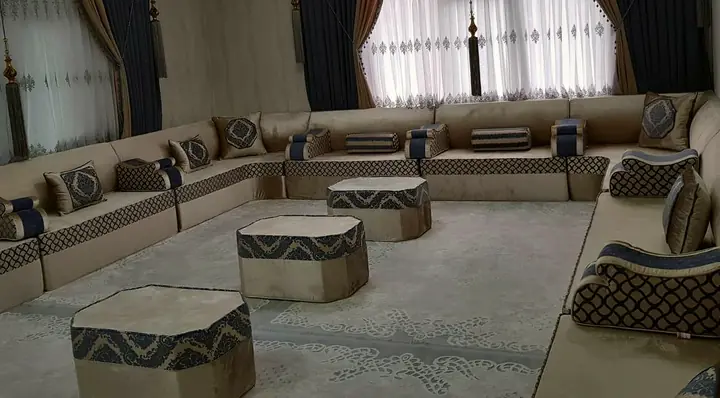
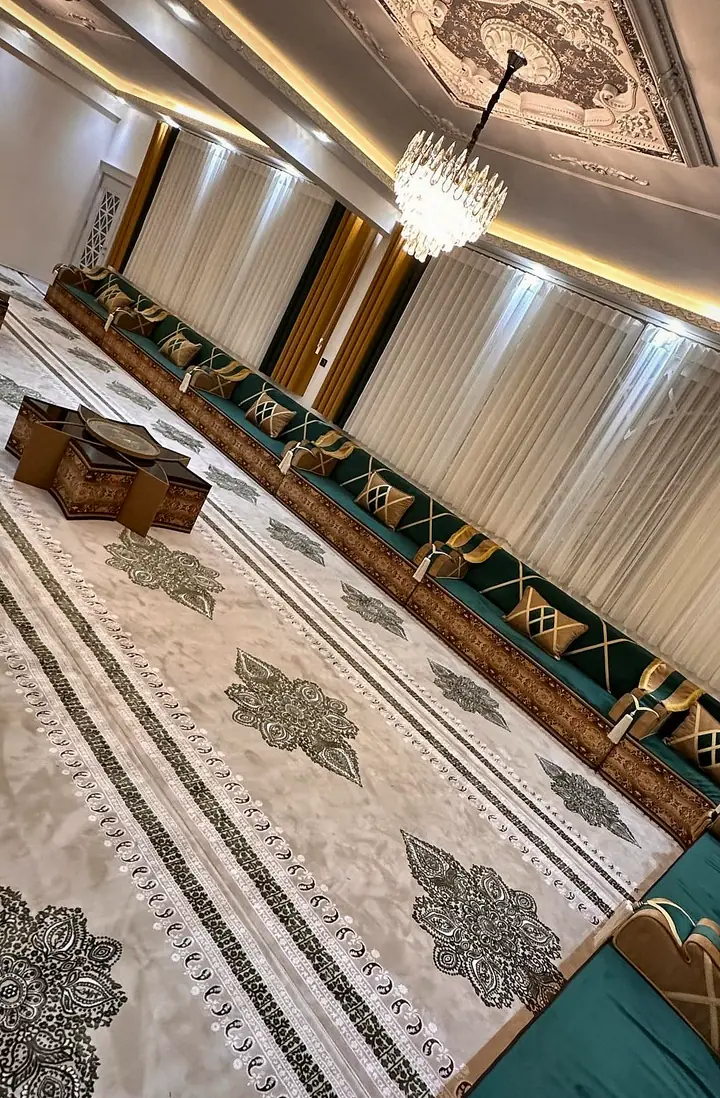
Plan a ghabga with the comfortable number, not the squeeze number. Shoulder to shoulder works for a short call, but nobody wants to sit that way from eleven until two. One 75 in (190 cm) cushion takes two to three adults, so the layout follows the guest list.
| Guests | Layout that fits | Seat cushions | Seating length |
|---|---|---|---|
| Two to three | One wall | One | 75 in (190 cm) |
| Five to six | L-shape | Two | 150 in (380 cm) |
| Eight to nine | U-shape | Three | 224 in (570 cm) |
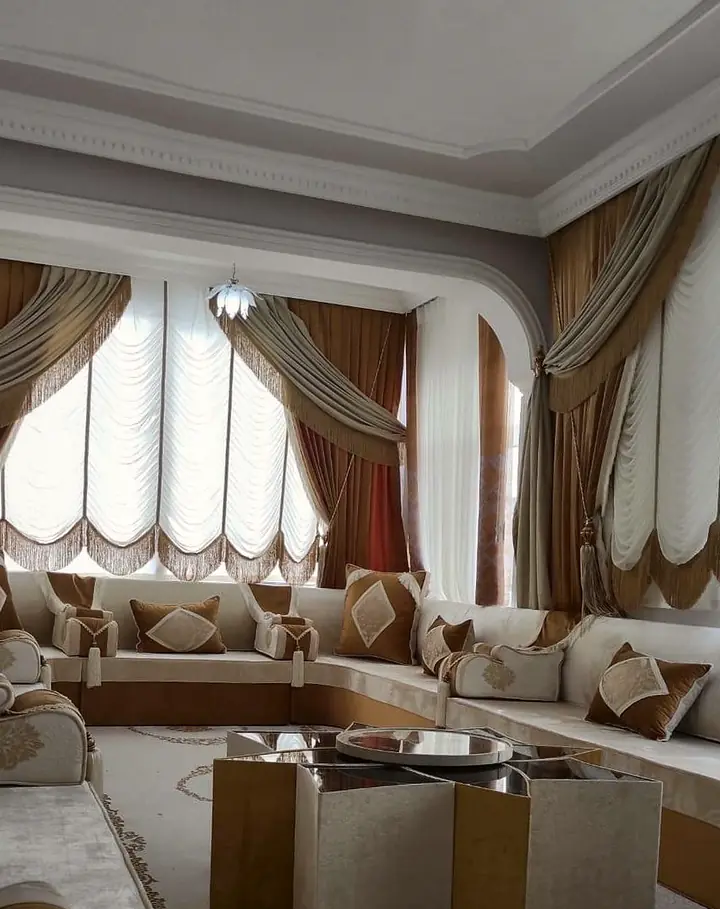
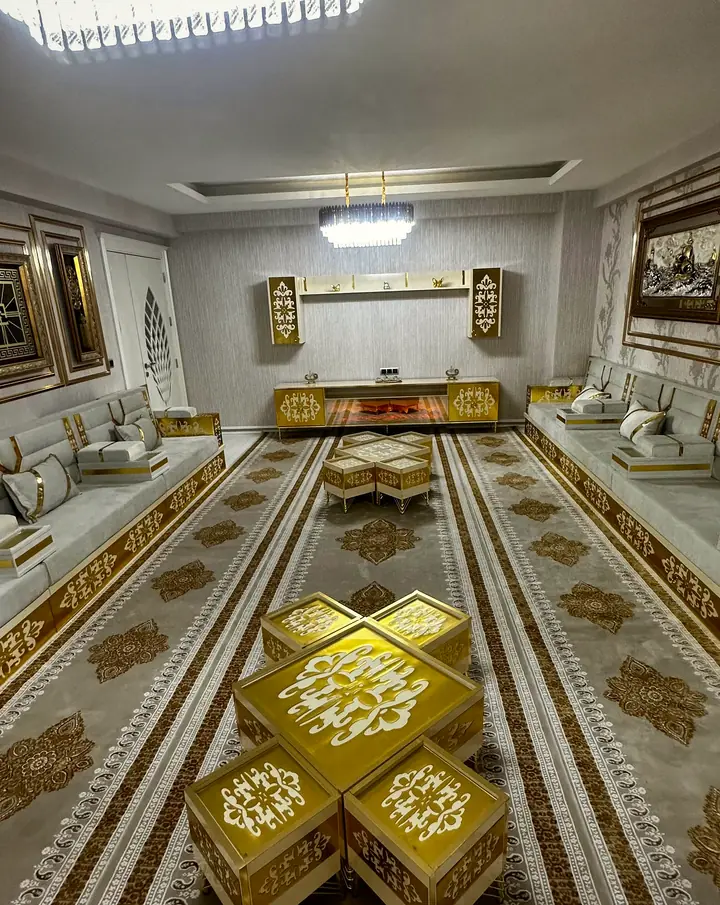
A gap at the end of a wall is not wasted. It is where a low table can sit, as this household found.
What is Garangao, and how should the room greet a knock at the door?
On the 14th night of Ramadan, Gulf children celebrate Garangao by going from house to house, singing and collecting bags of nuts and sweets, according to Visit Qatar.
Garangao is a quick welcome rather than a long sit, so the action stays at the entrance. Keep a gap of about 35.5 in (90 cm) clear there and leave the main seating undisturbed. I would put the bowl of sweets on a table by the door, not on the cushions. Hosts furnishing a room for these nights can start from our Arabic majlis sets, planned around the walls of the room.
What changes if the night moves to the terrace or garden?
Our regular upholstery fabrics are made for indoor rooms. For terraces we use a water-repellent outdoor fabric, mostly in plain colors, so say early if part of the evening will be outside. Water-repellent is no reason to leave cushions out overnight, so carry them in when the night ends.
When should the order go in for a majlis meant for the first ghabga?
Planning around Ramadan, Eid or a wedding? Tell us your date when you ask for a quote and we'll confirm what's achievable. Production time depends on your layout and the season — ask us for the current schedule.
Tell the team the date of the first gathering when you request a quote, along with the wall lengths and the number of guests you plan to seat. The schedule is checked against that date before the design details are settled.
Frequently asked questions
How is ghabga spelled, and where does the word come from?
Both ghabga and ghabqa are used in English. The word is said to be linked to an old Arabic term, ghabouk, meaning eating late at night, which suits a gathering that begins once iftar and prayers are behind the household.
What should a host set out before a ghabga begins?
Put out the tea, the low tables and the backrests first, since those decide comfort for hours. Then plan for harees, thareed and luqaimat to arrive in turn, and keep the way from the kitchen clear so the plates reach the middle of the room.
Do all Gulf countries keep the ghabga?
The ghabga is often described as a long-standing Kuwaiti custom that spread to other Gulf countries. Doha News links Qatar’s recognition of the Ramadan ghabqa with its national inventory of intangible heritage.