Where does the word fanous come from?
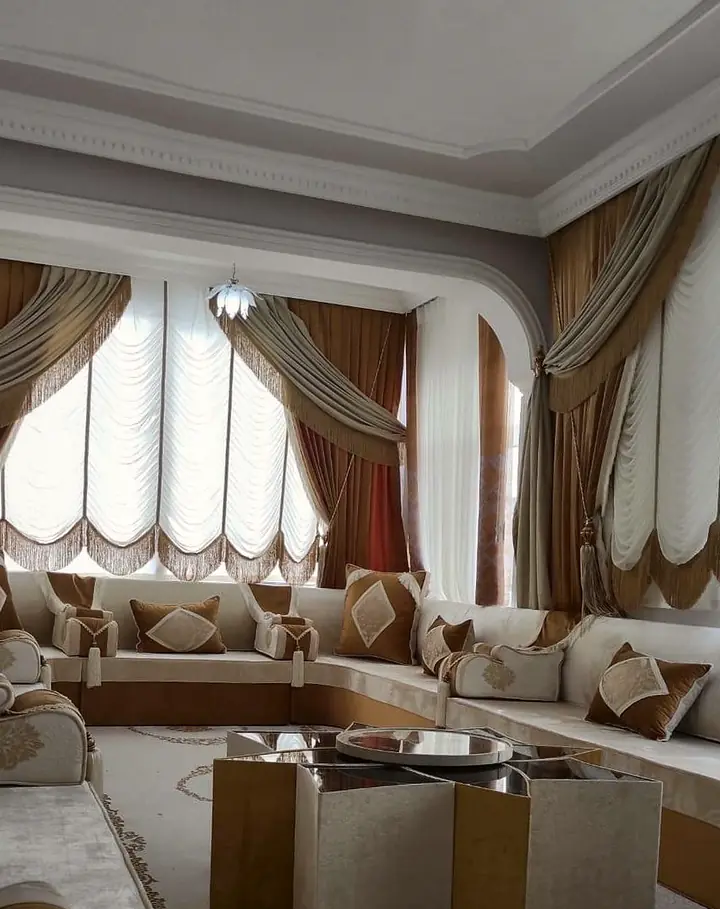
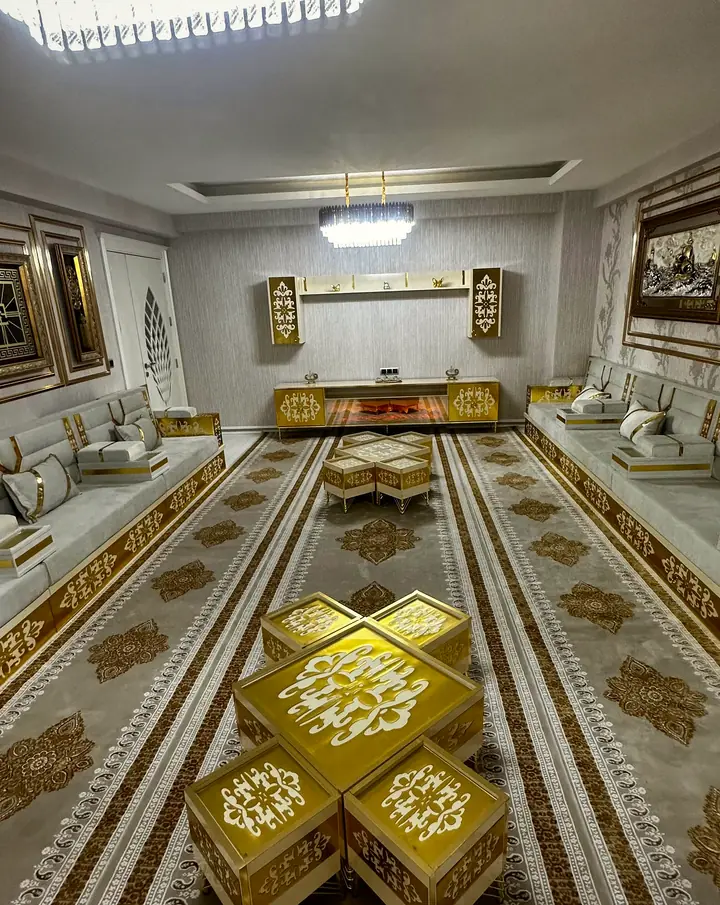
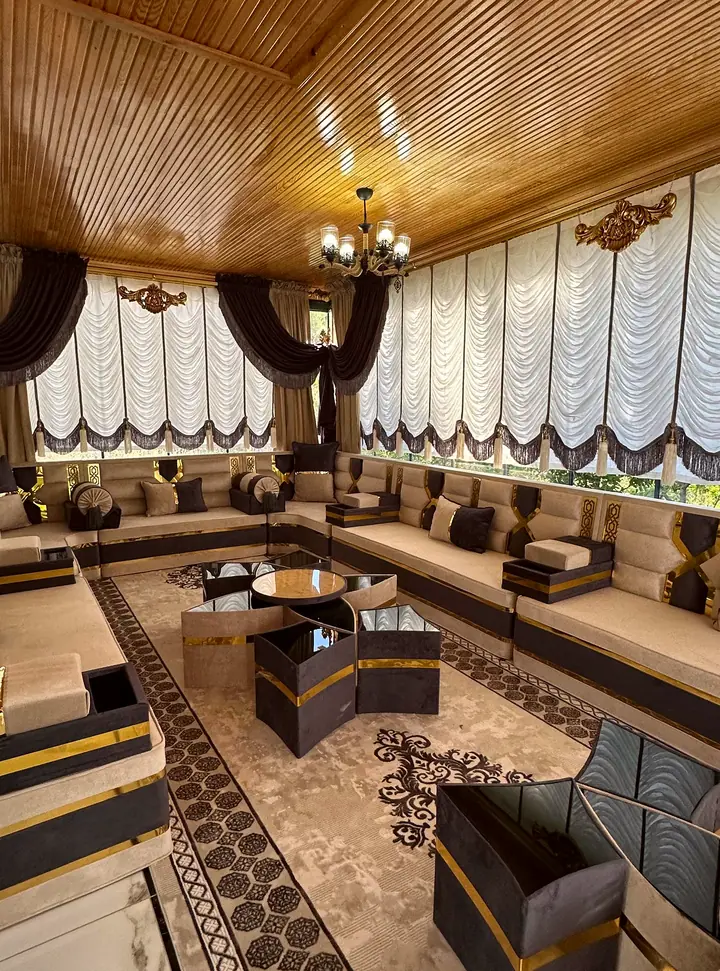
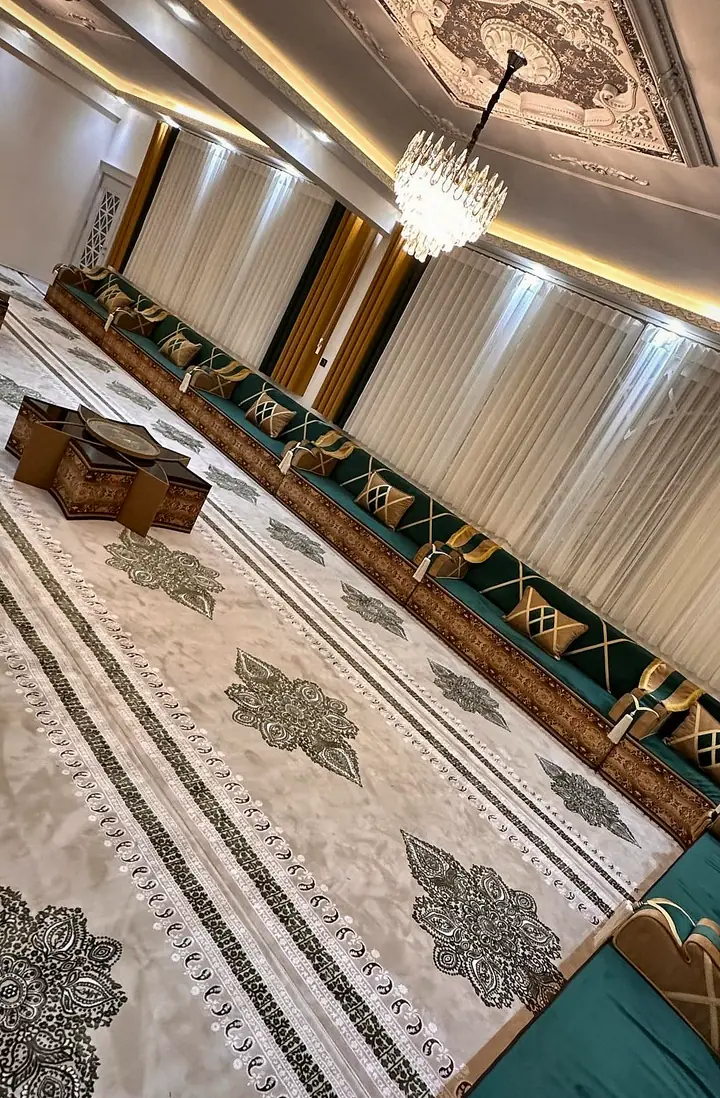
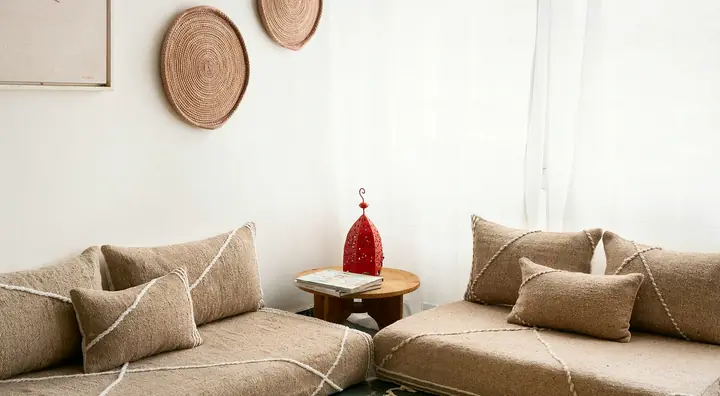
Fanous (a lantern, and above all the Ramadan lantern of Egypt) is usually traced to the Greek phanós, meaning light or lantern. The word covers lanterns of every size, from small ones for a shelf to large ones hung over streets and squares, but the classic form is a metal frame set with colored glass. In a home it tends to end up in the room where guests are received, near the low seats of an Arabic majlis set.
From the atelier
Questions buyers ask
- What kind of table can hold a lantern beside floor seating?
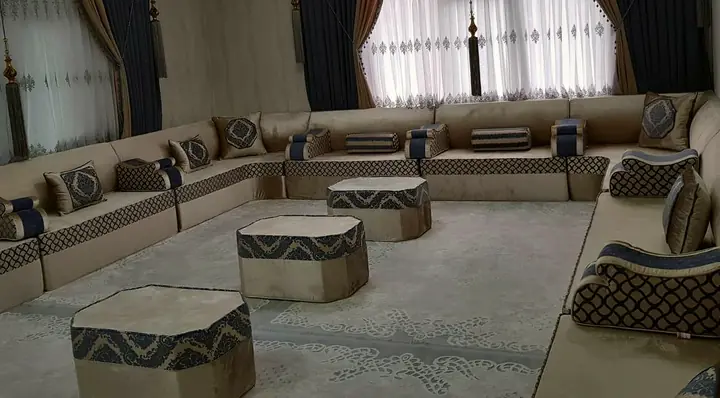
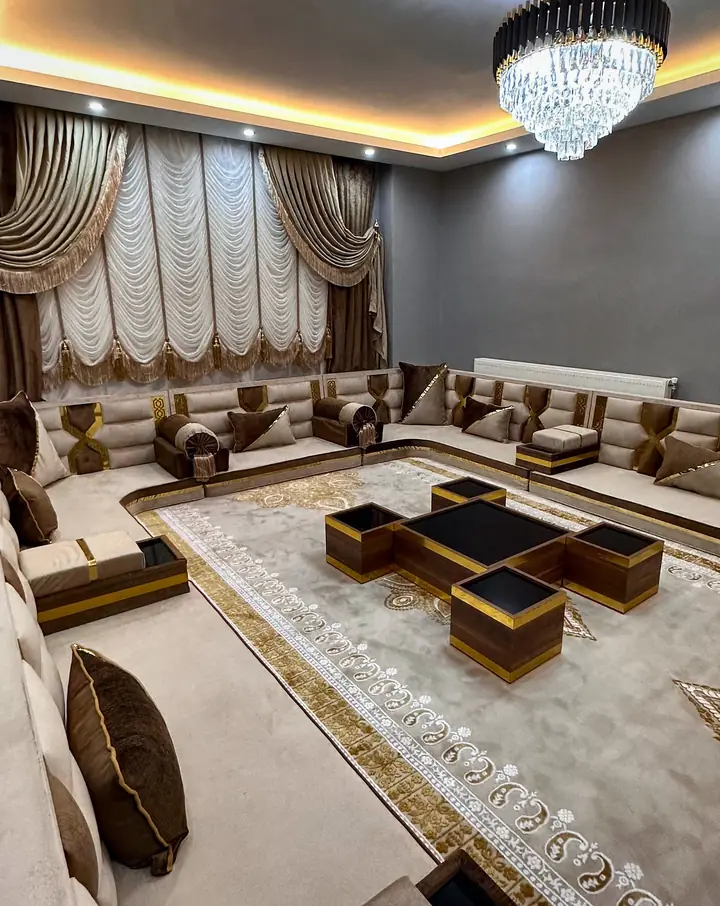
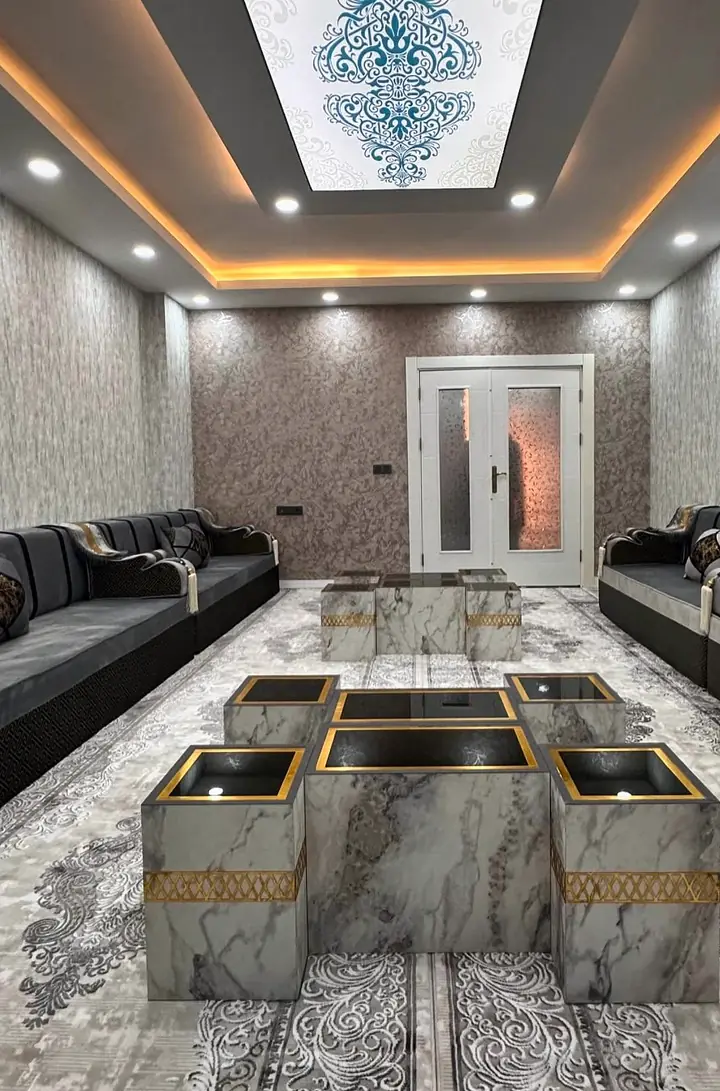
- A matching table set does the job: one large table with four small ones around it, or a nesting set of 5, 7 or 9 pieces in a star, round or square shape. A small table at the end of a seat run lifts the lantern clear of the cushions, while the large one keeps trays within reach.
- Can a worn majlis be refreshed with new covers before Ramadan?
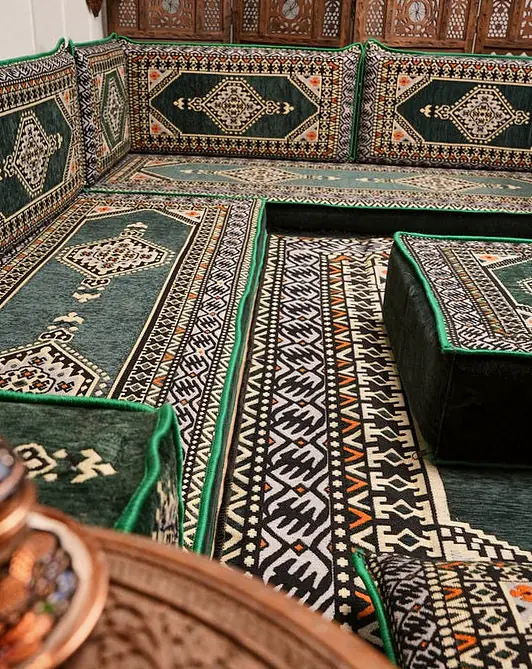
- New covers can be made on their own, without foam, to give a set a fresh color while the filling stays. Measure the length, depth and height of every seat, backrest and armrest, add a photo of each, and ask us for the current schedule well before the month begins.
How much of the Fatimid lantern story is legend?
The tale most often told sets the scene in Fatimid Cairo in the tenth century. Residents went out with lanterns to light the way for the caliph as he entered the city during Ramadan, and the lanterns stayed long after the welcome was over. Retellings add details that change from one teller to the next, and the story is best read as a cherished tradition rather than a documented event. I like that a city chose light as its way of saying welcome.
What the story does capture is how firmly Cairo tied the lantern to the month, a link its lantern makers have kept alive for generations. Customs of this kind, where a household object carries a city's memory, run through the Atelier Journal.
The Islamic calendar runs about 10 to 11 days shorter than the solar year, so Ramadan lanterns come out earlier each year.
What were the first lanterns made of, and how did they glow?
Accounts of the craft describe tin frames and panes of colored glass, with a candle or a little oil burning inside, and later craftsmen cut and punched the metal into lace-like patterns. Lit from within, a pierced lantern throws its pattern across the walls and ceiling, so a single fanous can change the feel of a whole room. Many lanterns made for homes keep the shape and the colored glass but swap the flame for an electric bulb or a battery candle.
How did the street lantern move into living rooms?
From Egypt the custom spread to many Muslim countries, and during the month lanterns decorate houses, restaurants, hotels and shopping malls, while some cities string them across squares and streets. In family homes the lantern moves indoors with the guests, onto a side table or a shelf above the seats, where it marks the month as clearly as the calendar does. For families abroad, a lantern unpacked from its box is often the first sign that Ramadan is close, well before the first iftar guests ring the bell.
Why does lantern season arrive earlier every year?
The Islamic calendar follows twelve lunar months and runs about 10 to 11 days shorter than the solar year. Ramadan, and the lantern season with it, therefore moves earlier through the Gregorian calendar from one year to the next. Over the years the month passes through summer, autumn, winter and spring in turn, which is why one family remembers lanterns on warm evenings and another on cold nights. The setting up stays the same even as the dates move, and many families bring the lantern out a few days before the month begins.
Candle or flameless light beside cushions and curtains?
The National Fire Protection Association (NFPA) reports that three of every five home candle fires start when something that can burn, such as furniture, bedding, curtains or decorations, is too close to the flame. A majlis brings all of those down to floor level, within reach of a lantern set beside the seats. NFPA guidance comes down to distance and attention: a flame needs at least 12 in (30 cm) of clear space from anything that can burn, and it should never be left alone in a room. A flameless candle settles the question for a long evening of guests.
Where does a lantern sit in a majlis room?
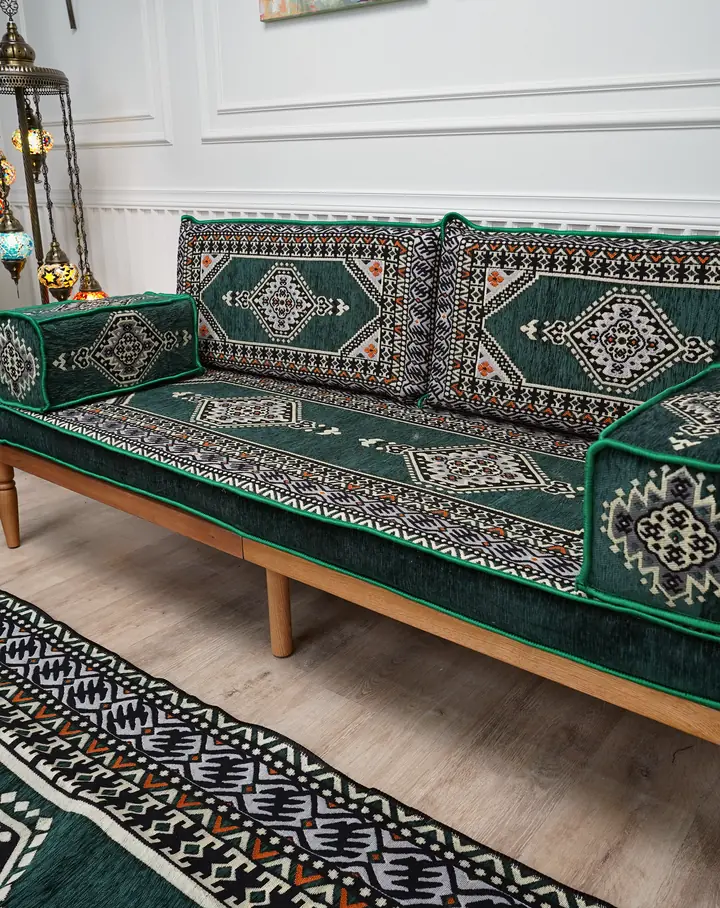
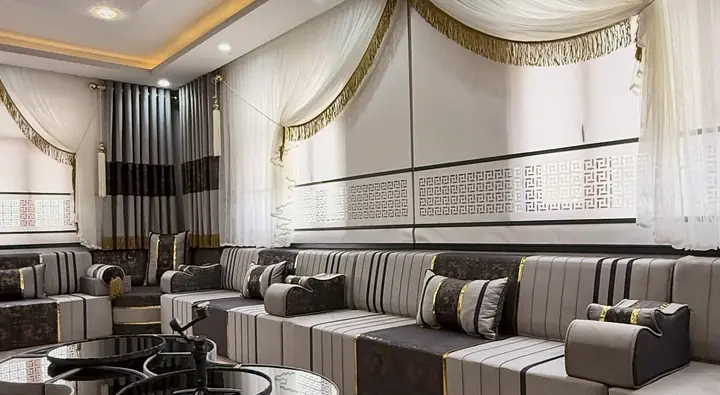
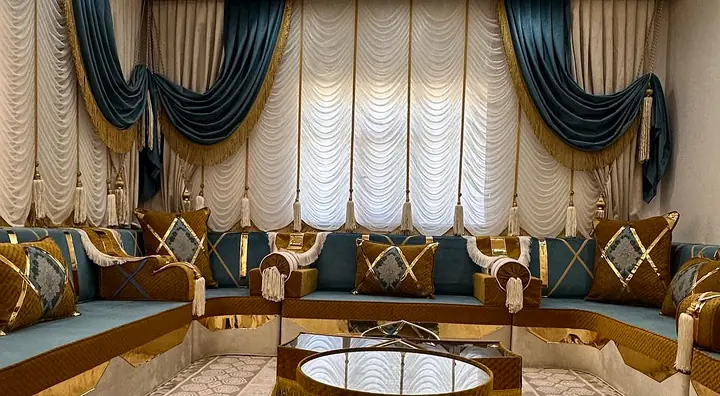
A lantern works best where every seat can see it without it sitting among the cushions. Backrests stand 16 in (40 cm) tall against the wall, and seats are made from 4 in (10 cm) to 16 in (40 cm) high. A lantern on a small table at the end of a run therefore sits above the cushion line and lights faces rather than knees.
- At the end of a run: a side table beside the armrest keeps the lantern off the seat and out of the walkway.
- In a corner: where two runs meet, a 23.5 × 16 × 4 in (60 × 40 × 10 cm) corner backrest fills the angle, and a shelf above it suits a lantern well.
- Away from fabric: a live flame stays at least 12 in (30 cm) from cushions, curtains and the rug, or a battery candle takes its place.
- Above the seats: on a wall shelf higher than the backrests, the pierced pattern spreads across the ceiling.

Our Moroccan-style covers are handmade in Morocco from cotton and travel separately from their foam inserts, and low Moroccan floor couches and their sizes shows the full range. To pair a red lantern with seating, rug and curtains, see color pairings for a majlis room.
When the last guest leaves after suhoor, the lantern is often the final light left on in the house. Eid mornings start early, and the majlis is the first room to fill.
Frequently asked questions
What is the plural of fanous?
In Arabic, one lantern is a fanous and several are fawanees. English spellings vary as well, so fanoos, fanus and fanous all appear for the same Ramadan lantern, depending on who is writing.
Is it safe to light a real candle inside a fanous?
It can be done with care, but NFPA advice is to give any candle at least 12 in (30 cm) of space from things that can burn and never to leave it alone. Beside floor cushions and curtains, a battery candle inside the lantern gives the same glow with far less to watch.
When should the Ramadan lantern go up?
Ramadan begins on a different date each year, because the Islamic calendar runs about 10 to 11 days shorter than the solar year. Check the expected start of the month and set the lantern out a few days ahead, as many families do.