What is a majlis color combination made of?
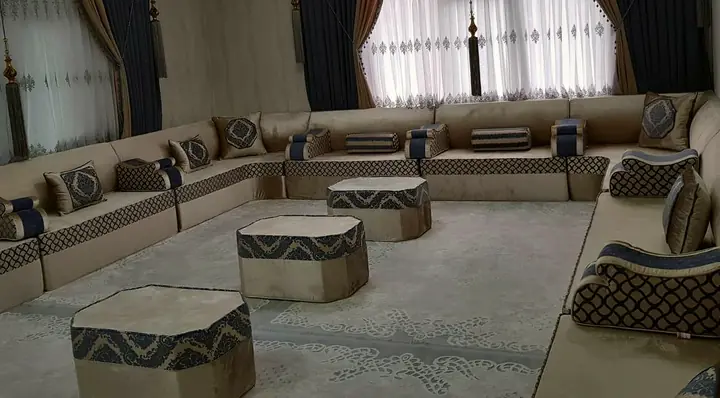
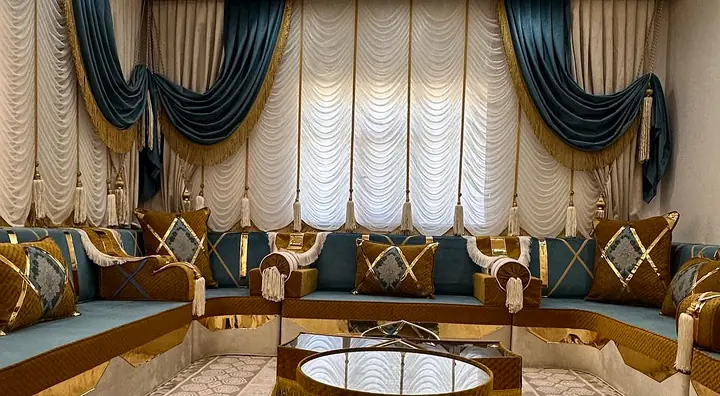
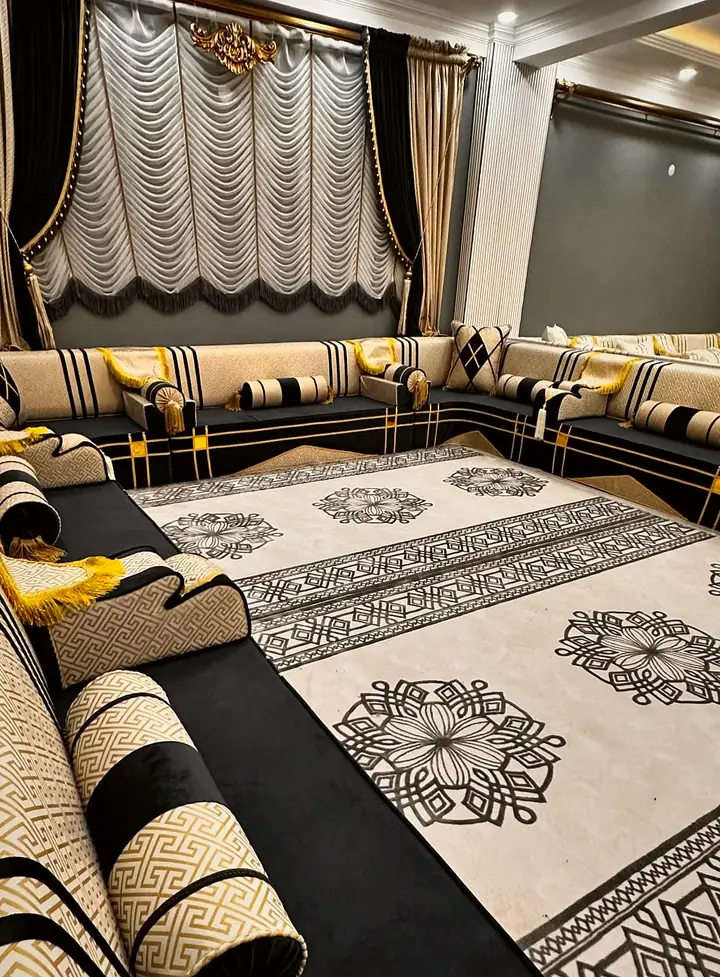
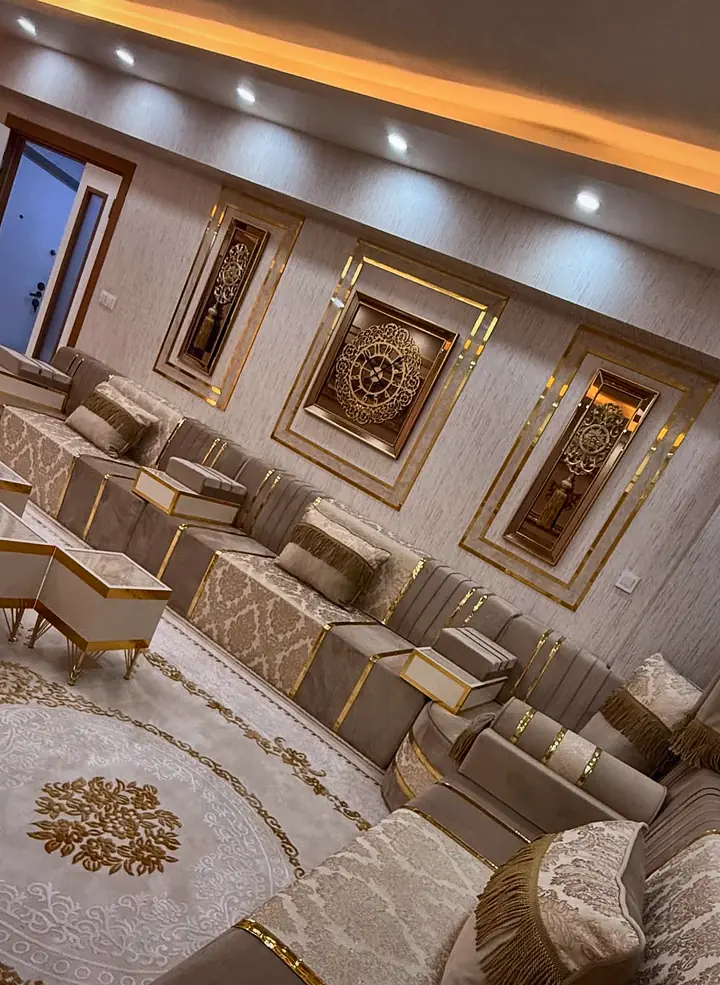
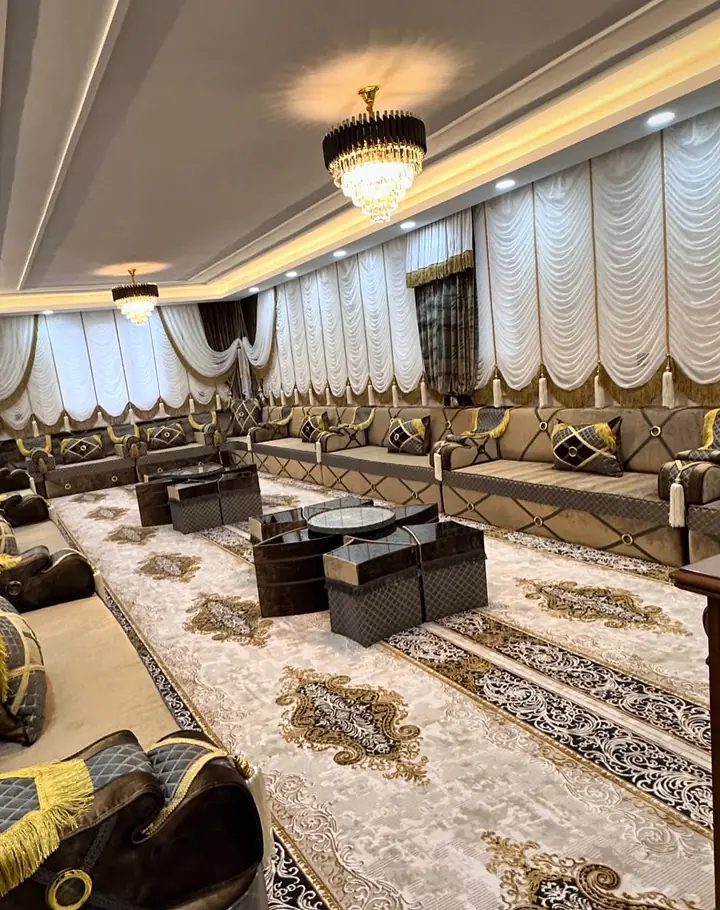
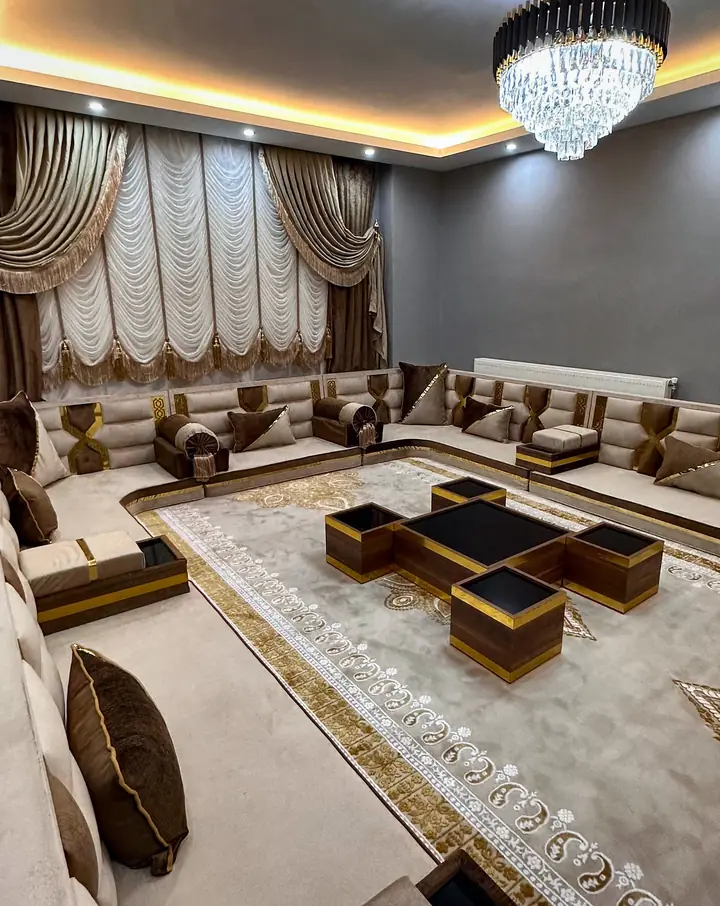
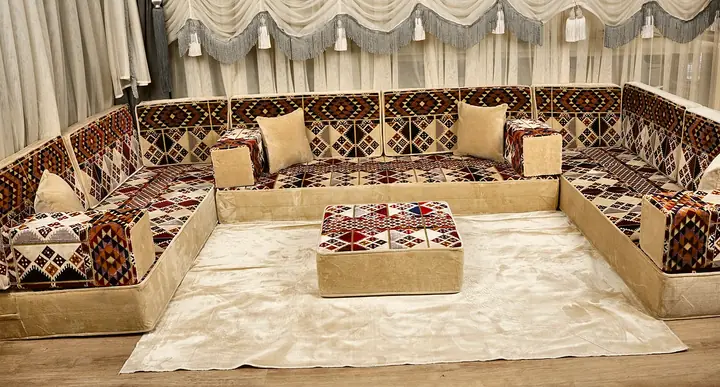
A majlis color combination is two decisions, not one. The base covers the large surfaces, and the accent runs through piping, trim or a pattern band. Gold accents are optional on most models, and solid colors are picked by number from the fabric color card. I start with what the room already owns: the floor, the rug and the curtains. The other majlis planning guides cover measuring and layouts.
From the atelier
Questions buyers ask
- Can a two-tone majlis have seats in one color and backrests in another?
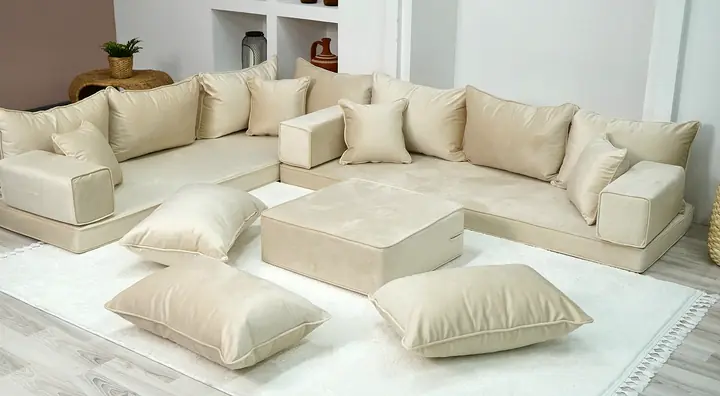
- Two-tone sets are a regular request, and plain fabrics such as velvet show the split most cleanly: one color on the seats and another on the backrests, floor pillows in a contrast shade, or a swapped accent at the center of a patterned backrest. List each color by its card number together with the parts it covers, down to the armrests, piping and ottoman.
- Can the designers suggest a color scheme if I am unsure what suits my room?
- Color suggestions are part of the design help. Share a photo that shows the wall color and the flooring, and the designers propose palettes that fit the space, such as maroon with white, muted teal, or dark green with gray. Ask us for a design consultation — we can talk through your room on a video call.
In what order should majlis colors be chosen?
- Photograph the room in daylight and again under its evening lamps.
- Decide what leads the room: the rug, the walls or the seating.
- Choose one base color for the seats and backrests and note its color card number.
- Choose one accent for piping, trim or the pattern band, or leave the accent off.
- Mark on a photo of the model which parts take the base and which take the accent.
- Repeat the base or the accent in the curtains instead of adding a third color.
- Hold the shortlisted swatches against the rug and the curtains in daylight.
- Confirm every fabric code before production starts.
A shade that pleases on a screen at noon can look heavy under lamps at night. Ask us about fabric swatches and a foam sample before you order.
Seven color slips are hard to undo once fabric is cut, and the most common is choosing navy or maroon from a sunny phone photo.
Which base and accent pairings suit a majlis room?
I judge a pairing on an ordinary weeknight, with guests over and the lamps on, rather than in a bright product photo. Each base below has partners that keep it from feeling heavy.
| Base color | Accent that suits it | Rug and curtains | Watch for |
|---|---|---|---|
| Navy blue | Gold, cream or silver | Cream or ivory rug, cream curtains | Reads almost black at night, so check it in daylight |
| Maroon | Beige, white or gold | Cream rug, or one with a deep red ground | Can look bright red in phone photos; order it by number |
| Deep green | Gray or cream | Sand or gray rug, sage or cream curtains | Sits calmly beside warm wood floors |
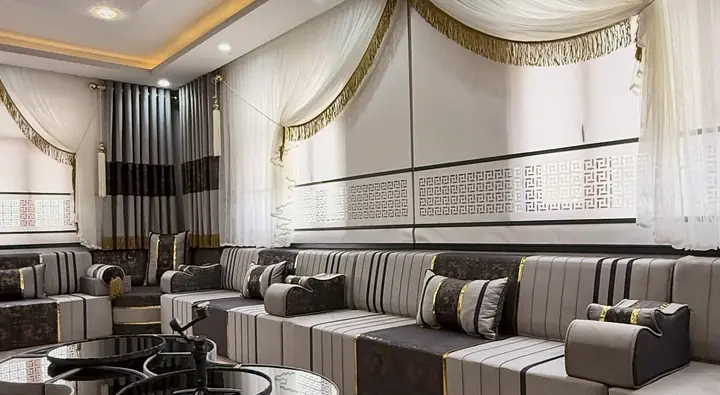
| Gray | Silver for a cool look, gold for warmth | A patterned rug with a gray ground | Plain gray lets a busy rug lead |
| Beige or cream | Brown, gold or a kilim-style pattern | A busy patterned rug can take the lead | Very light shades show dirt quickly |
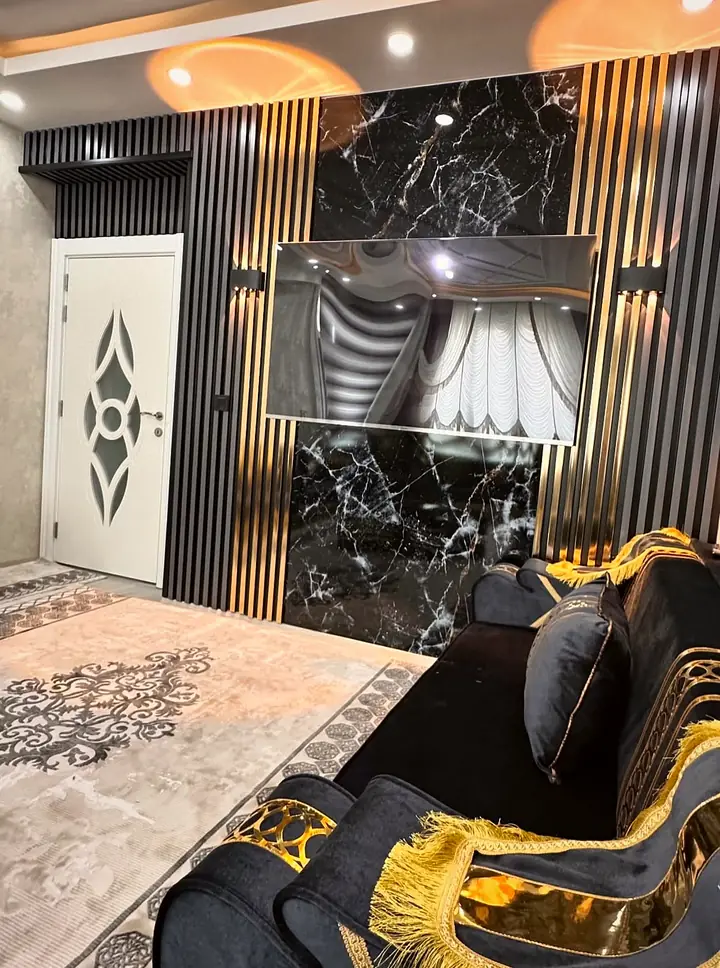
| Black in plain velvet | Gold or silver trim | A light rug keeps the room open | Some patterned designs are not woven in true black |
| Muted teal or sage | Cream and gold | Seating, curtains and rug can share the sage | Keep the accent to one metal |
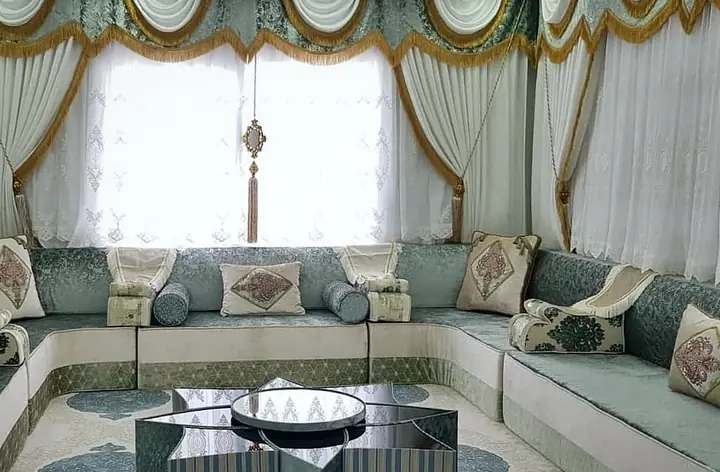
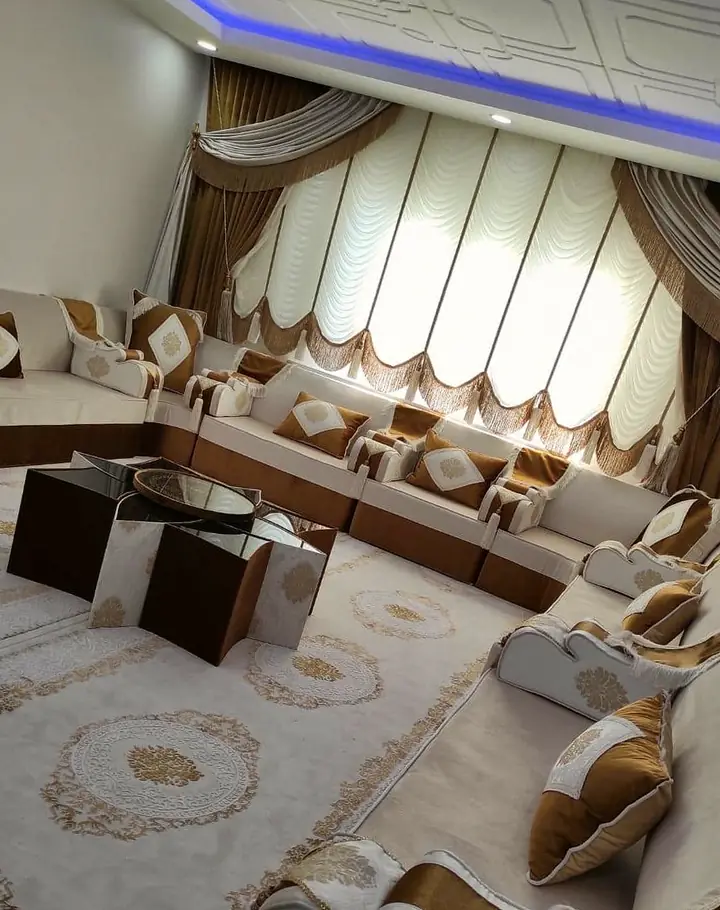
Gold trim is the mark of royal majlis designs. Plain velvet with no accent at all suits modern majlis designs, where the shape does the talking.
How do two colors divide across an L-shaped set of 14 pieces?
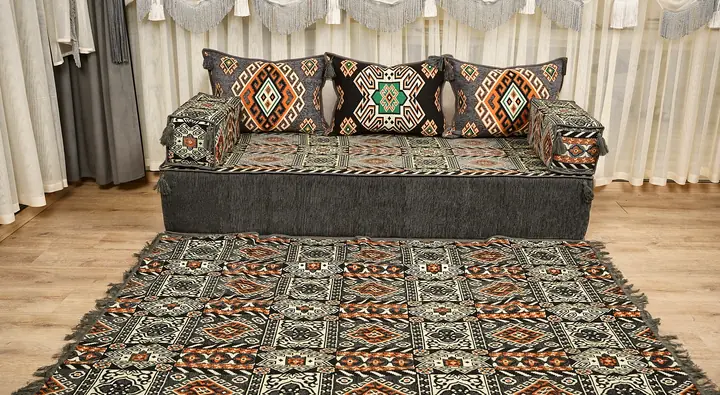
For an ordinary patterned, kilim or Afghan full L package, take the standard example with 4 in (10 cm) seats: two 75 × 27.5 in (190 × 70 cm) seat cushions, four 37.5 × 16 × 4 in (95 × 40 × 10 cm) backrests, one 23.5 × 16 × 4 in (60 × 40 × 10 cm) corner backrest, two 19.5 × 8 × 8 in (50 × 20 × 20 cm) armrests, three 27.5 × 19.5 in (70 × 50 cm) pouf pillows, an ottoman of 23.5 × 23.5 × 8 in (60 × 60 × 20 cm) and a rug. The seats and armrests carry the base, because they cover the floor plane and the open ends. The backrests and the corner piece stand 16 in (40 cm) tall against the wall, so the accent or the pattern sits at eye level. This 14-piece example does not apply to every family: Ember, Shami and Bursa, velvet, linen and Moroccan packages have separate piece lists.
A seat about 27.5 in (70 cm) deep is the largest single block of color in the room, and at 8 in (20 cm) its side panel shows twice as much base as at 4 in (10 cm). Reverse the split, with patterned seats and plain backrests, when the floor is plain and the room needs pattern lower down. The three pouf pillows take a third note most easily, since new covers for them can be ordered later. Ask us whether a matching rug is included with your set. Its colors can repeat the base, the accent or neither. Our page on Arabic majlis sofa sets lists the pieces in each layout.
Which rooms and lights call for a lighter or darker pairing?
The same fabric changes with the room around it.
| Room or situation | What happens to color | Pairing that holds up |
|---|---|---|
| Basement or room with little daylight | Deep navy and maroon can read almost black under lamps | A gray, beige, cream or soft blue base, with the dark color as the accent |
| Bright room with strong afternoon sun | Saturated shades on the sunny wall change first | Mid-tones or patterns, with curtains drawn at midday |
| Busy patterned rug already in place | Two patterns compete for attention | A plain seat in one of the rug's colors |
| Plain floor or wall-to-wall carpet | A plain set can look flat | Patterned seats, or a patterned band on the backrests |
| Home with young children or pets | Pale solids show every mark | Mid-tone and patterned fabrics, which hide everyday marks better |
| Covered terrace | Indoor fabrics are not made for outdoor use | Water-repellent outdoor fabric, mostly in plain colors |
On a terrace, choose a color you can live with in strong light, since the outdoor range is mostly plain. Water-repellent fabric buys you time to wipe, nothing more.
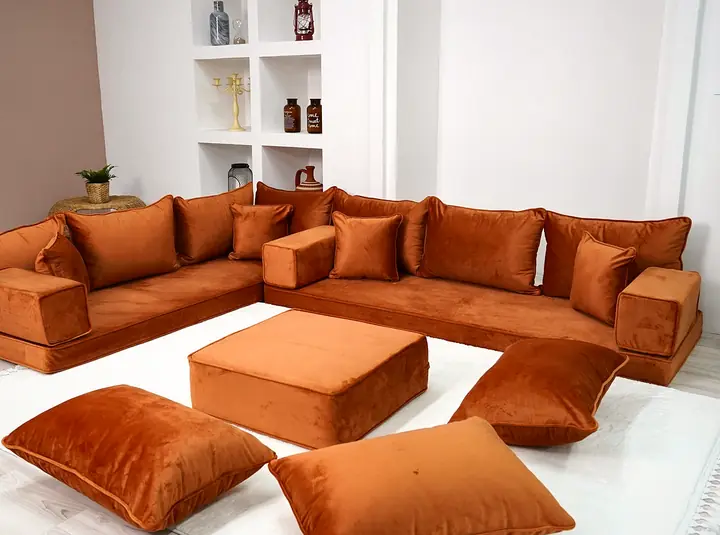
Which color slips are hardest to undo once the fabric is cut?
- Choosing navy or maroon from a phone photo taken in bright sun.
- Naming a shade in words, such as red or burgundy, instead of giving its card number.
- Matching the seats to a photo of the rug rather than to the rug itself in daylight.
- Pairing a busy patterned seat with an equally busy rug.
- Expecting true black in a patterned range that is not woven in it.
- Choosing white seats for a room with small children and daily guests.
- Listing colors for the seats and backrests but forgetting the armrests, pillows and ottoman.
Which photos and numbers bring the best color suggestions?
Five things settle most color questions in one exchange.
| What to send | Why it helps |
|---|---|
| A daylight photo of the room | Shows wall color, flooring and window light together |
| A photo under evening lamps | Shows how dark shades behave at night |
| A close photo of the rug | Lets the designer pick up one of its colors or contrast with it |
| A photo of the model, marked by part | Settles which pieces take the base and which take the accent |
| Card numbers of your shortlisted shades | Avoids mix-ups between close colors such as maroon and red |
Frequently asked questions
Can the seat band use a different shade from the seating surface?
Side-band and trim choices should be named separately on the specification. Compare the available fabric references and ask the team to show the proposed contrast on the drawing, rather than assuming the entire seat uses the color of its top surface.
Where should I compare a fabric sample in the room?
Place the sample beside the surfaces that will surround the seating, including the wall and the chosen base finish. Check it in the room lighting and confirm its fabric code, because a screen photograph can make the same shade appear different.
What if the pattern I like is not offered in my color?
A woven or printed pattern exists only in the colorways its fabric is made in, so it rarely moves to a new color. When the shade you want is missing, plain velvet usually has it, and the pattern can stay on the backrests while the seats go plain.
Can a design I like be made in a deeper shade?
Most designs come in deeper tones, either as a darker colorway of the same pattern or as plain velvet in chocolate brown, navy or deep green. Shades can also be mixed within one set, such as chocolate seats under beige backrests. Pick each one by its card number so the order leaves no doubt.