Which fabric choices belong to which seating collection?
The collection determines which cloth belongs on the set. Ready-size patterned floor sofas usually use a cotton-polyester upholstery weave. Velvet and linen collections are separate choices. Turkish Majlis uses Turkish carpet-weave fabric on wooden frames, while Sedir Bench uses kilim-patterned cushions on pine benches. I compare the large covered surfaces before the small accents, because the seating will repeat that cloth around the room. Fabric selection sits alongside the other decisions in our majlis planning and buying references.
From the atelier
Questions buyers ask
- How many fabric and color options do you have to choose from, and is there a catalog?
- The numbered fabric card provides more choices than the photographed sets. Select a fabric code rather than treating the picture as a complete catalog. Plain shades can be selected from that card, while a particular patterned collection may have fewer colorways. We confirm which combinations belong to the model you have selected.
- I saw a color in one of your videos that isn't on the product page. Is it still available?
- A video can show a shade that has not been added to the product page. Send the screenshot with the model reference, and we check the actual cloth and its available colors. Thickness is a separate choice: confirm whether the intended model has the 4 in (10 cm) or 8 in (20 cm) seat before ordering.
How can you compare fabric texture without relying on a screen?
- Identify the seating model and its available fabric collection.
- Choose whether the main surfaces should be plain or patterned.
- Compare close views of the cloth with a complete view of the seat.
- Record the numbered shade from the fabric card.
- Check the cleaning instruction for the exact cover.
- Request confirmation of the fabric code on the final specification.
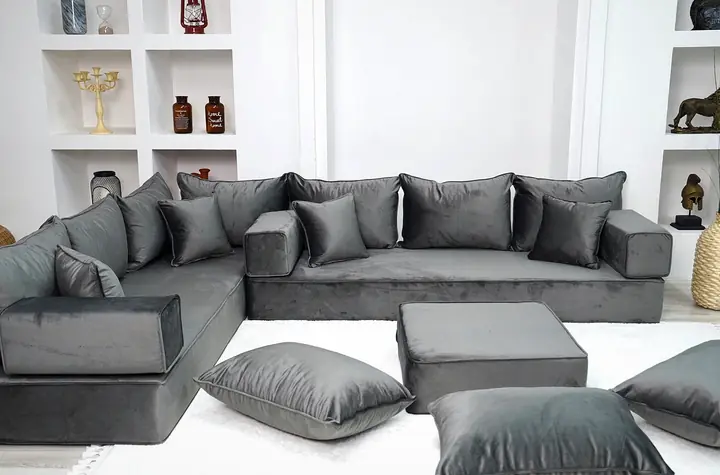
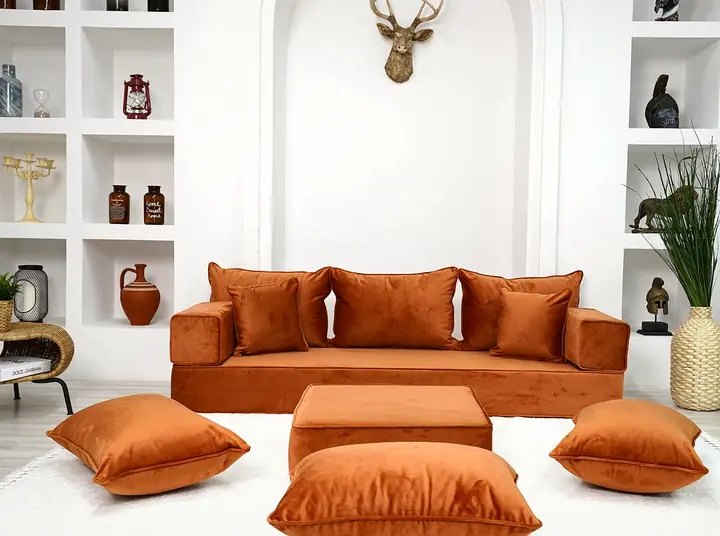
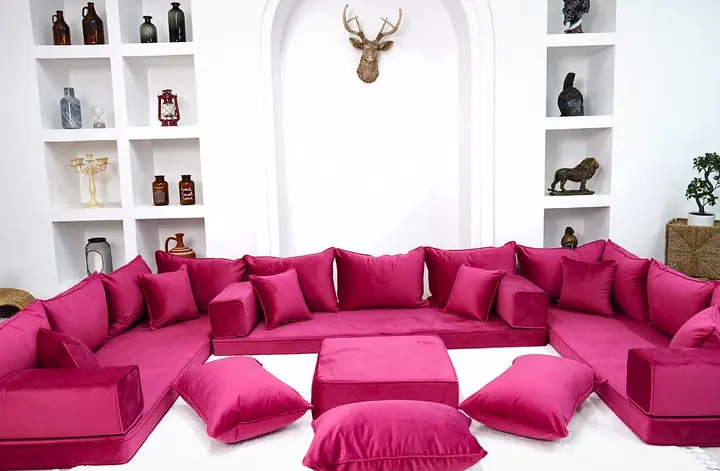
Texture, pattern and fiber content answer different questions. A cloth can look like linen without establishing that it is pure linen. A jacquard describes a patterned weave rather than an assured fiber recipe. For the soft pile option, the velvet floor sofa collection shows complete sets alongside their individual pieces. Do not treat a photograph as a composition label.
Fabric types and the size of the surfaces they cover
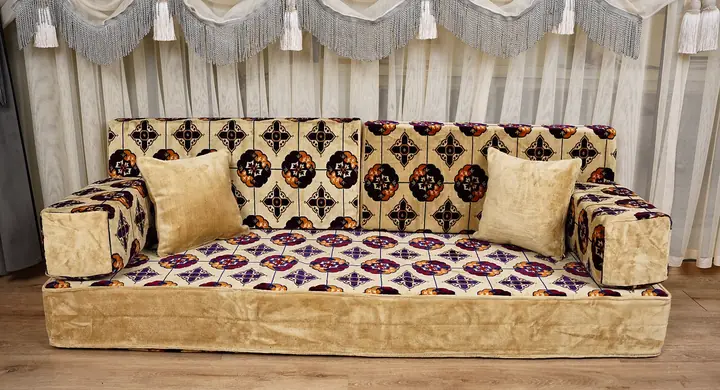
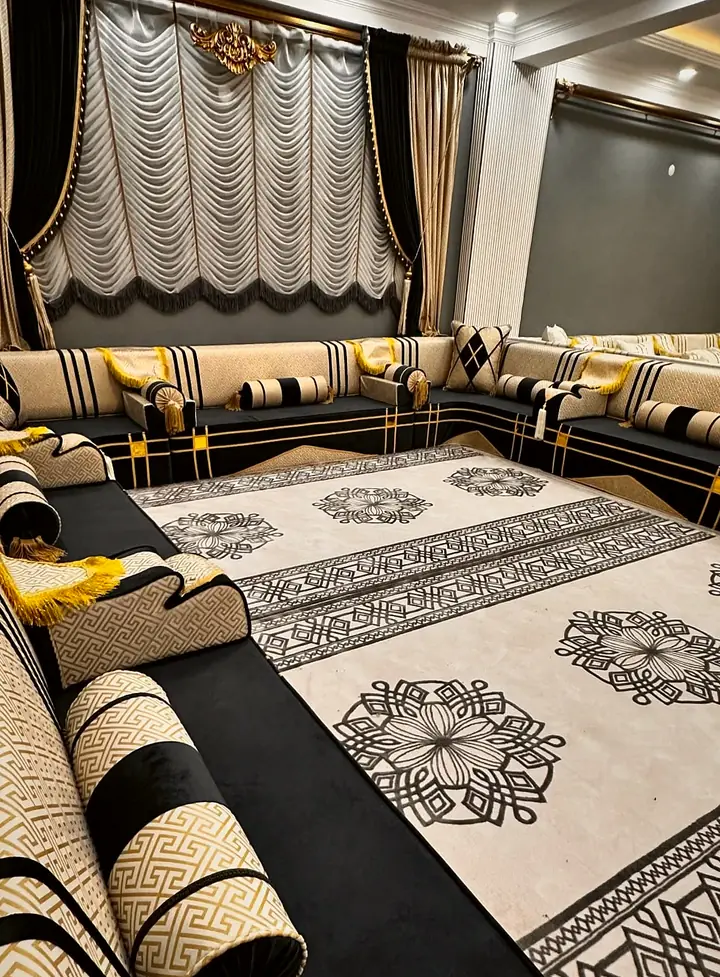
Velvet gives a pile surface, chenille is another textured upholstery choice, and linen-look cloth provides a different visual finish. Patterned weaves carry motifs across larger panels. I look for continuity between a seat and its backrests rather than ranking fabrics by an unsupported durability score. The dimensions below identify standard floor-sofa surfaces, not fabric quantities or a cutting instruction.
| Covered component | Standard size | What to compare |
|---|---|---|
| Floor seat footprint | 75 × 27.5 in (190 × 70 cm) | View the cloth over a broad surface, not only a small swatch |
| Standard low seat | 4 in (10 cm) thick | Check the side panel as well as the upper surface |
| Thicker floor seat | 75 × 27.5 × 8 in (190 × 70 × 20 cm) | Read the vertical fabric panel separately |
| L/U long backrest | 37.5 × 16 × 4 in (95 × 40 × 10 cm) | Look at the face and the edge finish |
| Corner backrest | 23.5 × 16 × 4 in (60 × 40 × 10 cm) | Compare the motif where two runs meet |
| Armrest bolster | 19.5 × 8 × 8 in (50 × 20 × 20 cm) | Check how the fabric covers the ends |
| Pouf pillow | 27.5 × 19.5 in (70 × 50 cm) | Treat its visible surface as an accent |
| Foam ottoman | 23.5 × 23.5 × 8 in (60 × 60 × 20 cm) | Compare the upper panel with the seating |
| Fabric roll width | 55 in (140 cm) | Ask about the amount needed for a separate fabric request |
What changes when plain seating meets a patterned rug?
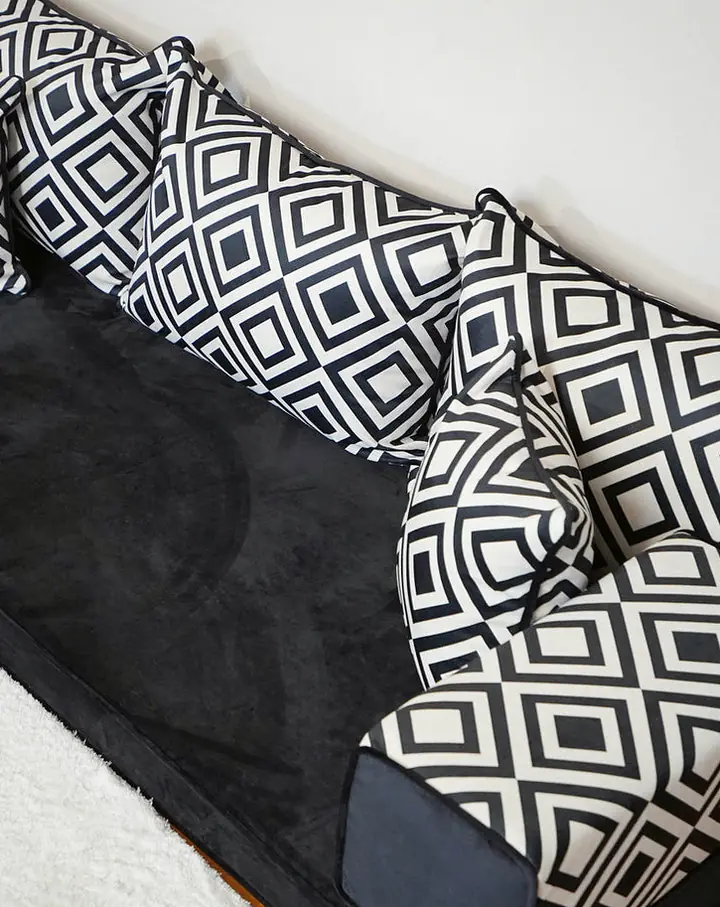
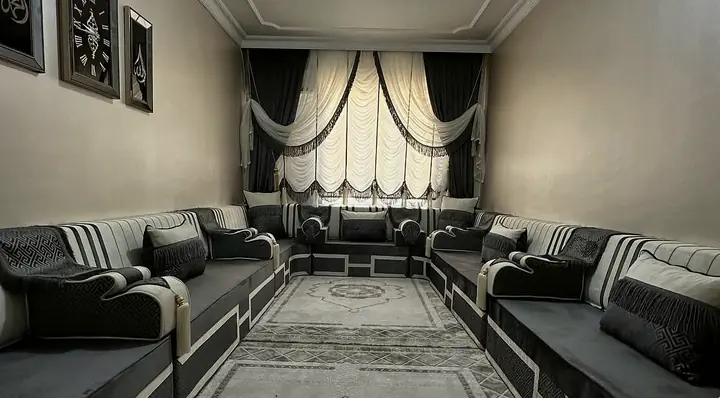
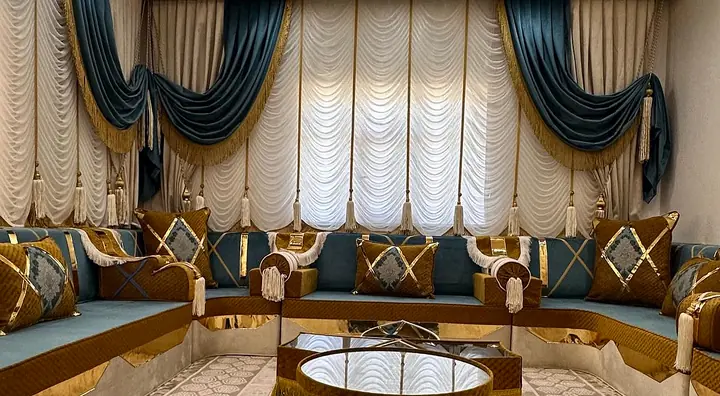
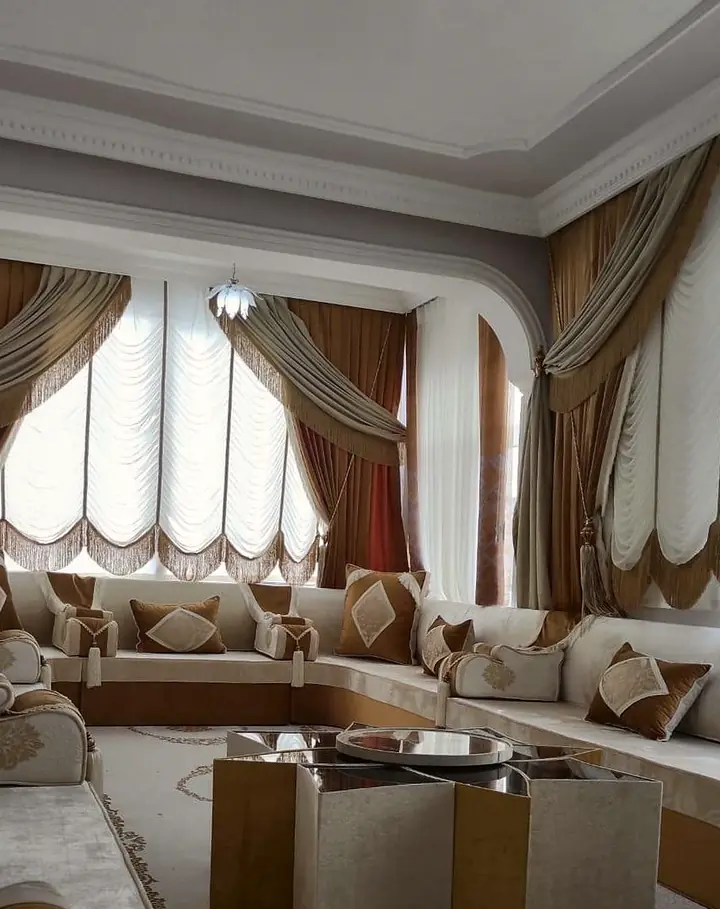
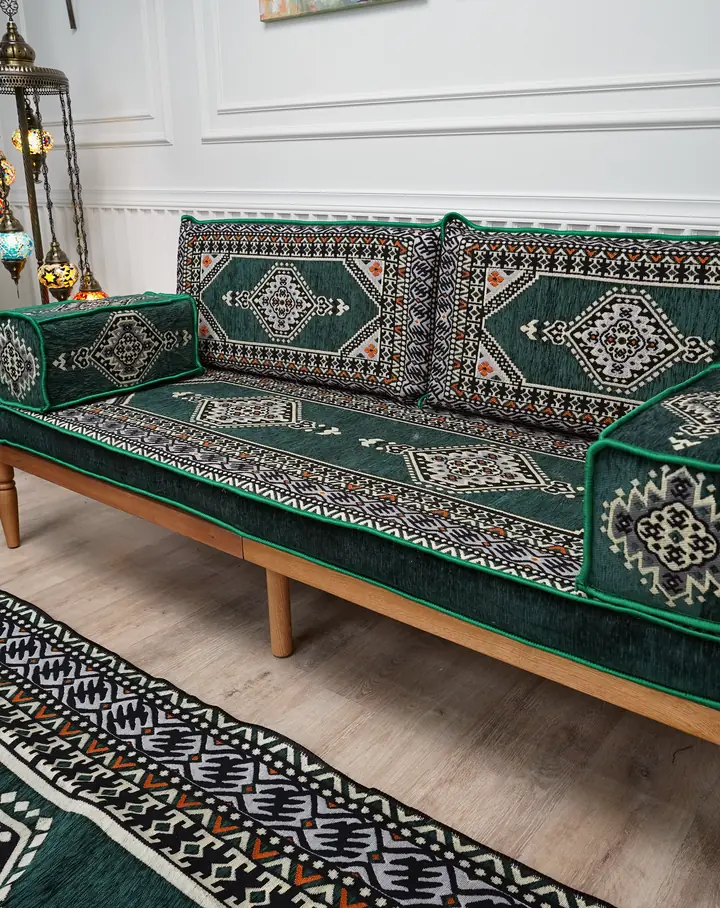
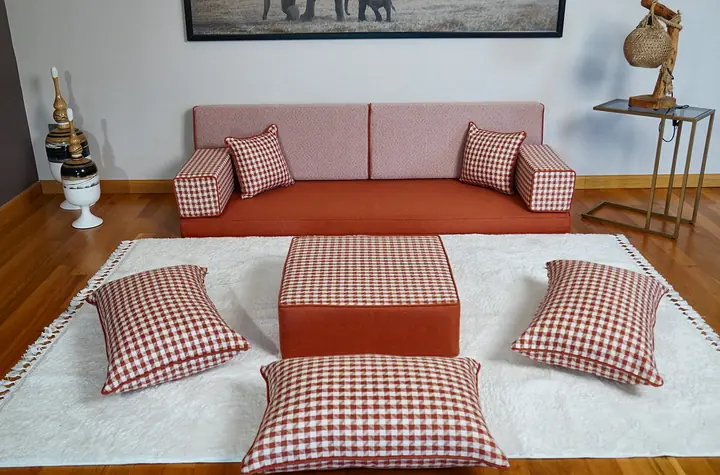
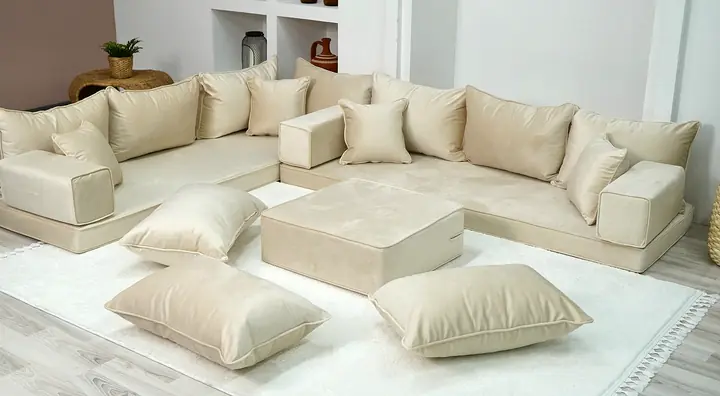
A plain set keeps the upholstery visually continuous, while a patterned set repeats its motifs on several pieces. In the cream room view, the seat, backrests and ottoman share a plain surface. The other photograph places geometric fabric on the backs, sides and accessories around plain seat tops. These are two photographed designs, not permission to combine cloth from separate collections.
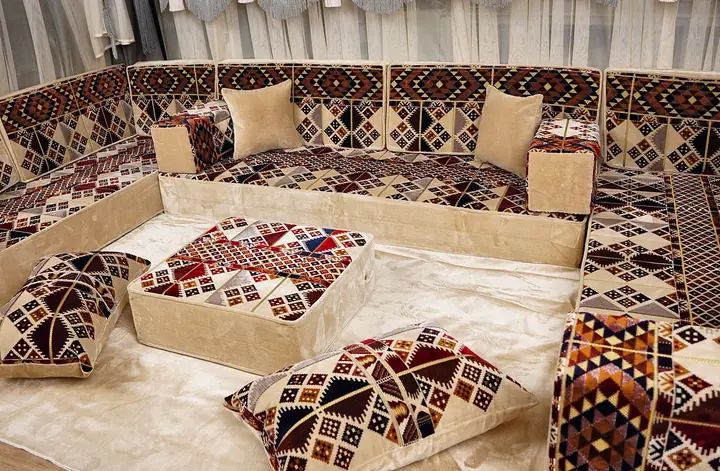
A 37.5 in (95 cm) half-length seat presents a shorter panel than a full 75 in (190 cm) module. Before choosing a large repeat for a shorter piece, ask how the cloth will be positioned on that model. A catalog photograph establishes the visible arrangement, while the specification establishes the fabric actually selected. Neither a color name nor a warm room photograph settles the final shade by itself.
Which fabric limits need confirmation for a family room?
| Question | Limit | Useful next check |
|---|---|---|
| Can different collections be mixed? | Fabrics are not mixed across collections | Select the collection first, then its fabric code |
| Will the cover suit children or pets? | Appearance alone does not establish a tested performance claim | Describe the daily use and ask about the exact cloth |
| Can the wooden line be washed the same way? | Cleaning needs a separate answer for that line | Ask how its covers are cleaned |
| Does a linen name prove pure linen? | Exact composition varies by collection | Request confirmation of the selected fabric |
| Can I buy matching cloth separately? | Ask us about fabric by the meter | Give the model and fabric code |
For removable covers, check the label first. Covers unzip and can be machine-washed on a gentle 86°F (30°C) cycle with mild detergent. That general instruction is not a washing promise for the wooden line or a separate velvet care rule. Seat options of 8 in (20 cm), 12 in (30 cm) and 16 in (40 cm) also change the visible side area, so compare the version you intend to choose.
What can make a fabric choice look wrong after the decision?
- Treating a collection name as a confirmed fiber composition.
- Choosing from an isolated swatch without viewing the whole covered seat.
- Assuming a plain shade can be substituted into every fixed patterned design.
- Reading a room photograph as proof of stain or sunlight performance.
- Mixing fabrics from separate collections on an imagined set.
- Planning a washing method before reading the cover label.
Which fabric details should you keep with the chosen model?
Keep the model reference, collection, numbered color and care instruction together. The code identifies the selected cloth more reliably than an informal description such as pale beige. A close video can help resolve an uncertain shade, but it does not replace the final written selection. Ask us about fabric swatches and a foam sample before you order.
| Selection record | What to retain |
|---|---|
| Model and collection | The actual seating design, rather than a general fabric family |
| Cloth and shade | Fabric name together with its numbered color code |
| Appearance | A complete view and a close view of the chosen cloth |
| Care | The instruction for the exact cover |
| Unresolved detail | A clear question for the team before the specification is confirmed |
I would keep one plain upholstery shade beside the rug you already own and judge the two together, rather than adding a second unrelated pattern. The sample box information gives the next step for seeing cloth before a larger selection.
Frequently asked questions
How should I record fabric choices for several rooms?
Give each room its own model reference and fabric code on the specification. If different collections are selected, keep their fabrics separate rather than treating a shared color name as the same cloth; confirm the codes before the covers are cut.
Where are the fabrics and finished covers produced?
Our upholstery uses first-quality Turkish fabric. The seating is cut, sewn and finished in Istanbul. Moroccan Style (Atlas) covers are handmade in Morocco and are outside this fabric statement.
Can I choose a solid shade that has no product photograph?
Solid colors can be selected by number from the fabric card, including a shade that has not yet been photographed on a set. Keep the fabric code with the chosen model, and confirm availability within that collection before settling the final selection.
Can I request matching fabric for a separate project?
Ask us about matching upholstery fabric by the meter and provide the model and fabric code. The roll width is 55 in (140 cm). Do not calculate an upholstery quantity from the seat footprint alone, because the other covered surfaces also need to be considered.