How do English and Arabic names describe the same seating request?
One word can name a room, a furniture family or a part. I introduce the item by function before adding the regional label. The meaning of Arabic sofa and majlis seating gives that wider context. These grouped entries describe a set; they do not trace every regional word’s history.
From the atelier
Questions buyers ask
- Besides Arabic majlis, do you make Yemeni, Iraqi diwan, Moroccan or other traditional floor seating styles?
- Arabic sofa is an umbrella name covering several seating families. Yemeni majlis, Iraqi diwan, Afghan toshak and Moroccan seating names help identify a design or tradition; they do not make the pieces interchangeable. Confirm the construction, seat dimensions and included components of the chosen model rather than ordering from the regional name alone.
- What does DNS mean in a foam description, and why does the density number matter?
- DNS describes foam density, rather than the cushion height or the length of a seat. Seats use high-density polyurethane foam — ask us for the exact density for your build. Keep that specification separate from the dimensions of each component; neither a color name nor a photograph tells you which foam has been selected.
Which names identify the parts and the set scope?
| English term | Arabic label | Meaning in a seating brief |
|---|---|---|
| Seat cushion | فرشة | The standard floor seat measures 75 × 27.5 × 4 in (190 × 70 × 10 cm). |
| Half seat | نصف فرشة | A shorter seat module, 37.5 in (95 cm) long. |
| Backrest | مسند ظهر | The rear support; long backrests measure 37.5 × 16 × 4 in (95 × 40 × 10 cm). |
| Single-set backrest | مسند ظهر مفرد | Single floor sets use two 35.5 × 16 × 4 in (90 × 40 × 10 cm) backs per seat. |
| Corner backrest | مسند زاوية | The joining back piece, 23.5 × 16 × 4 in (60 × 40 × 10 cm). |
| Armrest bolster | مركى | End or elbow support, commonly 19.5 × 8 × 8 in (50 × 20 × 20 cm). |
| Floor pillow | مخدة أرضية | A loose pouf pillow, standard size 27.5 × 19.5 in (70 × 50 cm). |
| Ottoman table | طاولة عثمانية | The standard upholstered foam centre piece, 23.5 × 23.5 × 8 in (60 × 60 × 20 cm). |
| Cushion cover | تلبيسة | The outer case, measured from the existing cushion foam. |
| Full set | الطقم كامل | Patterned-set scope including a rug, ottoman and floor pillows. |
| Sofa only | الكنب فقط | Seat cushions, backrests and armrests, without full-set extras. |
| Wooden base | قاعدة خشبية | The bench beneath a cushion; finished seating height is 14.5 in (37 cm)–16 in (40 cm). |
| Back support | دعم الظهر | A wooden or metal support requested for open placement. |
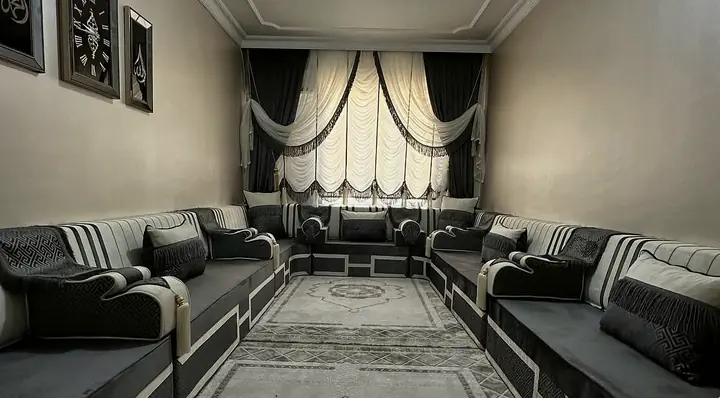
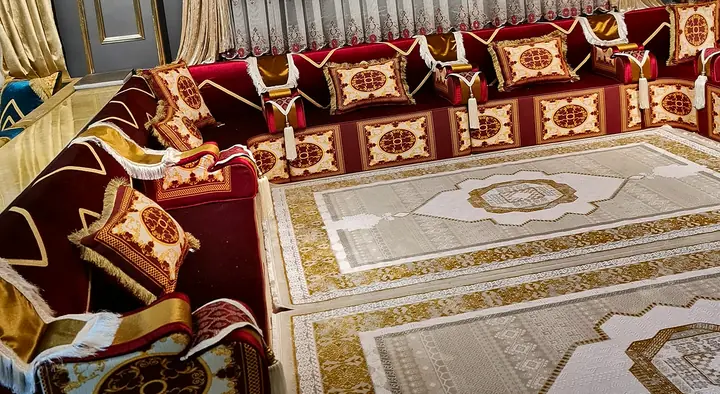
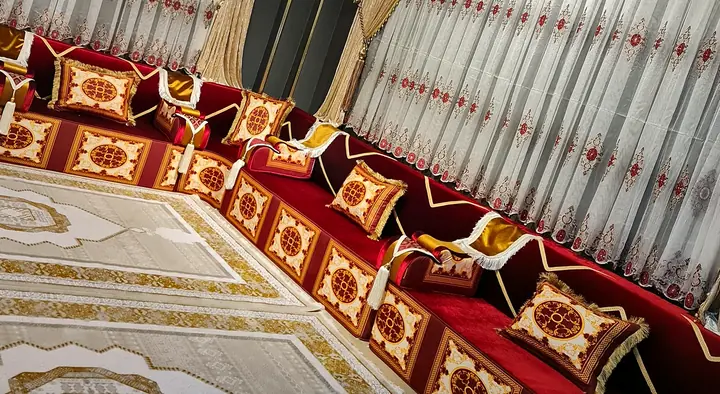
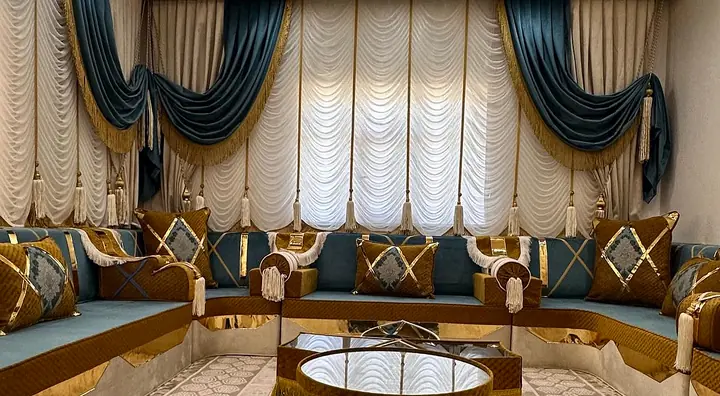
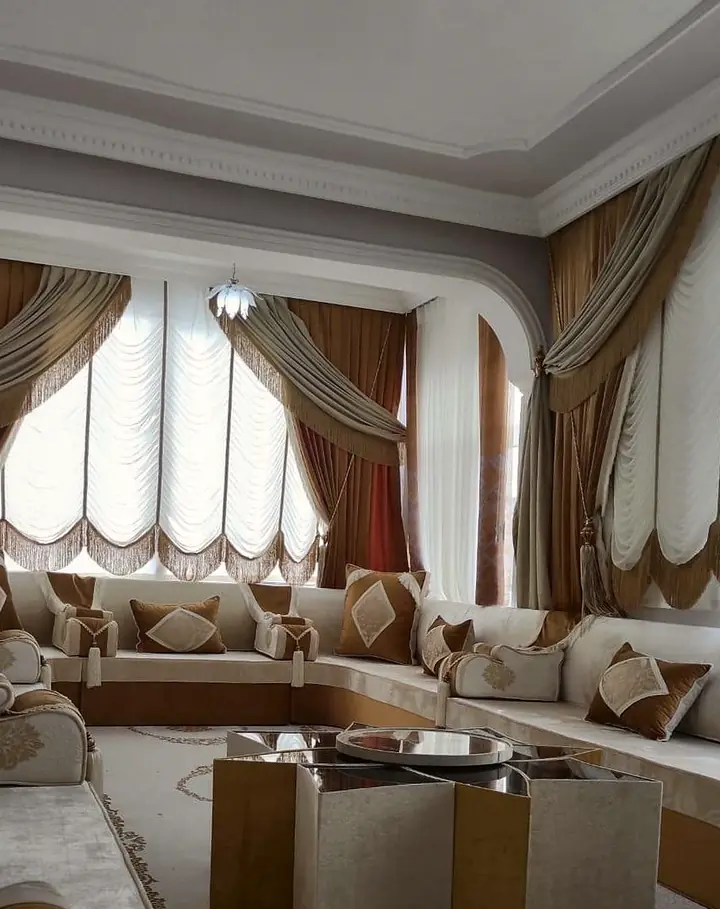
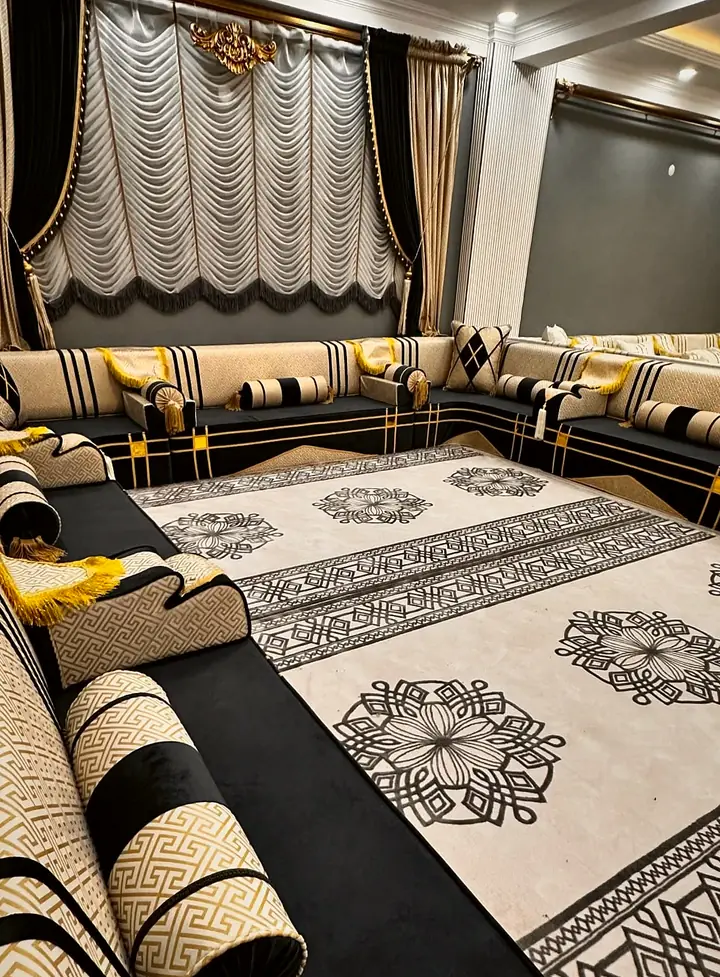
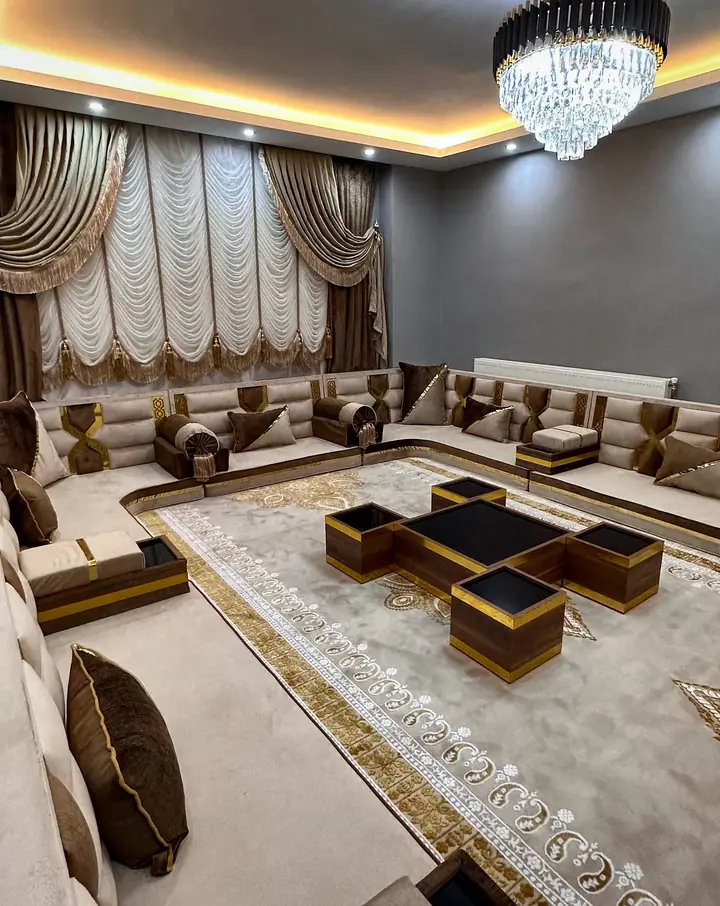
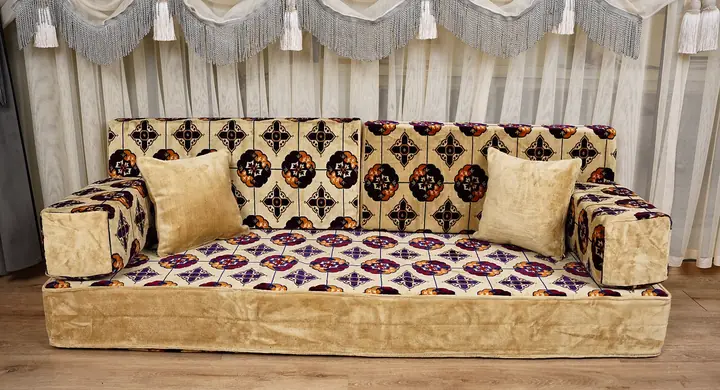
A photograph can show spare pillows or several tables. The majlis set components guide separates the order list from the arrangement. The beige example identifies the seat, backs and arms.
Name the room and the furniture separately: majlis can describe both.
Which words name seating families and reception rooms?
| English term | Arabic label | Meaning in a seating brief |
|---|---|---|
| Majlis seating | مجلس عربي | The furniture set; majlis can also name the room. |
| Arabic sofa | كنب عربي | A broad name: specify floor, raised foam or bench construction. |
| Arabic floor seating | جلسة عربية أرضية | Floor-level seating without a wooden bench beneath the cushions. |
| Jalsa or jalsah | جلسة عربية | A seating-set name used alongside majlis; specify furniture context. |
| Yemeni majlis | مجلس يمني | A Yemeni design label; confirm construction, dimensions and accessories separately. |
| Diwan or divan | ديوان | A seating or room name; this site also names a modular line. |
| Afghan toshak | توشك أفغاني | An Afghan floor-seat label; confirm dimensions and included back pieces. |
| Moroccan seating | صالون مغربي | The Moroccan seating family; distinguish a complete set from covers. |
| Turkish sedir | مجلس تركي | A Turkish bench-seating term; it does not establish wood species. |
| Qaada | قعدة | A seating-arrangement name, clarified through a photograph or parts list. |
| Diwaniya | ديوانية | A reception-room name, rather than an individual furniture component. |
| Mafraj | مفرج | A Yemeni reception-room name, separate from its furniture dimensions. |
| Salon | صالون | A room or seating name; add a furniture qualifier. |
The same label can refer to a room and its furniture. I preserve the household’s word and ask what it describes. Compare a Yemeni majlis and an Afghan toshak through their actual parts.
What do fabric and construction labels actually tell you?
| English term | Arabic label | Meaning in a seating brief |
|---|---|---|
| Velvet | مخمل | A pile-surface fabric label, without a confirmed fibre-composition claim. |
| Linen-look | قماش بمظهر الكتان | An appearance description; it does not establish pure-linen composition. |
| Chenille | شانيل | A fabric-family label; confirm the particular fabric specification. |
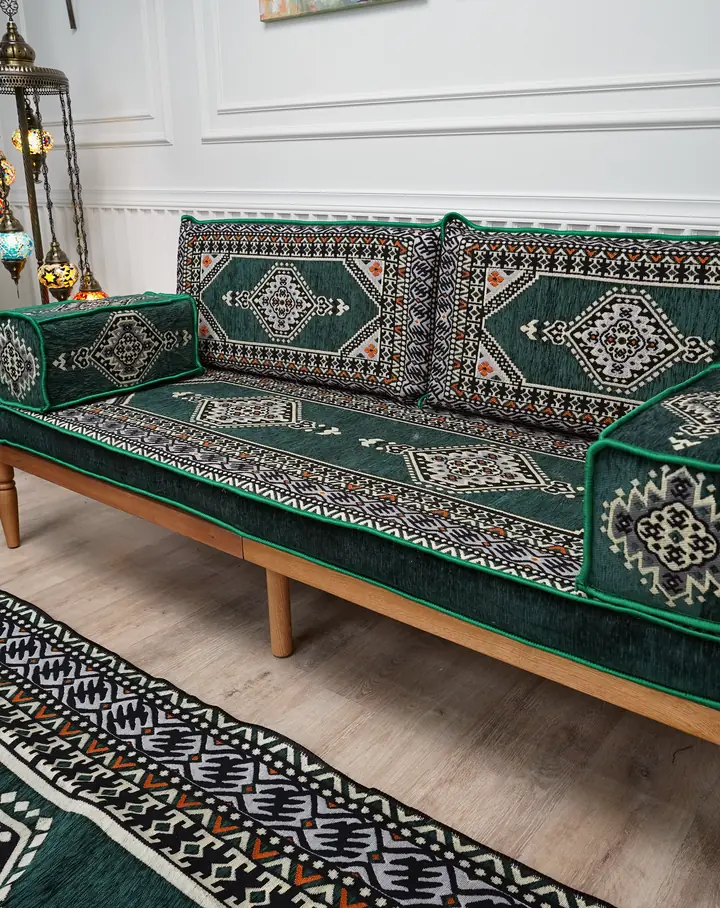
| Kilim-style weave | قماش بنقشة كليم | A wooden-line textile description, distinct from an accompanying rug. |
| Pattern or motif | نقشة | A repeated visual design, rather than a performance specification. |
| Plain fabric | قماش سادة | Fabric without the chosen motif; retain its collection identity. |
| Color card | بطاقة ألوان | The numbered reference for selecting a solid fabric color. |
| Gold accent | تفاصيل ذهبية | An optional visual detail on most models, without metal-content claims. |
| Fabric sample | عينة قماش | A small material sample for checking a fabric selection. |
| Foam or sponge | إسفنج | The cushion filling; firmness and density describe different properties. |
| Removable cover | تلبيسة قابلة للفك | A separable outer case; check its care label before cleaning. |
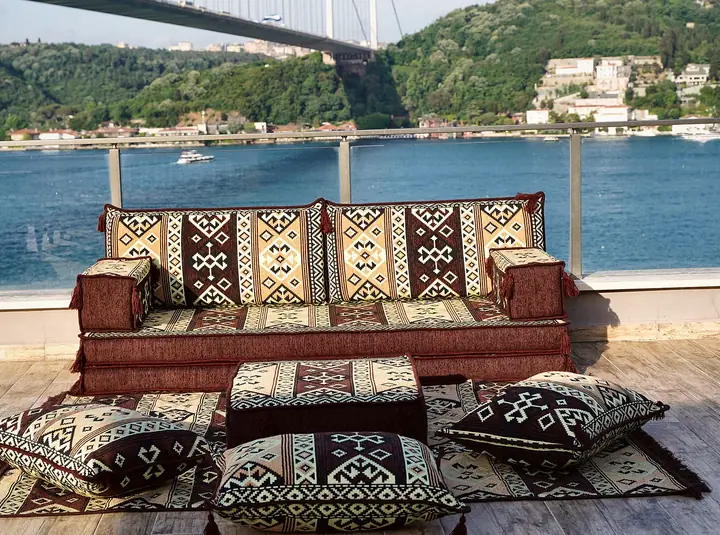
The brown and cream example separates patterned covers from the accompanying rug and centre piece. Its visible motif does not establish fibre content or a cleaning method.
Which dimensions and layout words must stay distinct?
| English term | Arabic label | Meaning in a seating brief |
|---|---|---|
| Seat length | طول الفرشة | The dimension along the wall; sections must remain within 75 in (190 cm). |
| Seat depth | عمق الفرشة | Front to back: floor seats 27.5 in (70 cm), standard raised custom seats 29.5 in (75 cm). |
| Usable depth | عمق الجلوس الفعلي | A 27.5 in (70 cm) seat minus a 4 in (10 cm) back leaves about 23.5 in (60 cm). |
| Seat thickness | سماكة الفرشة | Cushion height: standard low floor choices are 4 in (10 cm) or 8 in (20 cm). |
| Finished seat height | ارتفاع الجلوس | Floor to sitting surface; raised full-foam tiers are 12 in (30 cm) or 16 in (40 cm). |
| Single-wall layout | جدار واحد | One run, without a corner back; patterned full sets have 10 pieces. |
| L layout | حرف L | Two connected runs, one corner back; patterned full sets have 14 pieces. |
| U layout | حرف U | Three connected runs, two corner backs; patterned full sets have 19 pieces. |
| Corner allowance | حساب الزاوية | Standard floor joins allow about 27.5 in (70 cm) for the occupied corner. |
| Made to measure | تفصيل حسب المقاس | A custom build checked against model limits and a room brief. |
| Ready-size set | طقم بمقاسات ثابتة | Established modules checked against the room, rather than cut to every wall. |
| Stacked seat | فرشات فوق بعضها | Two 4 in (10 cm) layers at 8 in (20 cm) height; count them separately. |
| Firmness | درجة التماسك | Cushion feel; standard seat foam is firm to medium-firm. |
Write length, depth and finished height separately. A long cushion is not automatically deeper; a high seat is not automatically softer. The words should lead to a clear drawing and component list.
Which translation shortcuts cause the most confusion?
- Calling every reception room a sofa: identify the furniture pieces as well as the space.
- Using full set for anything shown in a photograph: the selected list controls the extras.
- Treating cushion thickness as wooden-base height: measure the complete sitting surface.
- Reading linen-look as a fibre specification: confirm the selected fabric.
- Calling an armrest a backrest: distinguish the end support from the upright rear piece.
- Assuming floor pillow always means the long seat: include its dimensions.
A useful description keeps the household’s familiar name and adds the component function. That preserves the language of the room while making the furniture request less ambiguous.
How can the glossary become a complete furniture brief?
Record the furniture family, every seating wall, the preferred construction, the seat height and the requested pieces. List covers separately if existing foam is being kept. Then match the vocabulary to a selected model and an itemized layout. The diwan floor-seating range offers another comparison for the same basic distinction between a name, a construction and an included set scope.
Frequently asked questions
Does majlis always mean the furniture?
The word can refer to the reception room as well as its seating. In a furniture description, use majlis seating or majlis sofa and list the parts you need. That avoids confusing the room name with a particular cushion, construction or set scope.
Are a bolster and a backrest the same part?
A backrest sits behind the person using the seat. An armrest bolster is an end or elbow-support piece. Both can be removable upholstered parts, but their roles and dimensions differ. Name each separately when asking for replacement covers or checking the components of a set.
Can the Arabic label replace the measurement?
A familiar label helps explain the item, but it does not identify its exact size. Include length, depth and thickness for cushions, and finished height for a complete seating build. The chosen model and its component list provide the final specification.