
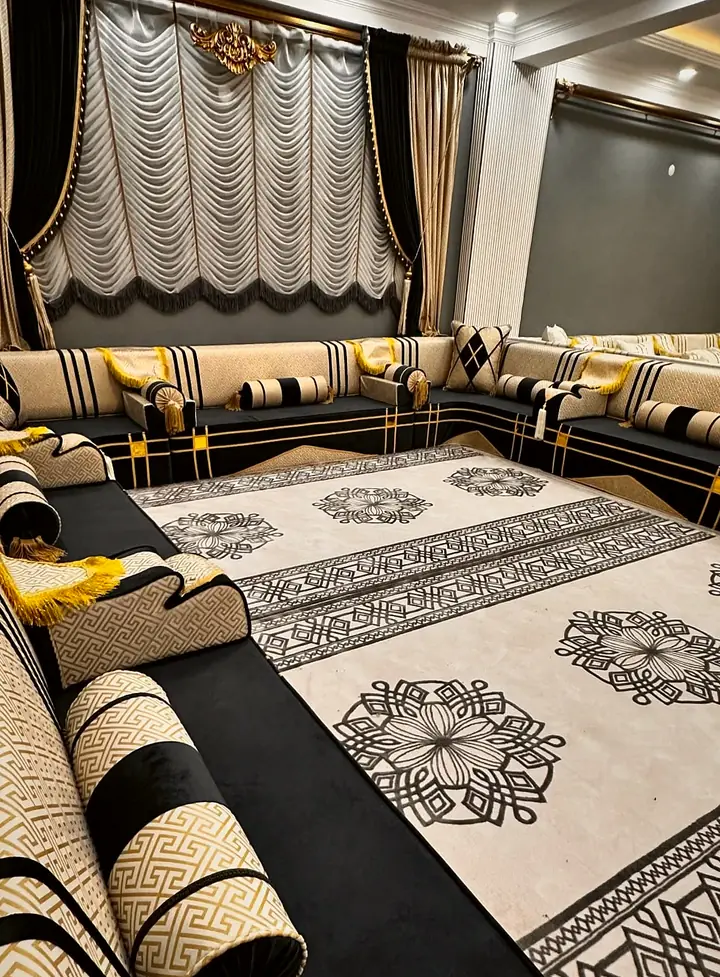
Ready-Made Velvet Jalsa Majlis
Arabic Majlis · Single, L & U
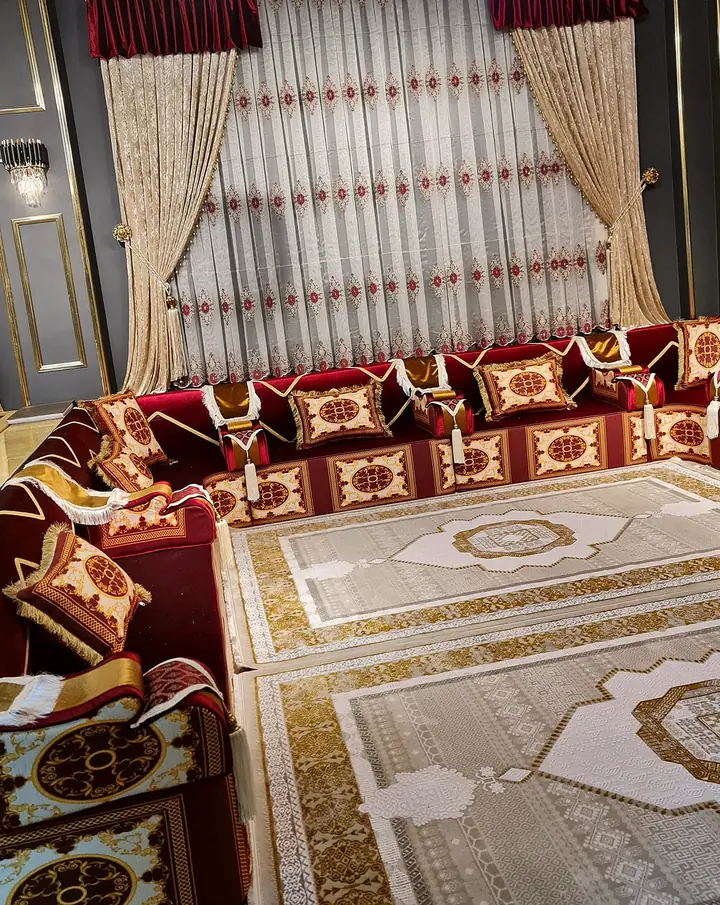
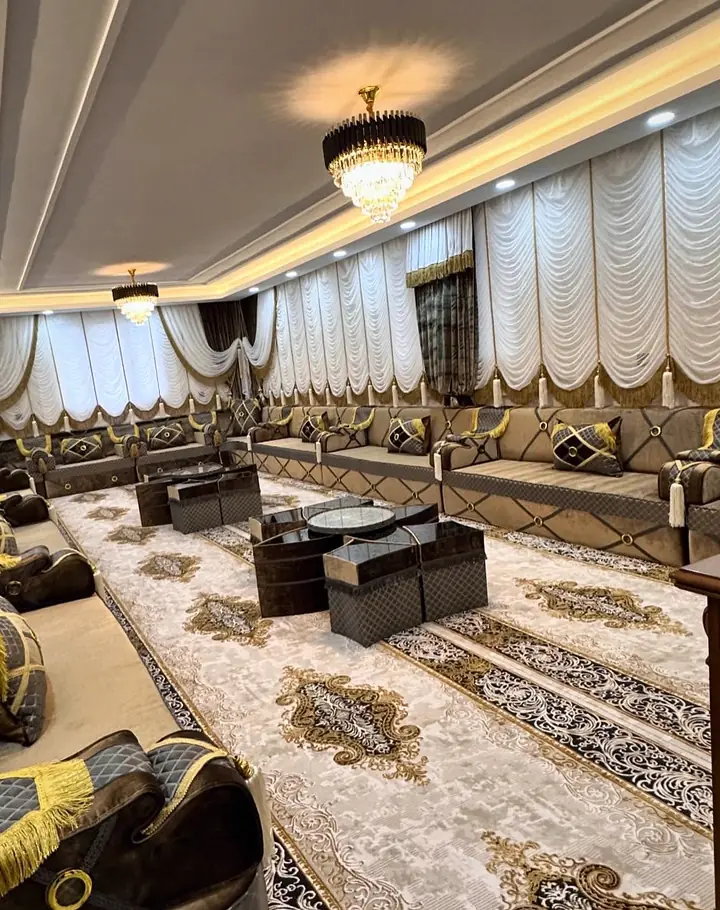
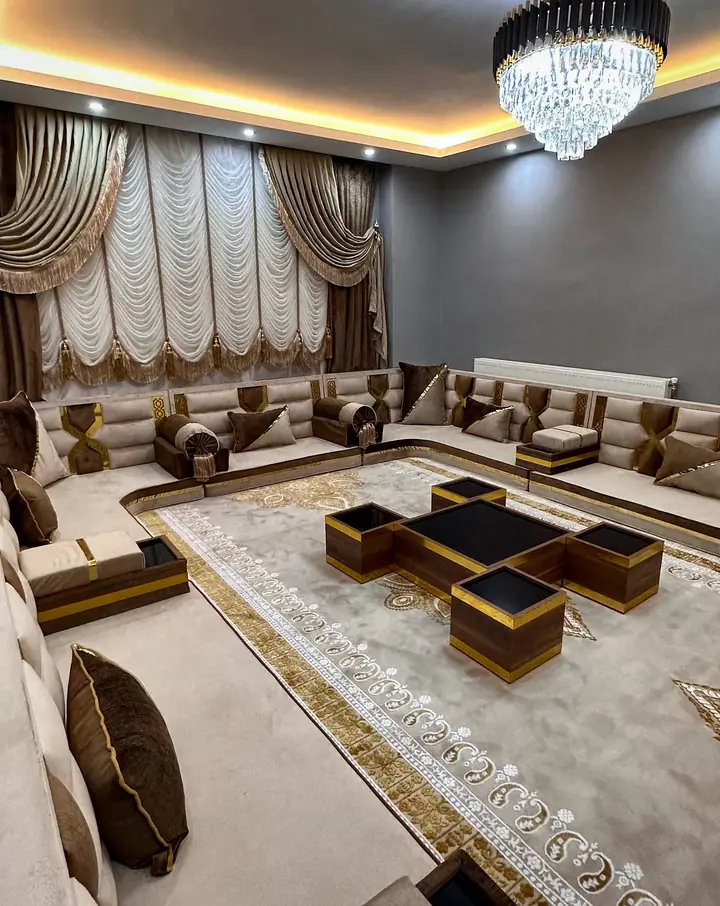
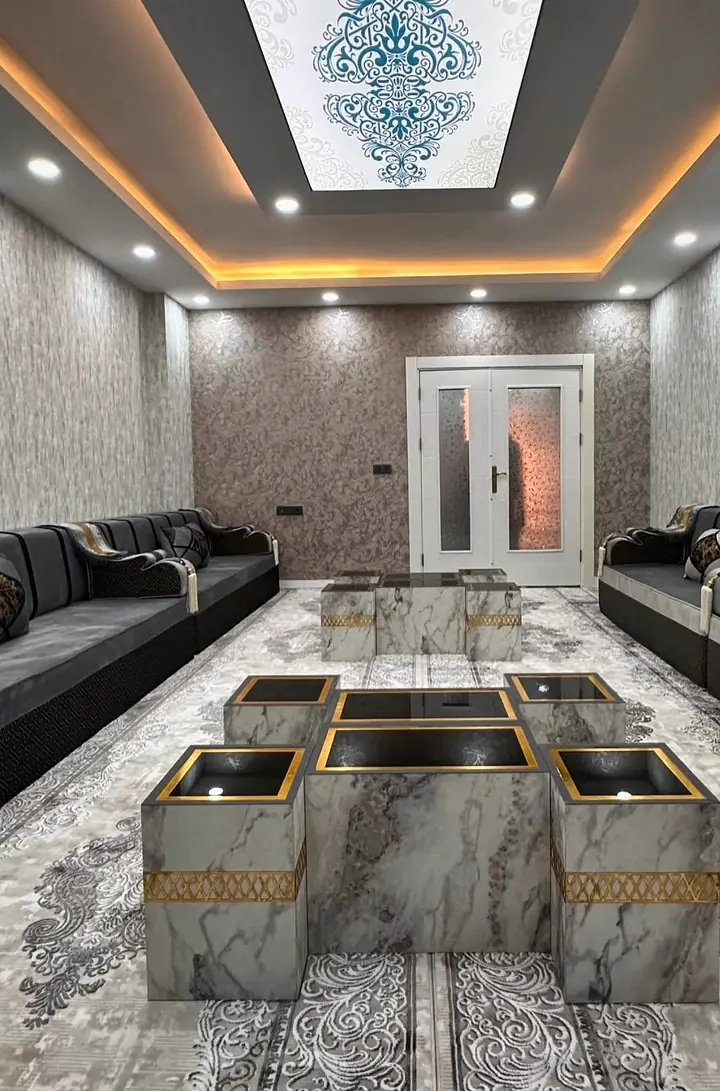
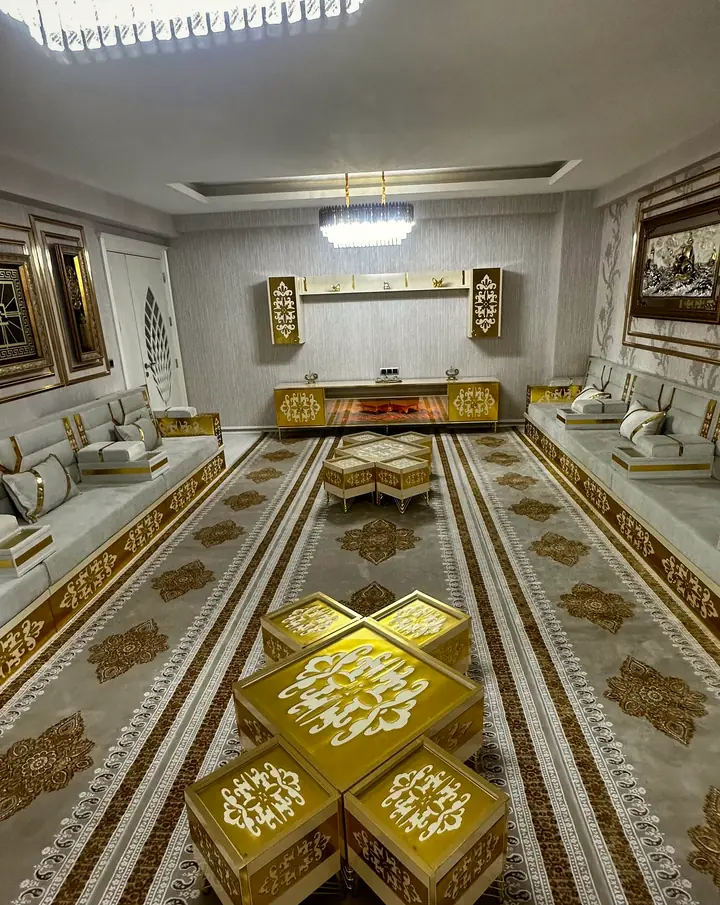
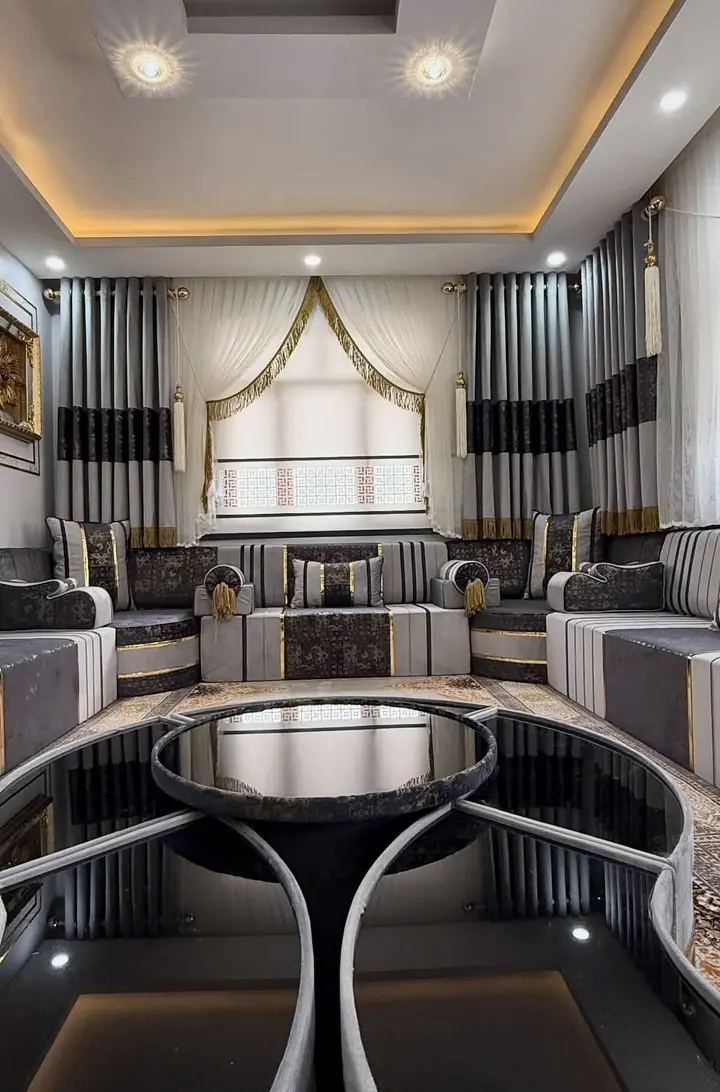
Yemeni majlis seating runs along the walls of a room as one low line of firm seat cushions, upright backrests and closely spaced armrest bolsters, the arrangement many families know from the mafraj. Families who want the classic low feel usually pick a 8 in (20 cm) seat, and those bolsters, called madaki, sit at the ends and along longer runs.
Yemeni-style majlis are made to order in our Istanbul atelier, with firm low seating along the walls, backrests, plenty of armrest bolsters (madaki). Send the total wall length, the number of corners, how many armrests you want and a photo of the style you like. All-foam seats are made 4 in (10 cm) to 16 in (40 cm) high, and a wooden base sits at about 14.5 in (37 cm) to 16 in (40 cm).
The lowest option is a 4 in (10 cm) cushion laid directly on the floor, and traditional Yemeni-style rooms often choose about 8 in (20 cm), so guests sit close to the floor with armrest bolsters beside them. A design photographed at a raised height can be rebuilt lower as all-foam seating. Before deciding, ask for photos or a short video of the heights you are comparing in a real room.
Arabic Majlis · Single, L & U
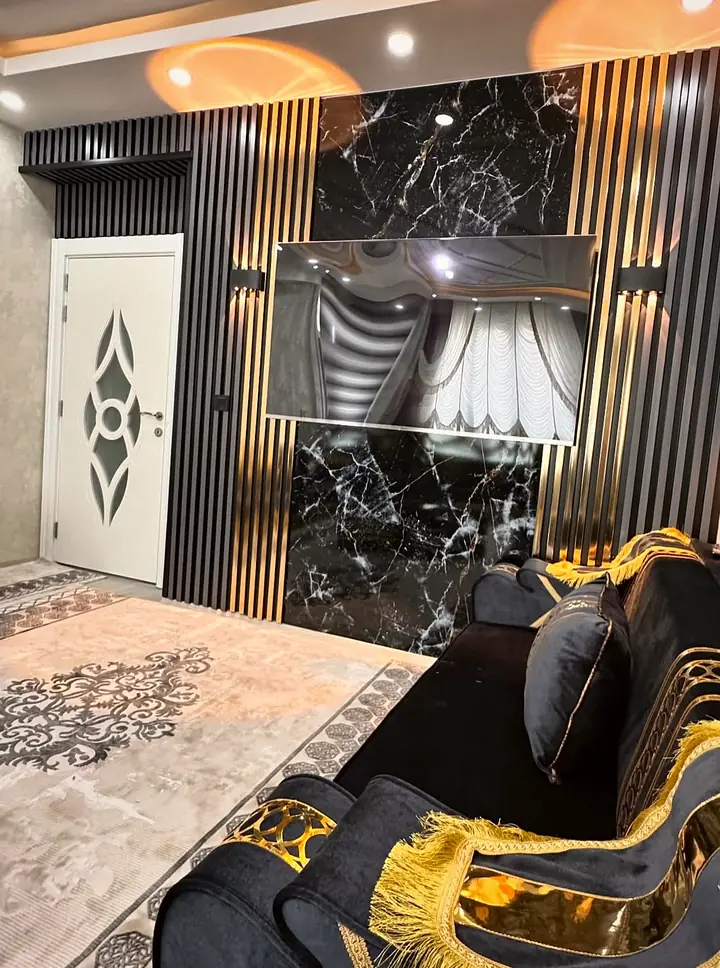
Arabic Majlis · L & U
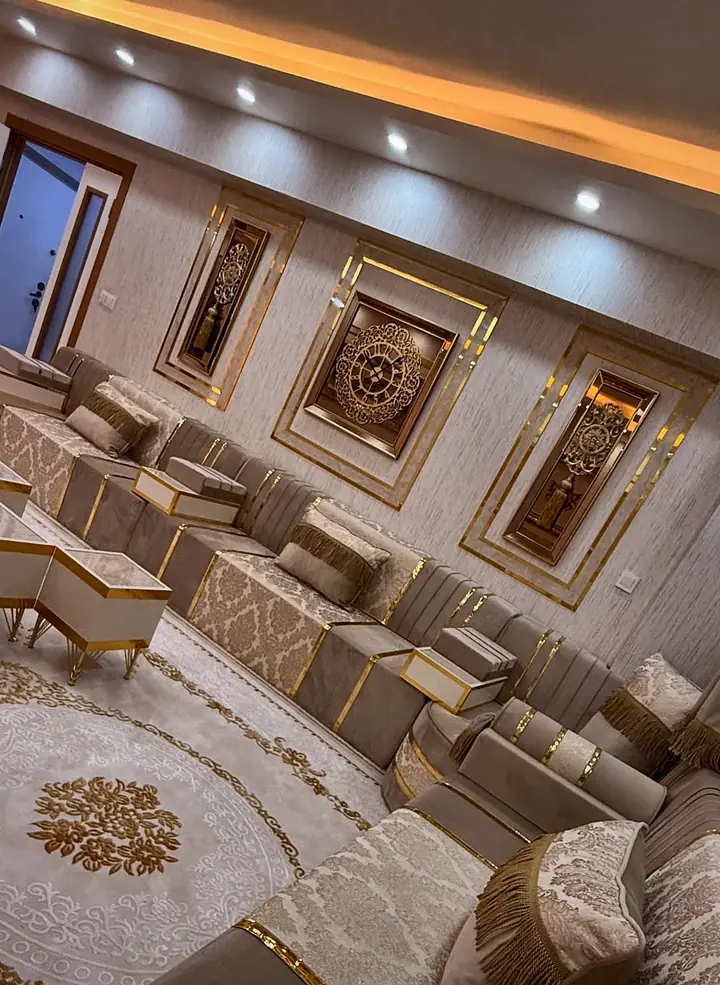
Arabic Majlis · L & U
Arabic Majlis · L & U
Arabic Majlis · L & U
Arabic Majlis · L & U
Arabic Majlis · L & U · 2 colors
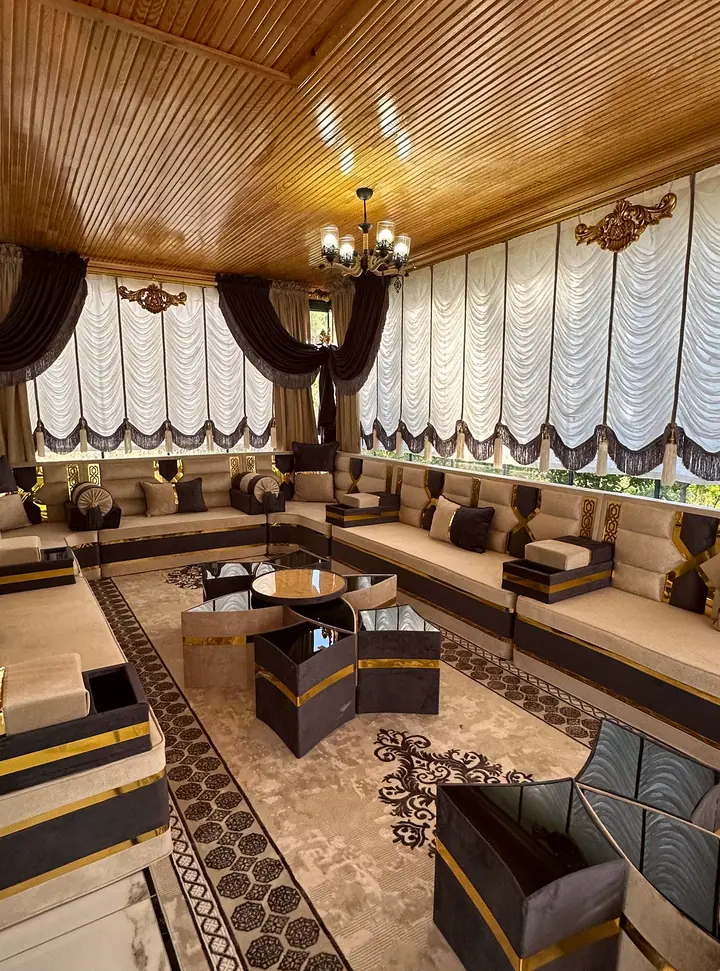
Arabic Majlis · L & U
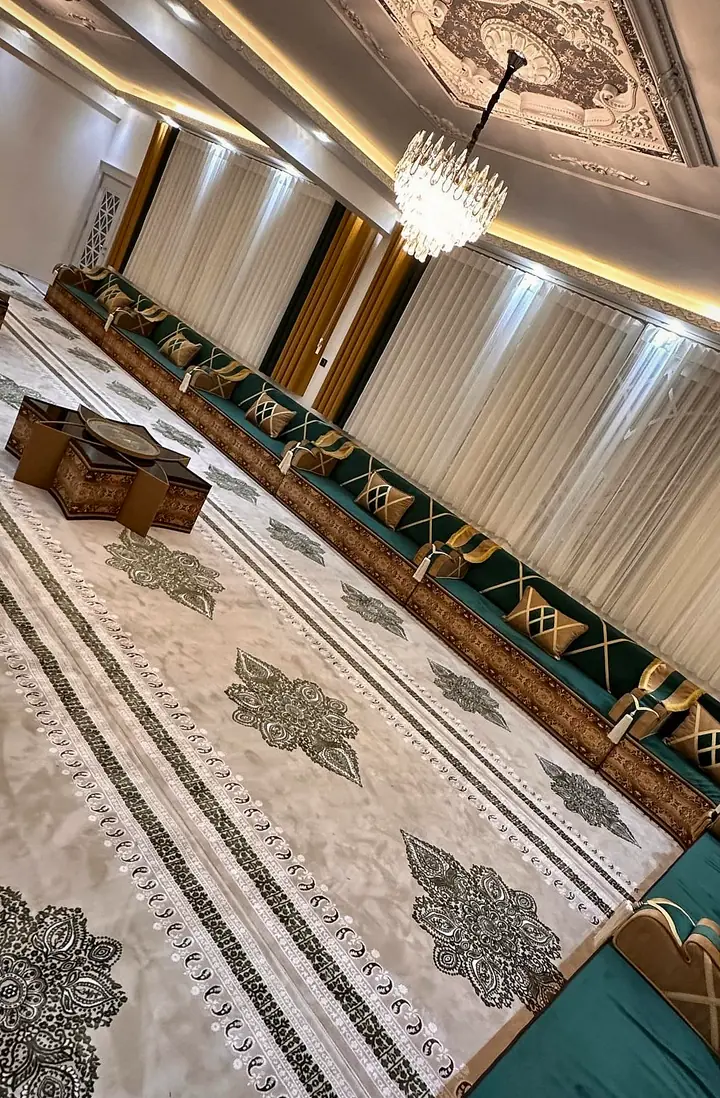
Arabic Majlis · L & U
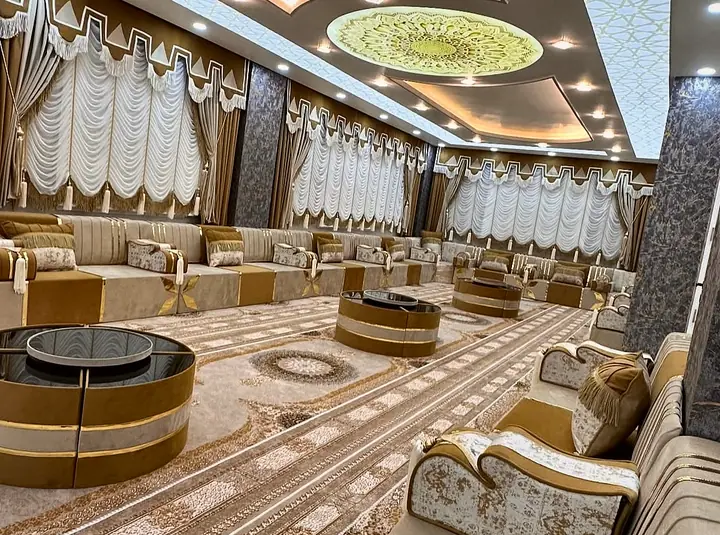
Arabic Majlis · L & U
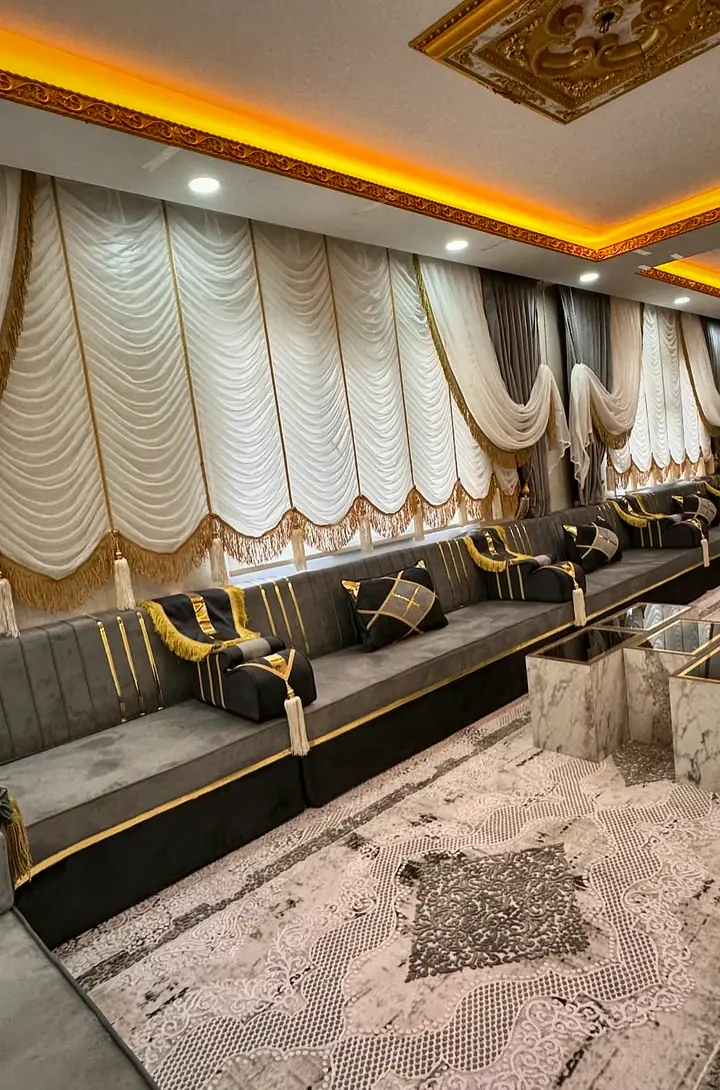
Arabic Majlis · L & U
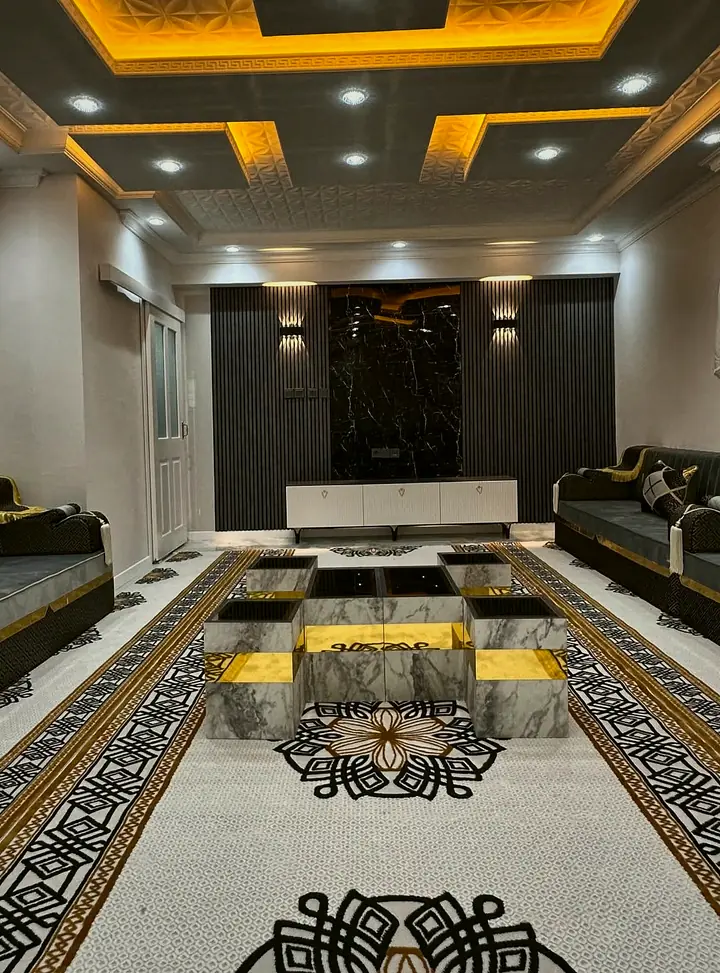
Arabic Majlis · L & U
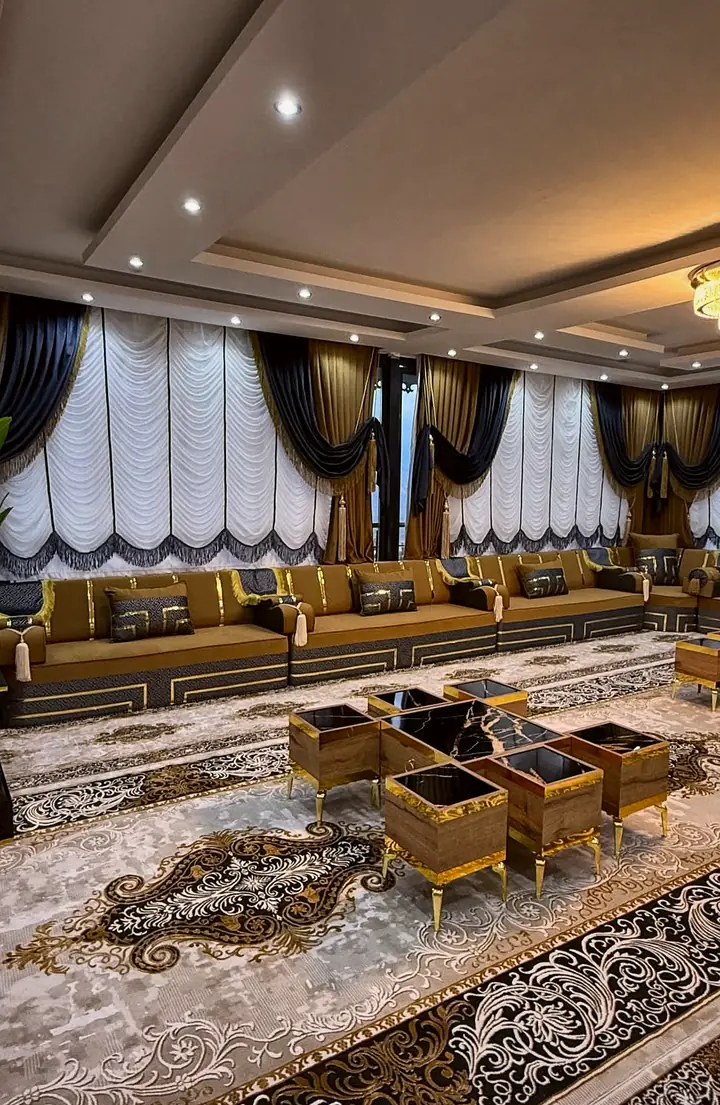
Arabic Majlis · L & U
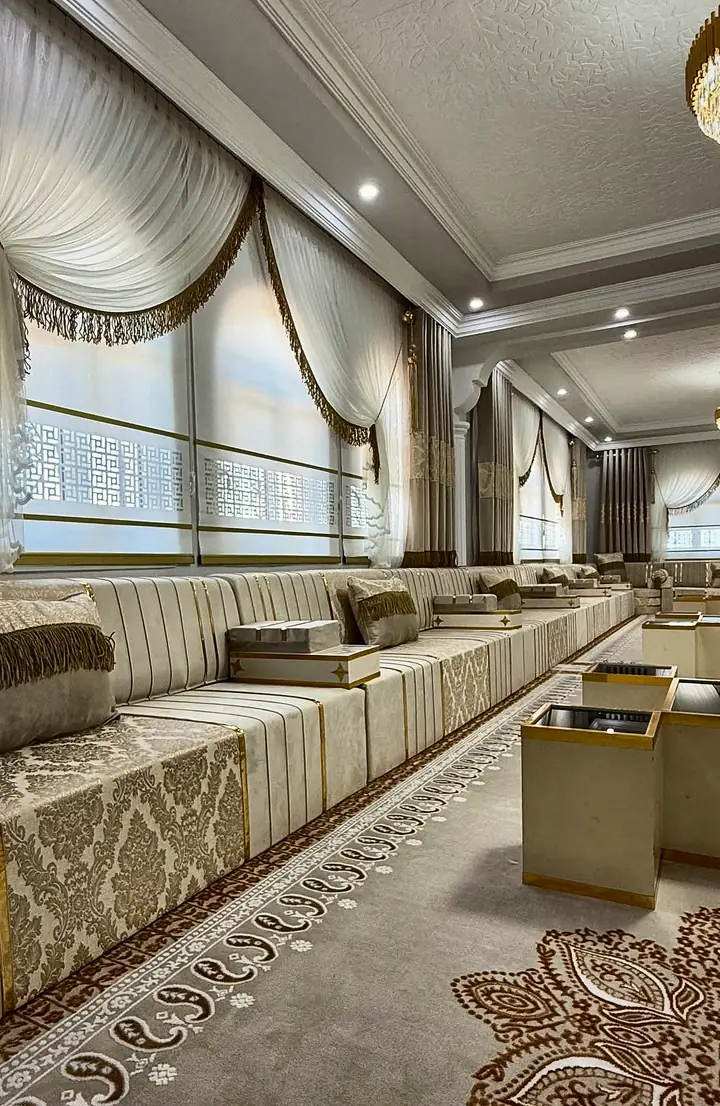
Arabic Majlis · L & U
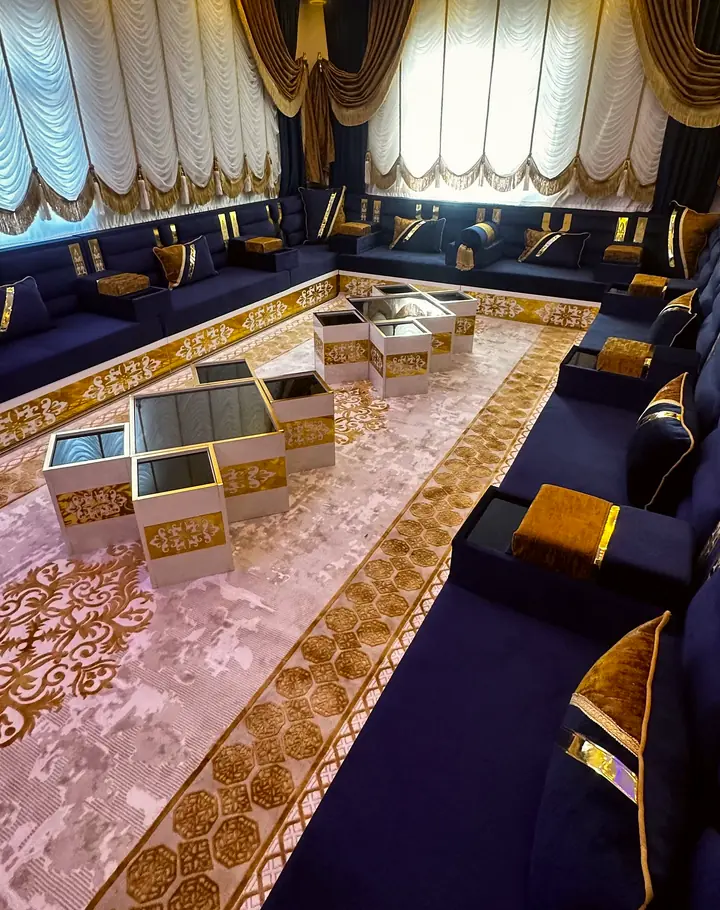
Arabic Majlis · L & U
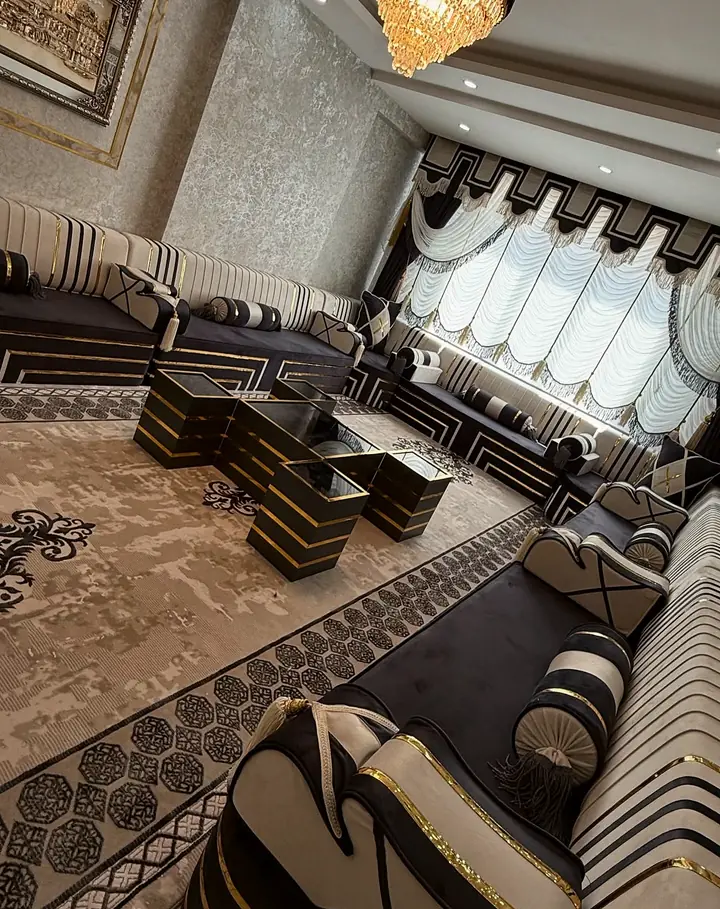
Arabic Majlis · L & U
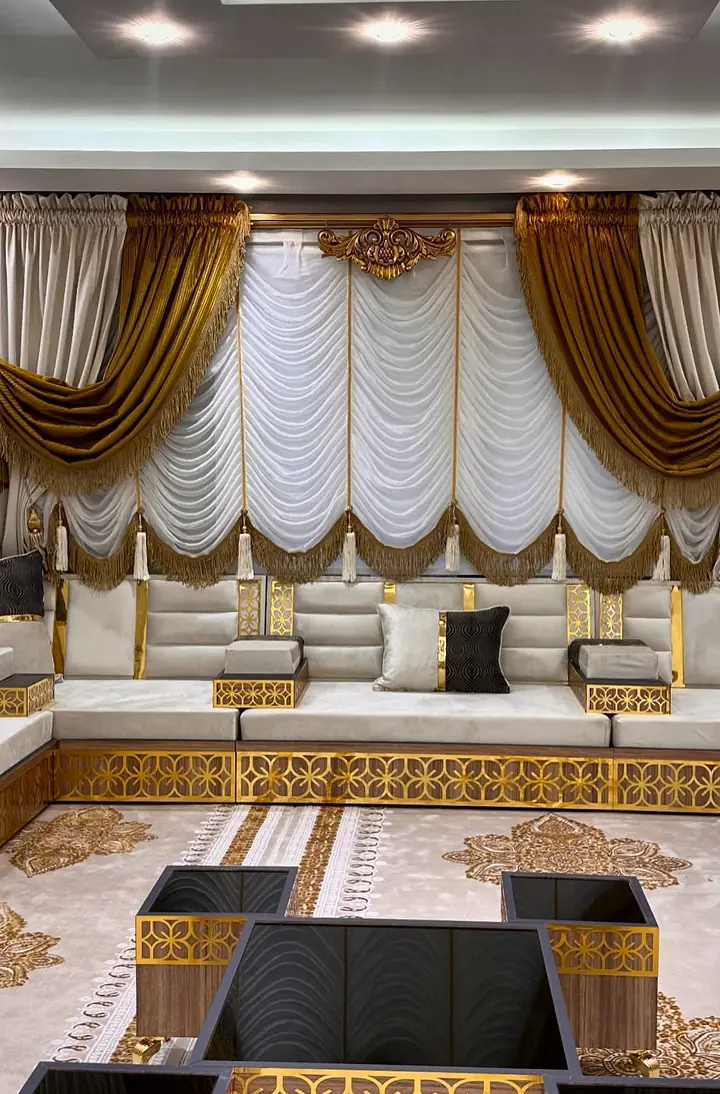
Arabic Majlis · L & U
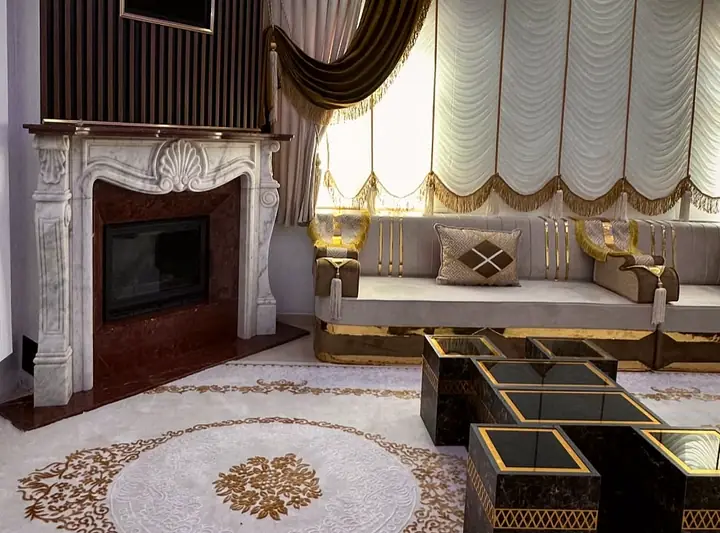
Arabic Majlis · L & U
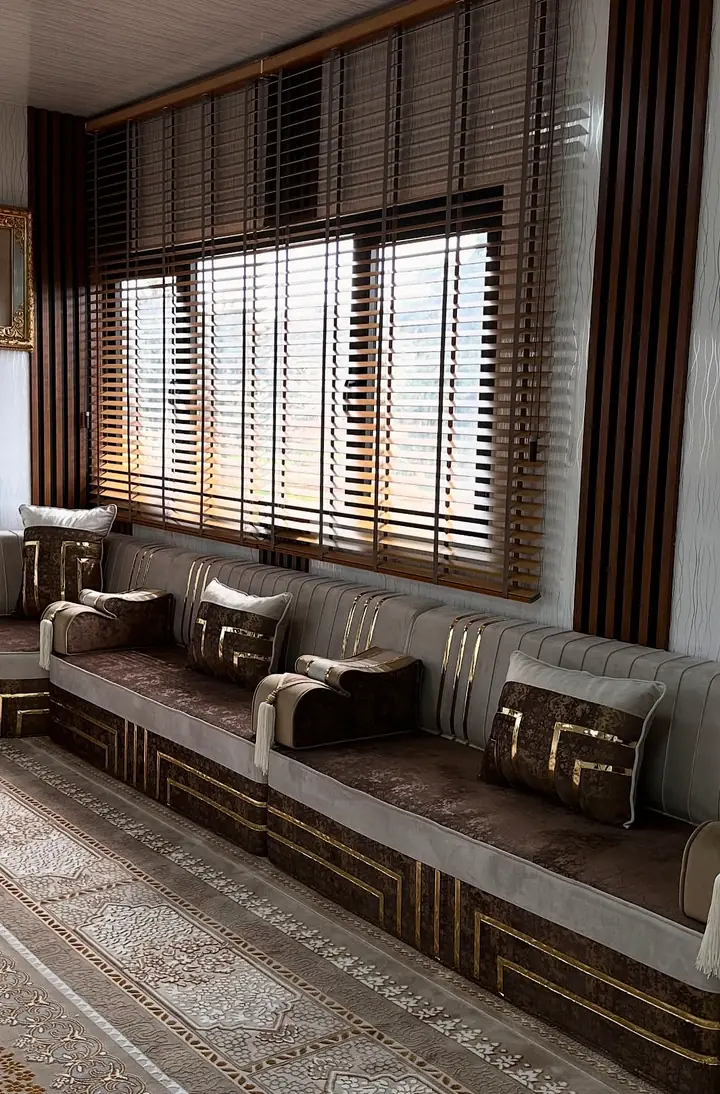
Arabic Majlis · L & U
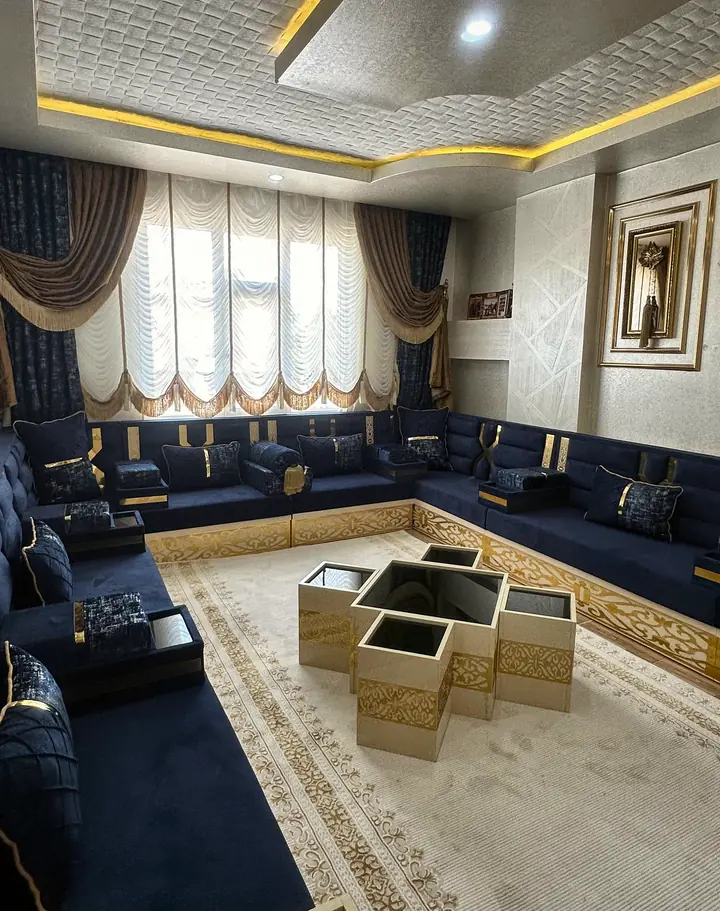
Arabic Majlis · L & U
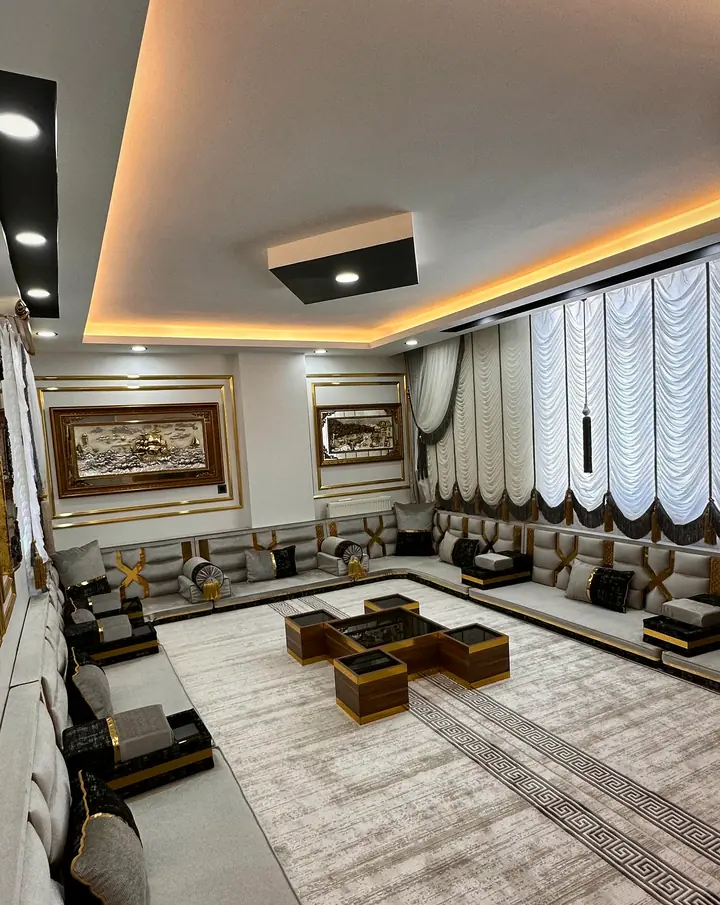
Arabic Majlis · L & U
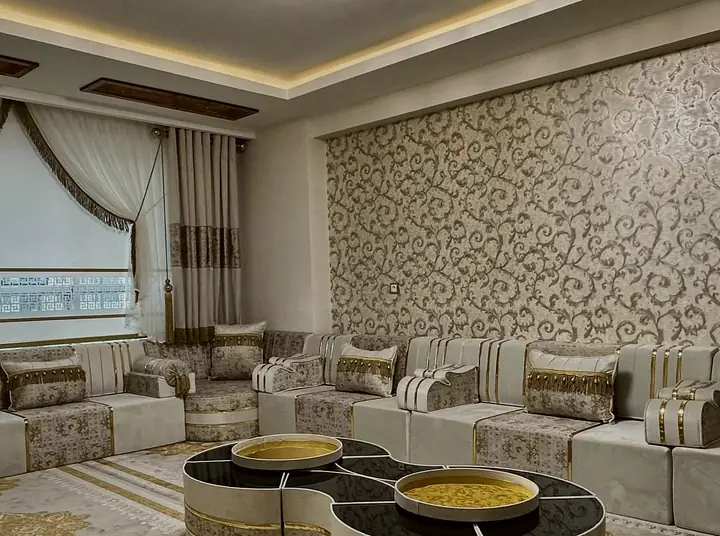
Arabic Majlis · L & U
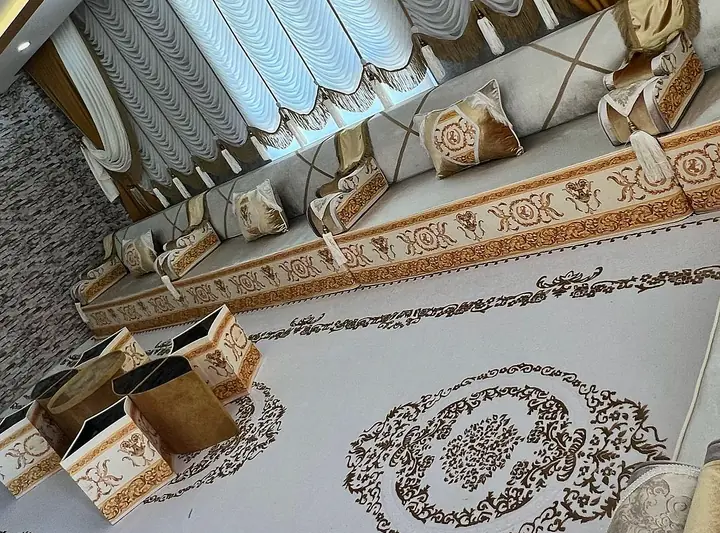
Arabic Majlis · L & U · 2 colors
Arabic Majlis · L & U
Wall lengths taped corner to corner, plus a unit, a shape and a seat height, are all the majlis planner needs to draw a numbered seat plan.
Open the plannerSend your wall lengths and a photo; we draw every seat before cutting.
Get a quoteNo designs match these filters.
Custom Yemeni majlis planning combines seating lengths with construction, finished height and fabric choice.
Read the guideYemeni majlis room planning brings the seating walls, preferred style, everyday comfort, fabric and personal details into one room plan.
Read the guideEvery majlis set is built from the same few pieces: seat cushions of 75 × 27.5 in (190 × 70 cm), backrests that lean on the wall, armrest bolsters at open ends and, in a full set, pouf pillows, an ottoman and a rug.
Read the guideStar jacquards, medallion weaves, plain velvet with gold bands and Greek-key borders all belong to this family, and each design is cut to the walls of one room. The low line, the generous bolsters and the patterned bands set it apart within the wider range of Arabic majlis sofa sets.
All three names usually describe the same seating, a continuous low run of cushions and backrests along the walls, and the word a family uses often depends on the language they search in. Some rooms keep the seat close to the floor and others raise it to sofa height, and both are still called a Yemeni majlis. The wider vocabulary, from jalsa to diwaniya, is gathered in what a majlis is.
| Name | What it usually means |
|---|---|
| Majlis | The sitting room and the gathering, and so the seating too |
| Jalsa | The seating arrangement as a whole |
| Madaki | Armrest bolsters at the ends and along longer runs |
| Mafraj | The Yemeni sitting room this low style is tied to |
For the traditional low feel, a Yemeni majlis usually sits about 8 in (20 cm) above the floor, and households with older guests often raise it to 12 in (30 cm) or 16 in (40 cm). On raised models the seat measures 14.5 in (37 cm) to 16 in (40 cm), depending on the design.
| Seat height | How it feels | Often chosen for |
|---|---|---|
| 4 in (10 cm) | A cushion straight on the floor | Prayer rooms |
| 8 in (20 cm) | Low, easy to lean back | Classic Yemeni family rooms |
| 12 in (30 cm) | Easier to stand up from | Homes where elders sit long evenings |
| 16 in (40 cm) | About regular sofa height | Guest rooms with older visitors |
I would settle the height with the eldest person who will use the room, since the youngest will sit anywhere. A majlis is measured in walls, but it is remembered in evenings.
Either build suits a Yemeni majlis room: entirely foam, or an MDF and wood frame with foam seats on top. The all-foam version has no internal frame or springs, the same way Arabic floor sofa sets are made, so it can be built at any of the four heights. A wooden base sits at about 14.5 in (37 cm) to 16 in (40 cm) and is not made lower. Seats use high-density polyurethane foam — ask us for the exact density for your build.
A small L-shaped Yemeni majlis usually takes two to four armrest bolsters and a large U-shaped one six or more, while every full seat takes two backrests. The designer sets the final count from your wall lengths so no run feels crowded. One 75 in (190 cm) seat holds two to three people, so total seating length is the better guide to how many guests a room takes. I would ask for every bolster and backrest to be listed on the plan before anything is cut.
Measure each wall from corner to corner, mark any door that comes down to the floor, and send the lengths with a photo of the room. A wall longer than 75 in (190 cm) is split into equal seat pieces, which keeps a star or medallion pattern lined up along the run. At a corner, the second run is shorter by one seat depth.
Leave a little space at each wall end, since foam forgives a measuring difference of up to about 2 in (5 cm). Single-wall, L-shaped, U-shaped and full-room plans are compared in majlis layouts.
A matching rug and a few 27.5 × 19.5 in (70 × 50 cm) floor pillows in the same fabric usually complete the room, so the seating, the floor and the spare places read as one design. Once a custom set is in place, buyers tend to notice that every piece meets its wall, because each one was cut for that room.
Custom orders start with a layout plan for your approval. Production time depends on your layout and the season — ask us for the current schedule. Custom orders are photographed and filmed for your approval before they ship. What moves a quote, from total length to build and fabric, is set out in what shapes a majlis quote.
Sana'a-style seating is usually deeper than a floor sofa: custom and raised majlis seats are about 29.5 in (75 cm) deep, and the depth can be increased on request to about 33.5 in (85 cm). Back pillows can be stacked two high against the wall.
On low seating the madaki are armrest bolsters of 19.5 × 8 × 8 in (50 × 20 × 20 cm), while raised seating takes larger armrests of about 10 × 10 × 21.5 in (25 × 25 × 55 cm), straight or round. The designer spaces them along your wall lengths, so list how many you want with your measurements.
Extra armrest bolsters, single seat pieces, backrests and covers can be ordered any time, so the room can grow with the family. Send a photo of the set and its fabric, and the team looks for the closest match.


