
Teal and turquoise majlis designs
Teal majlis designs connect aqua, turquoise and deeper petrol seating with bronze, gold or pale patterned surfaces around the room. Most models can use an available color from the fabric range, while a woven pattern keeps its own colorway limits. The long room shown here repeats teal in the drapes and leaves a pale center between dark table tops.
Questions buyers ask
Can I choose turquoise or light blue for majlis floor seating?
Turquoise and light blue sit within a wider blue fabric range, so begin with the model and the shade you want together. Many models can be made in an available fabric color. Ask which fabric options fit that model, then confirm the selected shade and whether the order is ready or made to order.
How can I settle the teal shade and seat height before asking for a custom quote?
A teal photograph answers the color question only partly; the same plan still needs a layout and seat height. Ask us for a design consultation — we can talk through your room on a video call. Bring the model you are comparing and the shade you want, so the fabric decision belongs to a complete seating plan.
About Teal
Aqua seats, turquoise patterns and deeper petrol tones
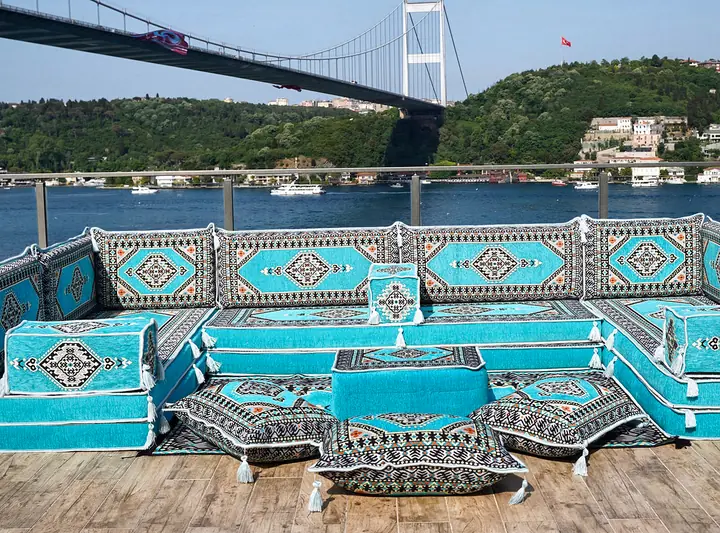
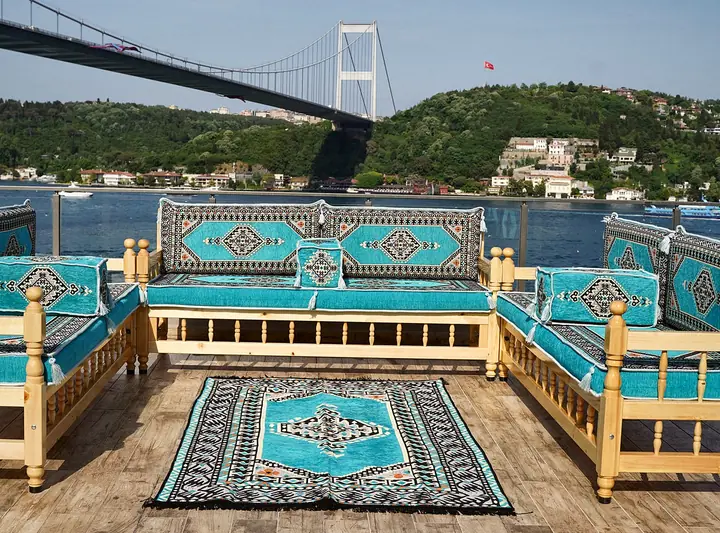
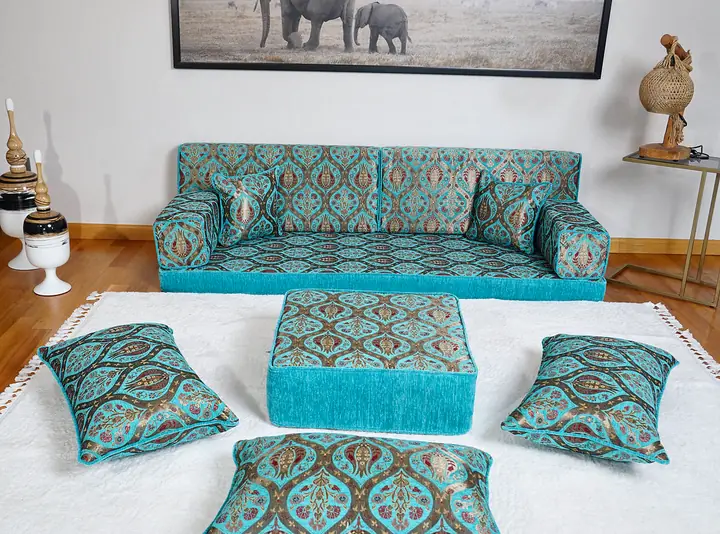
Teal spans several blue-green arrangements in the photographed seating. The long room puts pale aqua-blue seats above bronze patterned bases, while the floor sets use clearer turquoise fields around cream-and-black motifs. Compare the complete layout within Arabic majlis seating before choosing a shade name.
| Blue-green arrangement | Main visible surface | Accompanying detail |
|---|---|---|
| Aqua with bronze | Plain seating | Bronze bases and pillows |
| Turquoise with cream | Medallion floor seating | Black-and-cream borders |
| Petrol with pale gray | Plain seating | Gray meander bases and armrests |
Which trim makes the blue-green seating stand out?
Bronze pattern gives the aqua seating a warmer lower edge, while a pale gray base leaves the blue-green seat more distinct from its border. In the separate corner shown below, narrow dark bands divide the backrests and a meander pattern returns on the bases and armrest covers. These are different ways of distributing the accent. Compare the full seat run and the end armrests, then keep the model reference with the fabric code. A close view of one pillow leaves much of that relationship outside the frame.
How should the daylight-facing teal be compared with the shaded row?
The long room makes this comparison visible in one view: windows line the left side, and another seating run sits across the pale center. Put the intended swatch beside the real window before deciding how much blue or green you want to see. Then carry it to the evening lamps. The teal drapes should stay in the comparison, because they repeat the color above the seats. A bright photograph of the window-facing row cannot settle the shaded side of a different room.
Select the exact fabric by its card number once the comparison is complete. Ask us about fabric swatches and a foam sample before you order. The fabric roll is 55 in (140 cm) wide, but a roll dimension alone does not describe how a plain shade and a patterned border will spread around the finished seating.
What belongs in the pale center between teal seats?
The center can keep the teal seating clear by using a pale rug and smaller dark table surfaces. The majlis color combinations guide helps compare the base color with its accent. These examples also show that a room arrangement and a floor-set configuration are different references.
- Rug: compare its pale field with the patterned seating border, keeping both visible in the same light.
- Tables: the long room uses dark octagonal tops in a row, with bronze pattern on the bases.
- Curtains: teal drapes frame white gathered sheers, repeating the seating color above the window. Matching curtains are made to the window measurements.
Which choices stay separate when ordering a teal set?
The selected shade belongs to a specific fabric and model. A woven pattern is limited to its available colorways, while a plain fabric may offer another turquoise or petrol shade. Confirm that pairing alongside the layout and seat height, without assuming a photographed color establishes current stock. The design consultation can work through those choices before the quote.
For standard all-foam seating, the height choices are 4 in (10 cm), 8 in (20 cm), 12 in (30 cm) and about 16 in (40 cm). Wooden-base models are 14.5 in (37 cm) to 16 in (40 cm), depending on the model. Keep the construction clear when comparing a floor set with the turquoise bench arrangement. A raised base and a cushion thickness are different measurements, so they should not be added together from a photograph.
How can the teal selection remain a usable room reference?
Keep one record of the model, selected fabric code and the room-light comparison. Removable floor-set covers can be machine-washed on a gentle 86°F (30°C) cycle. Confirm the instructions for the actual collection, including a wooden-base model if that is the intended construction. The turquoise color itself does not decide how every cover is cared for.
Where does the long room repeat its teal seating color?
The drapes repeat the blue-green seats above the window wall. White gathered sheers sit inside those darker borders, while bronze pattern returns on the bases and pillows. Compare the curtain area and seat run together to judge how much teal the finished room will contain.
What changes the balance between teal and bronze in the pictured room?
The plain aqua-blue seats occupy the long horizontal runs, while bronze pattern appears on the bases, pillows and table sides. The pale rug separates those surfaces through the center. Look at their relative areas in the full room view before using a single bronze pillow as the main reference.
Why keep the dark octagonal table tops in the color comparison?
Their dark surfaces mark the center of the pale rug between the blue-green seating runs. The table bases repeat the warmer bronze pattern, so both surfaces belong in the comparison. The photograph shows their visual relationship to the seats without establishing a table material from appearance alone.