
Golden Majlis Arabic Jalsah
Arabic Majlis · L & U
Brown majlis seating spans light camel upholstery, golden caramel surfaces and deeper chocolate tones, with black linework or pale decorative bands separating the cushions. Solid upholstery is specified through a numbered fabric card. Brown belongs to both floor seating and raised designs, so the photographed trim and the chosen construction need separate decisions.
Curtains are made for each window and ordered alongside a majlis. Choose floor-length panels or a finish at backrest level, then record which brown tone belongs on each window. A seating photograph supplies a visual reference, rather than a measurement for the curtains.
Curtain arrangements can contain up to three layers: a sheer, the principal color layer and an optional decorative top. Identify the brown layer you want before selecting the other tones. A brown drape and a brown top band occupy different parts of the window composition.
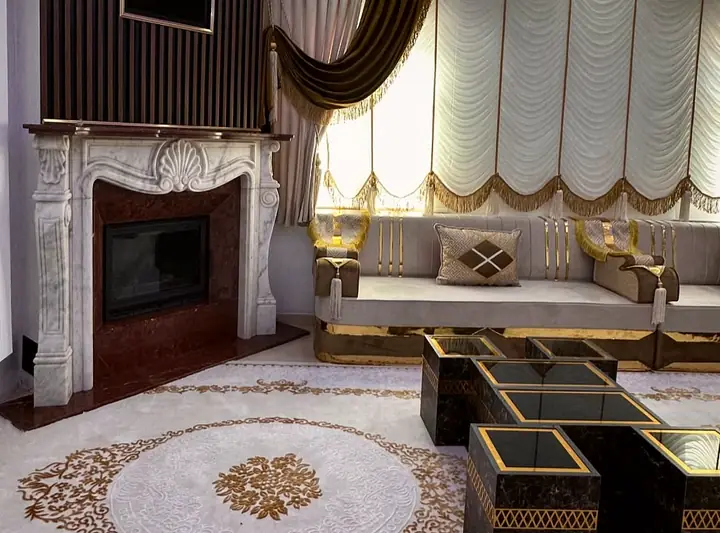
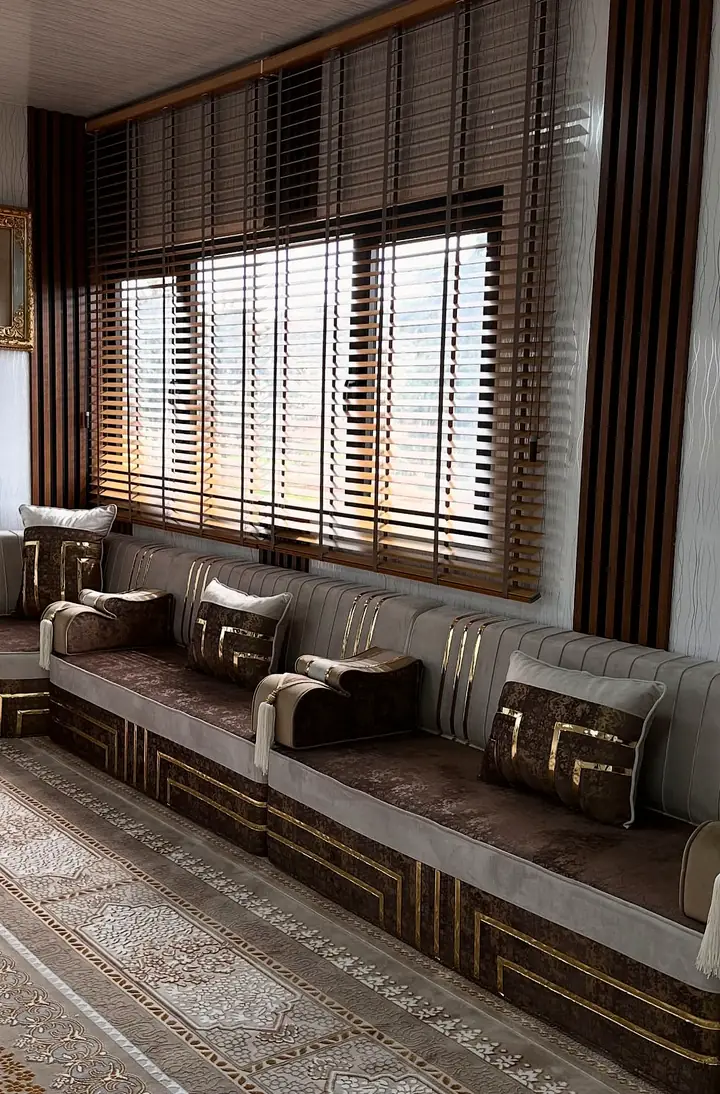
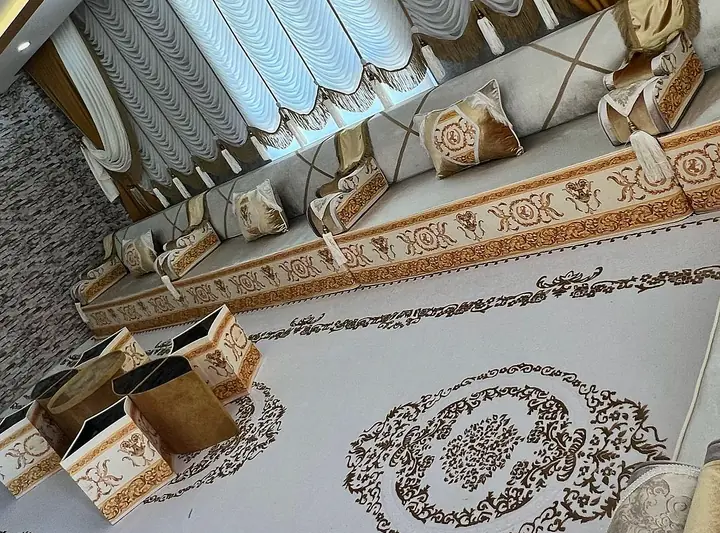
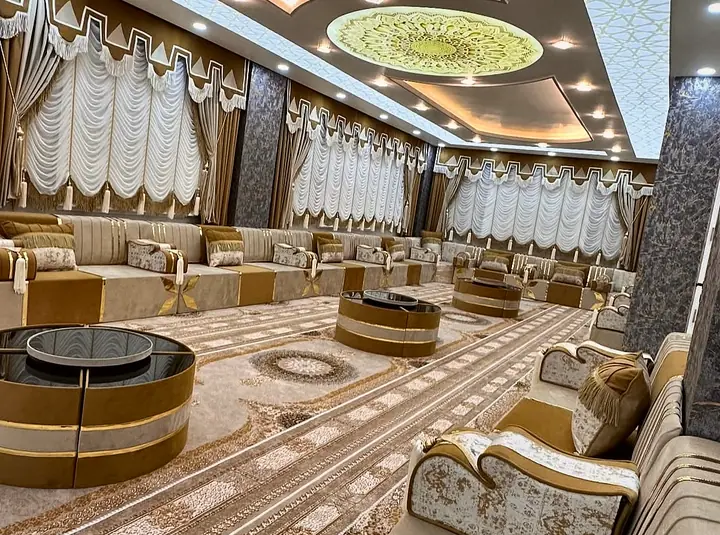
Camel, caramel and mocha show different brown directions in the photographed rooms, distinguished by their lighter panels and surrounding trim. Compare the backrest color first, then look down at the base. The same dark table can sit beside quite different upholstery.
| Brown direction | Visible contrast | Details to compare |
|---|---|---|
| Camel | Black against a lighter brown surface | Crossed lines and fringed geometric armrests |
| Caramel | Brown above a charcoal base | Quilted panels and gold fringe |
| Mocha | Pale bands across brown seating | Diamond pillows beside a medallion rug |
Black lines divide the caramel backrests, while fringed armrest covers bring smaller geometric repeats to the ends of the seating runs. The caramel design with diagonal lines places those edges beside dark tables. The greige and chocolate Yemeni majlis uses broader pale and gold bands across its deeper brown panels. Look at the width and position of the decoration, rather than treating every gold detail as interchangeable. I would choose the backrest treatment before adding another repeat to the rug.
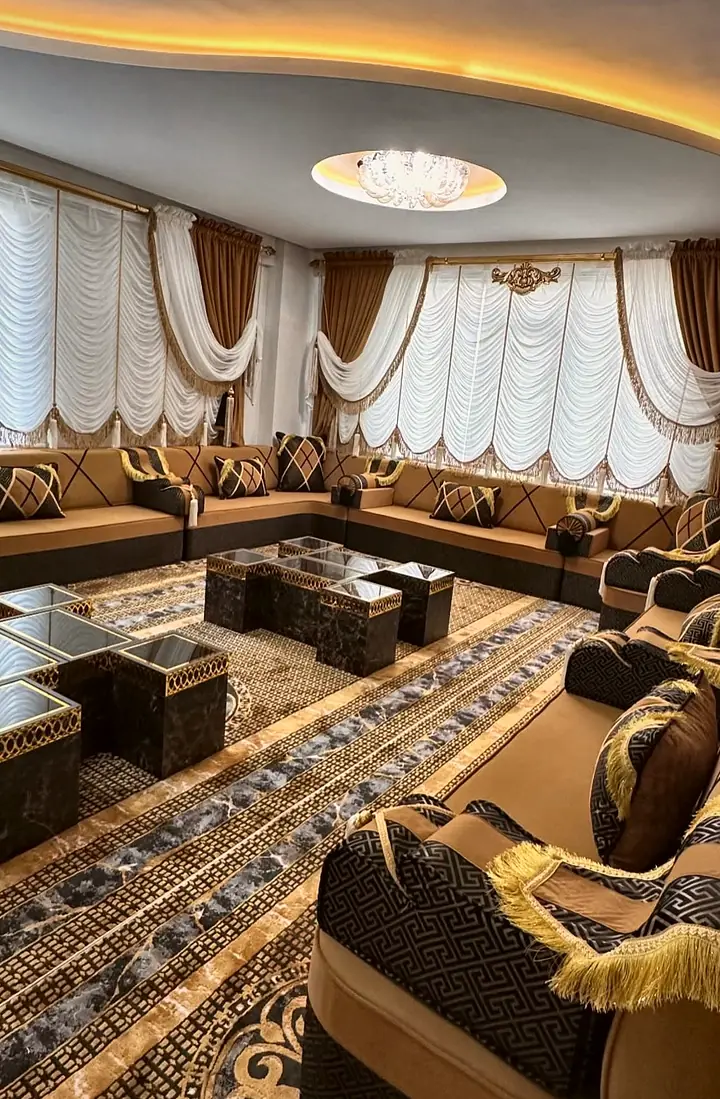
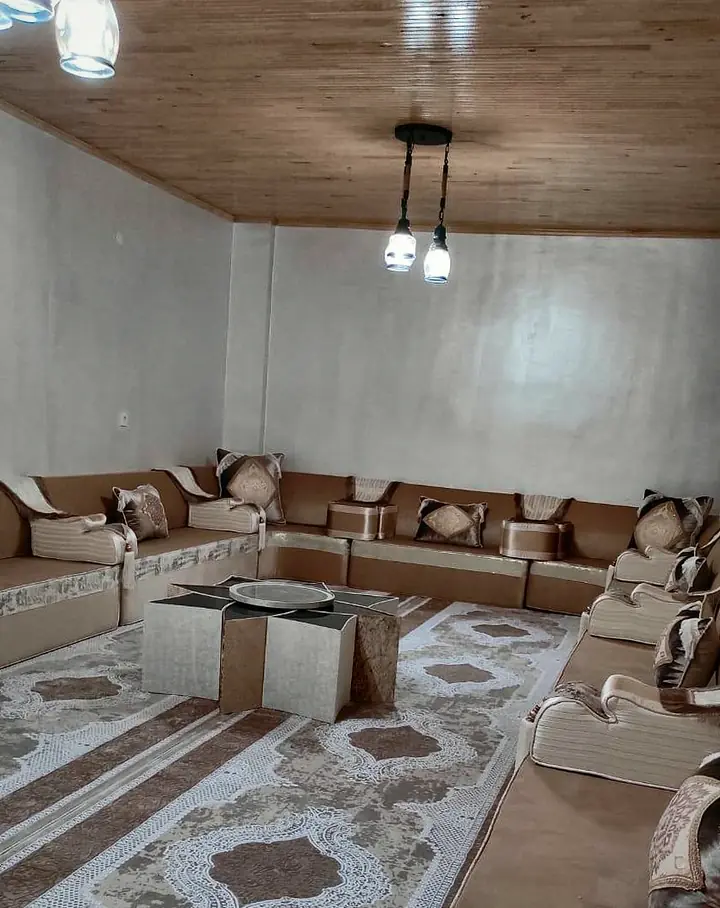
A brown sample should reveal how the chosen seat tone sits beside your floor and walls under the lighting you use. Lay it near the intended seating position, with a plain pale card beside it, then turn the room lamps on. In the photographs, camel upholstery is surrounded by black lines, while the mocha room has broad pale bands and a wood ceiling. Those neighbors contribute to the whole impression. I would keep the rug reference in view during this comparison, rather than considering the brown square in isolation.
For solid upholstery, retain the fabric card number with the selected swatch. A solid shade can be specified even when it has no finished-room photograph. Use caramel, camel or chocolate as a search description, then identify the actual fabric choice by number. A room name does not supply a fabric code or a verified fiber composition.
The center can stay pale while brown seating outlines the walls, as the mocha room shows with its medallion rug and champagne bands. The quilted caramel arrangement follows a different route, using dark bases and ornamental armrest covers around the seats. For broader pairings across other colors, consult the majlis color guide. The floor sofa repeats cream motifs over the seats and backs, whereas the mocha room concentrates its lightest area in the rug.
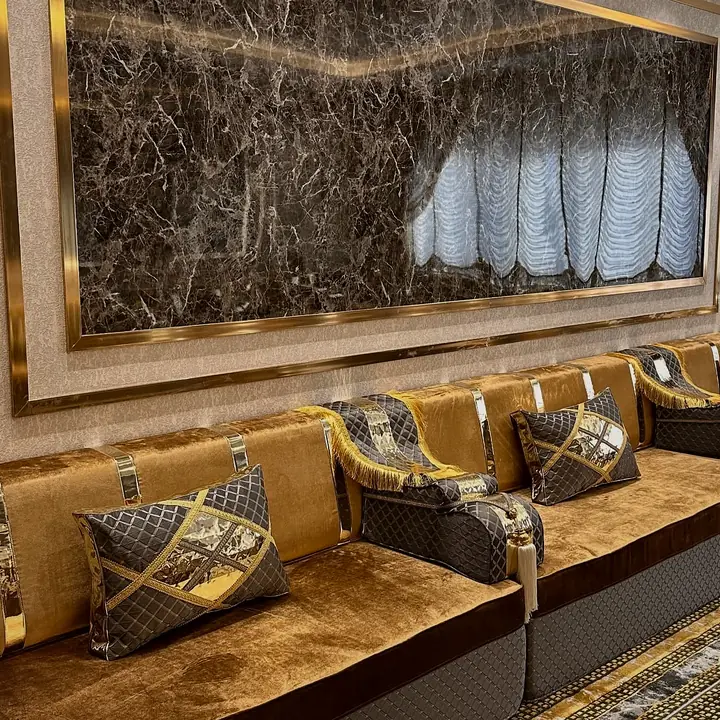
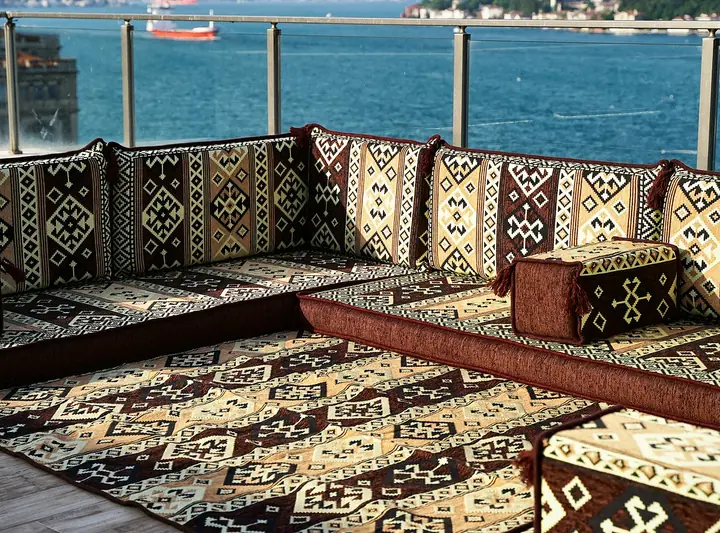
Construction, collection and decorative treatment remain separate choices from brown upholstery. Most models can use a color from the fabric range, and gold accents are optional, but confirm the selected design rather than assuming every photographed pattern has another colorway. Keep each fabric collection together, with a linen collection remaining linen throughout. General foam seating options include 4 in (10 cm), 8 in (20 cm), 12 in (30 cm) and 16 in (40 cm) heights, with availability checked for the design. Wooden-base majlis instead sits around 14.5 in (37 cm)–16 in (40 cm) and is not built lower. An all-foam interpretation is a separate construction request, rather than a shorter wooden version.
Care belongs to the selected cloth and cover construction, rather than the depth of its brown color. For washable removable covers, follow the gentle 86°F (30°C) instruction with mild detergent and avoid heat. Request the applicable care instructions for the chosen collection, especially where decorated pieces differ from plain seat covers. Keep the selected fabric reference available when considering a later piece, so its specification can be checked against the original choice.
Keep the two fabric card numbers separate and label which swatch is intended for the seating. Compare them against the same floor and rug references under your room lighting. Color names help describe the search, while the selected number identifies the solid fabric used for the request.
A dark color carries no stain-hiding guarantee. Select the cloth for its appearance and follow its applicable care instructions. Washable removable covers use a gentle 86°F (30°C) cycle without heat, but confirm the instructions for the particular decorated and plain pieces in the selected collection.
The photographs show accessory arrangements, rather than a guaranteed package list. Record the table design you want and confirm the selected group alongside the seating specification. Gold edges, dark surfaces and a star shape describe visible details, without establishing the table material or dimensions.