
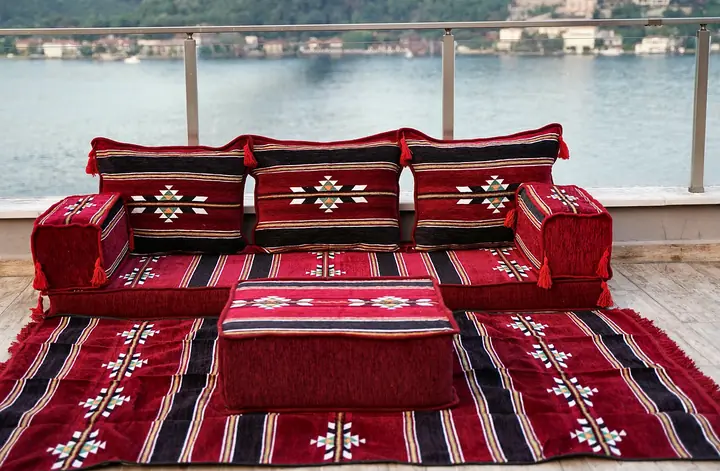

Shami Stripe Floor Sofa Set
Floor Sofa Sets · Single, L & U
For Business
Floor seating for event rental companies can be bought as separate floor-seat pieces or as seating on a wooden base, with backrests and accessories recorded individually. We help plan the selected construction for the layouts your business will use. Review a measured drawing and an itemized piece schedule before approving the stock order.
2 questions
Event seating businesses can ask for standard floor sets, wooden seating and individual cushions. Begin with the intended layouts and a list of the pieces required for each. Review the model and dimensions before ordering, and ask about spare pieces or covers as separate items.
Individual armrests can be requested without replacing the entire seating arrangement. Send the model reference, the finished dimensions and the required quantity. Ask us about the replacement pieces and the fabric being considered; a previous order does not establish that a later piece will match its color.
Put the guest seating, supported backrests and accessories on the venue plan. Keep their stock entries separate. I check the approach to an occupied seat before adding another piece; a full inventory list does not mean every item belongs in every setup.
| Venue area | Seating decision | Stock entry |
|---|---|---|
| Wall run | Floor seating with support behind its backrests. | Seat pieces, straight backrests and end cushions. |
| Open lounge | A selected build with its support arrangement confirmed. | The specified seat construction and separate accessories. |
| Shared center | An ottoman reference of 23.5 × 23.5 × 8 in (60 × 60 × 20 cm). | Record the actual chosen accessory. |
The business seating overview brings these project decisions together. UNESCO describes majlis spaces as places for receiving guests and social gathering. Plan for the way guests will meet at your events, rather than treating the seating as decoration alone.
3 questions
The purchase records the seating and accessories listed in the agreed order. Renting them to guests and installing them at a venue are separate responsibilities for your business. Include the venue arrangement in the brief so the supplied seating can be considered in its intended setting.
Package contents depend on the selected family and layout. Request the component list for that order instead of applying one general full-set count to every collection. Keep seats, backrests, pillows, rugs and ottomans separately identified when preparing the stock record.
A photograph helps identify the appearance, but it does not replace the model and dimensions. Keep the original component schedule and fabric reference available. Ask us about the specific spare piece or cover required, with its quantity, before assuming a pictured part will fit.
Floor pieces and wooden-base seating need different construction entries. A standard floor seat is 4 in (10 cm) thick, with a 8 in (20 cm) version also available. Custom majlis heights include 12 in (30 cm) and 16 in (40 cm). The selected wooden-base model is about 14.5 in (37 cm)–16 in (40 cm) high.
Use the wooden seating range when the base is part of the supplied model. A venue-built platform is separate work. Decide which construction is being ordered before discussing its storage position or assuming that floor cushions and a raised model are interchangeable.
Record each finished piece size and its place in the layout. Keep the wall length separate from the cushion length. A standard single-seat arrangement supplies a useful reference, while an L or U layout uses its own backrest schedule.
| Piece reference | Dimensions | Inventory check |
|---|---|---|
| Standard floor cushion | 75 × 27.5 × 4 in (190 × 70 × 10 cm) | Record the seat and its cover separately. |
| Single-set backrest | 35.5 × 16 × 4 in (90 × 40 × 10 cm) | Two back pieces belong to the standard seat reference. |
| Long L/U backrest | 37.5 × 16 × 4 in (95 × 40 × 10 cm) | Use the chosen arrangement’s schedule. |
| Corner backrest | 23.5 × 16 × 4 in (60 × 40 × 10 cm) | Mark its actual corner position. |
| Armrest bolster | 19.5 × 8 × 8 in (50 × 20 × 20 cm) | List the ends that need this part. |
The floor-cushion pages explain the seat component. For a custom run above 75 in (190 cm), plan equal-length sections within that limit. Identical length alone does not establish a replacement fit; depth, thickness, construction and the selected cover also belong in the record.
Floor Sofa Sets · Single, L & U
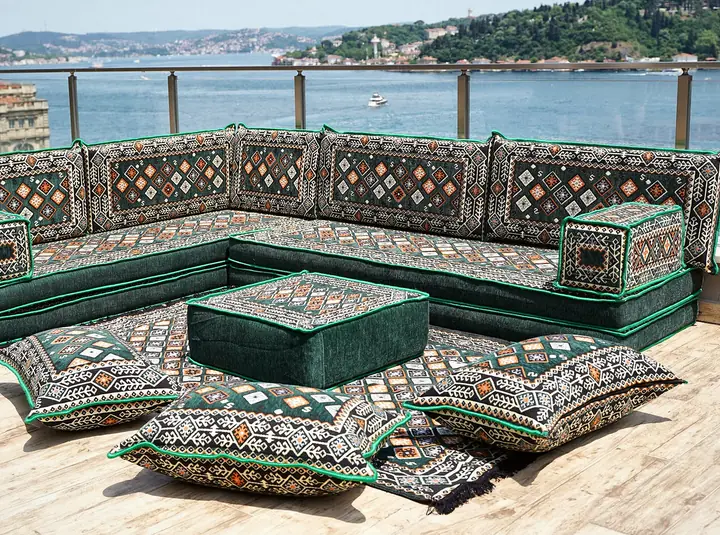
Floor Sofa Sets · L-shaped
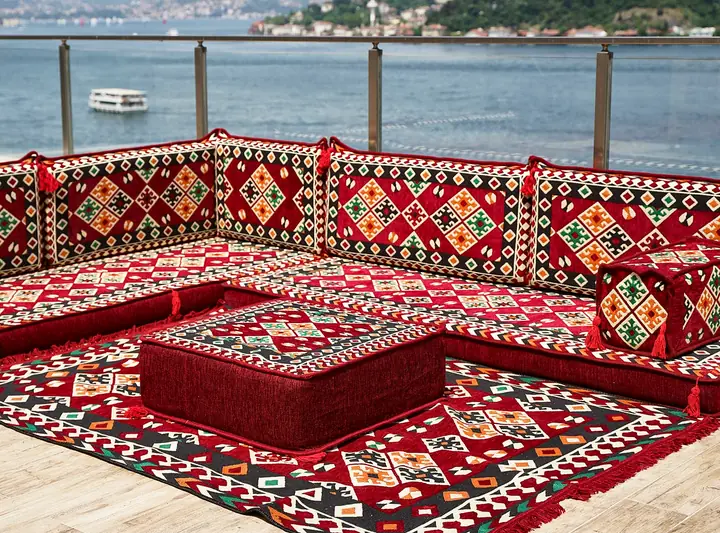
Floor Sofa Sets · L-shaped · 2 colors
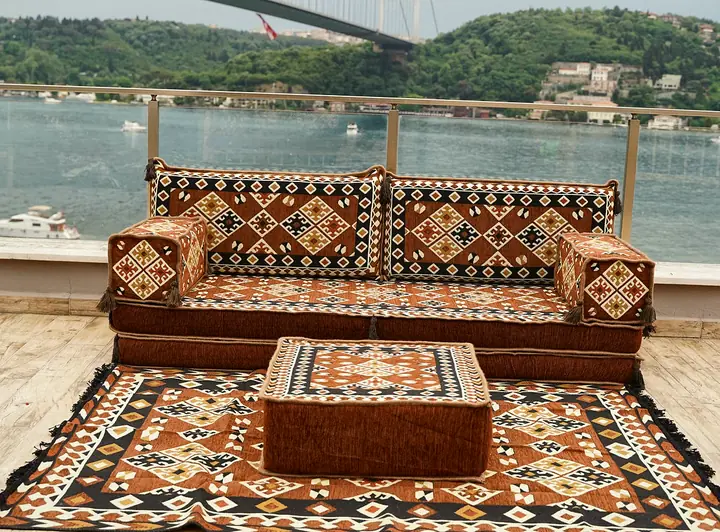
Floor Sofa Sets · Single wall · 2 colors
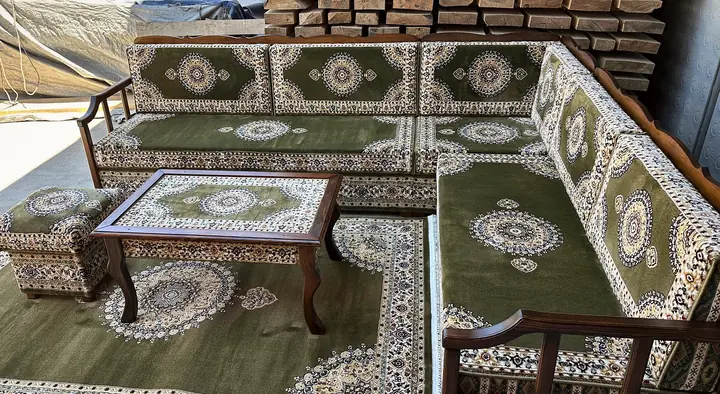
Turkish Majlis
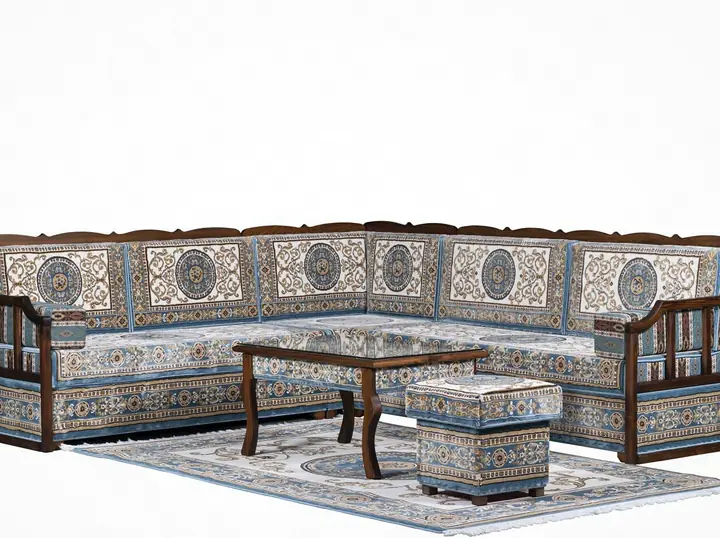
Turkish Majlis
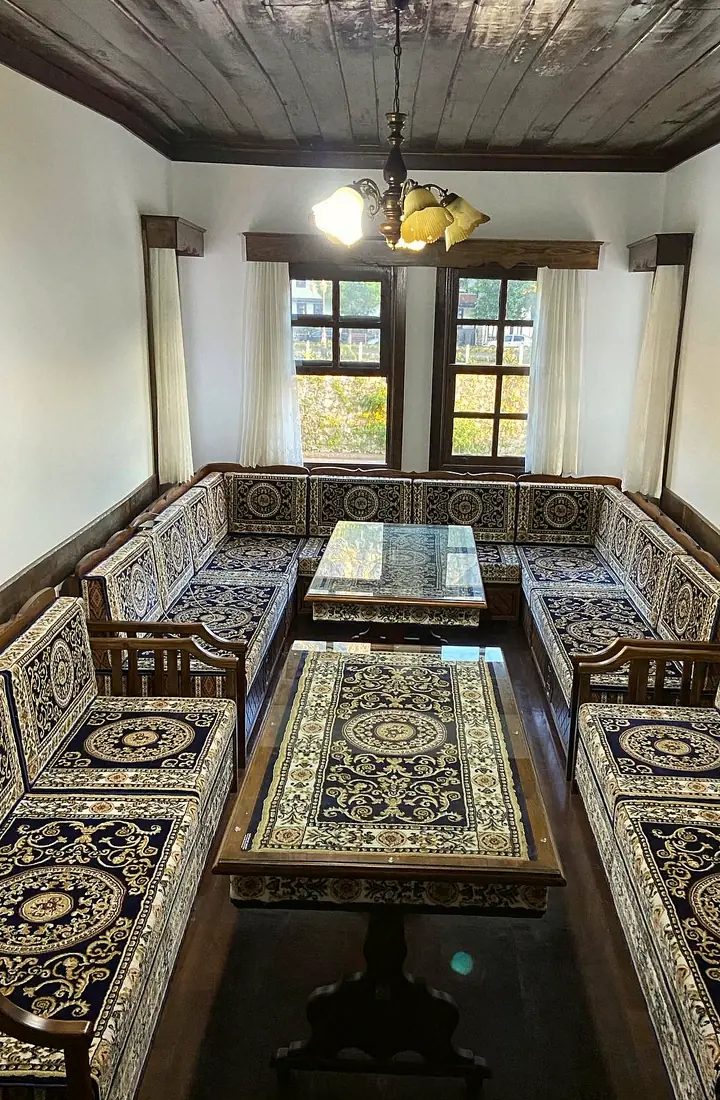
Turkish Majlis · L & U
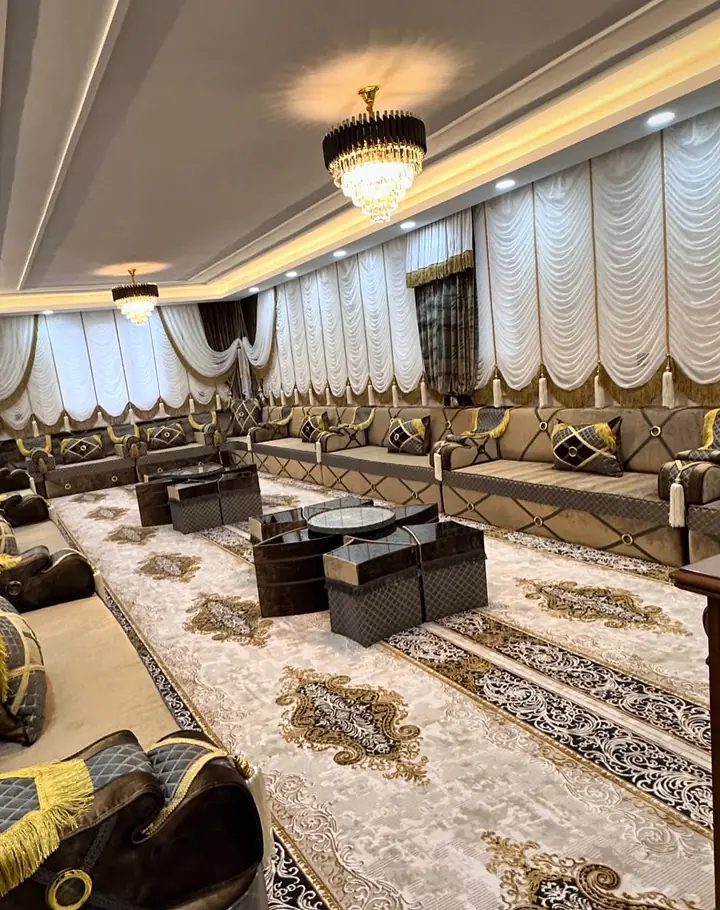
Arabic Majlis · L & U
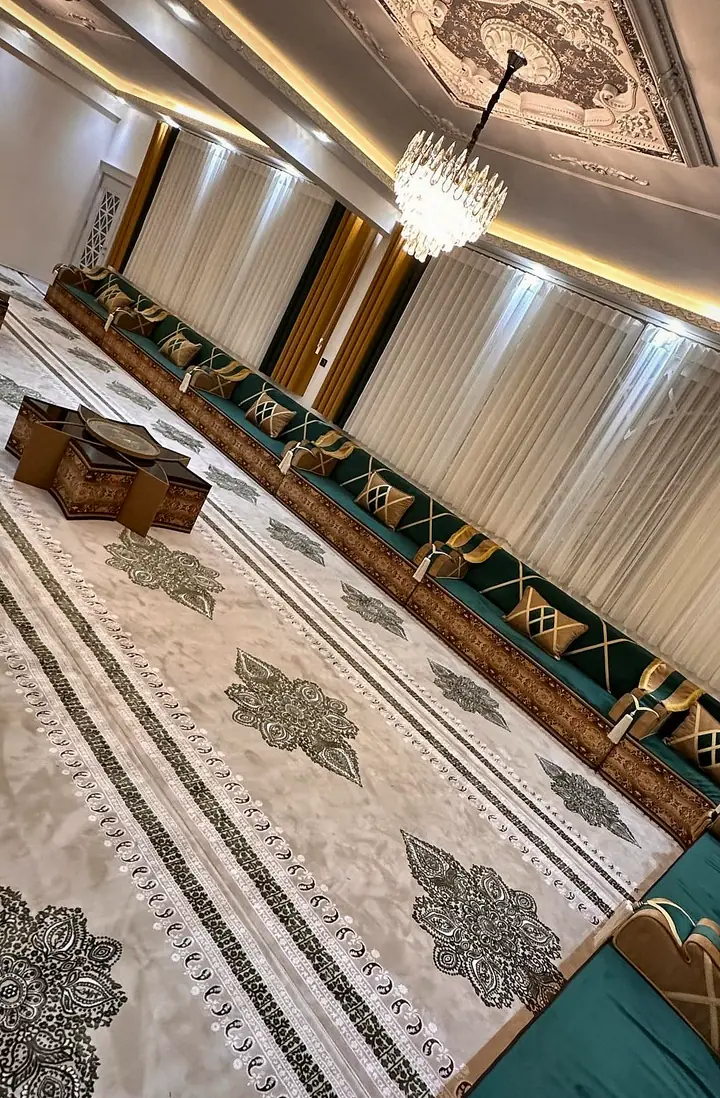
Arabic Majlis · L & U
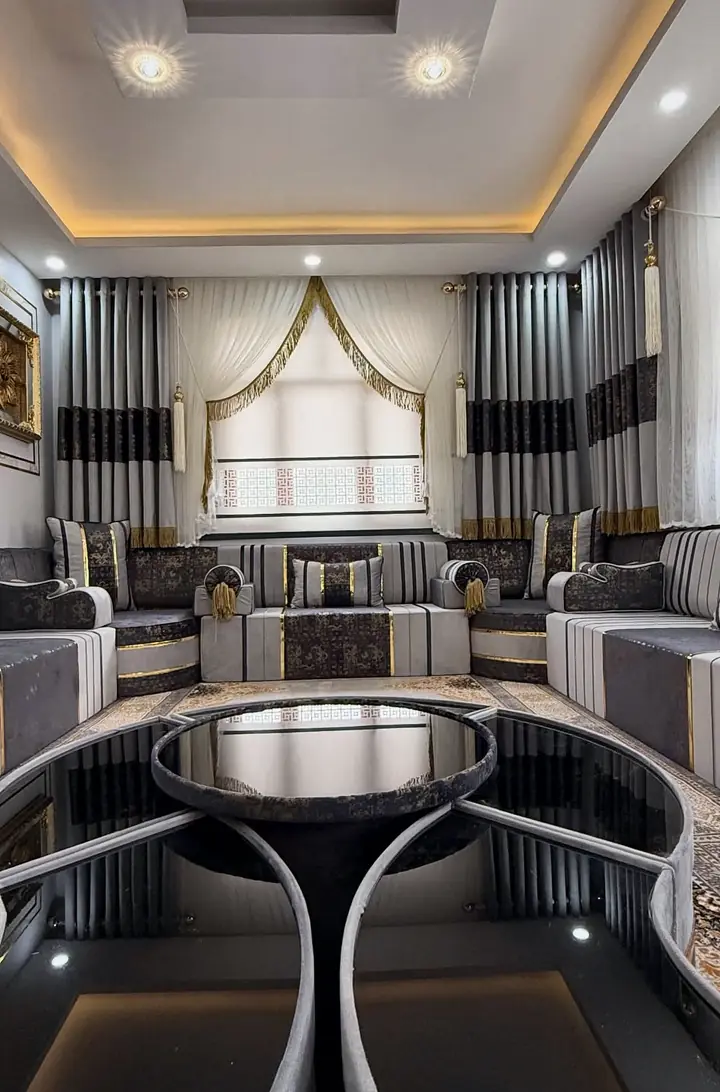
Arabic Majlis · L & U
5 questions
Keep the fabric reference and the selected model together for each order. Standard patterned floor sets commonly use a cotton-polyester blend. Velvet and linen belong to separate collections. A fabric code records the choice; it does not guarantee a future color match.
Compare the actual selection through the fabric pages. Do not assume that seat fabric can be combined freely with a different collection’s backrests. Ask about spare covers when preparing the first order, and check later requests against the actual model and fabric available.
The itemized list should identify every component your business is buying. Give seats, backrests, armrests and accessories separate entries, with dimensions and quantities. Keep spare covers and foam requests distinct from complete upholstered pieces, so a later enquiry describes the part clearly.
This example shows why a piece breakdown matters when buying reusable stock. It does not establish universal package contents or interchangeable spares. Ask us about the particular replacement required, using the record for the original model.
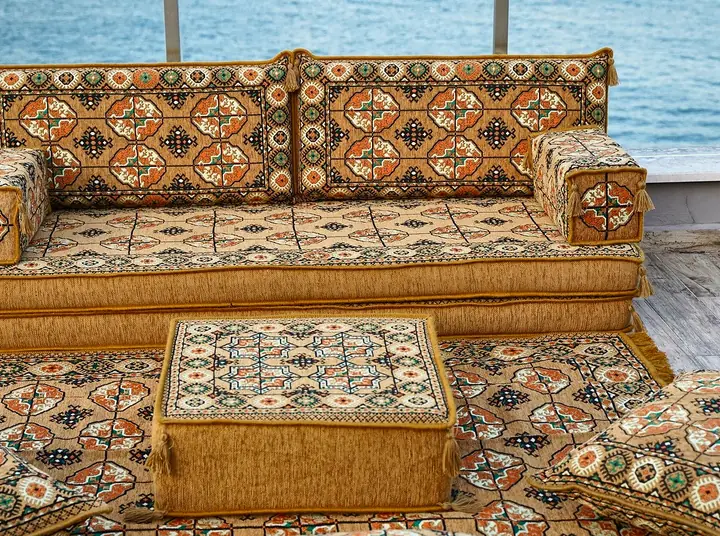
One test setup lets your business review the chosen arrangement and its inventory record before buying more. Note which parts were actually used and where the supported seating was placed. Keep packing and storage requirements in the brief, without assuming a cushion can remain compressed for a particular period.
For an agency’s cultural event or festival lounge, collect the client’s visual approval beside the piece schedule. I would review the unpacked seating before the first event, following the instructions for the selected model. No fixed foam-recovery time or stacking performance is promised here.
Confirm the back support and venue requirements before approving an open-floor or tent layout. Foam backrests require a wall or another firm supporting surface. Tell the team when that surface is absent, and ask which supported arrangement suits the chosen construction.
If your fire official or landlord asks for fabric documents, put the written requirement in your first message, and the team will say plainly whether any fabric can meet it.
Send the first event date with the proposed order, then review production and shipping separately. Production time depends on your layout and the season — ask us for the current schedule. Ready-made sets are packed soon after payment — ask us for the current dispatch time.
Planning around Ramadan, Eid or a wedding? Tell us your date when you ask for a quote and we'll confirm what's achievable.
Ask us about freight options for large and commercial orders.
Use the wholesale enquiry page for the commercial order. Identify the delivery location and ask which company documents are needed. Ask us about fabric swatches and a foam sample before you order.
Project brief
The purchasing brief should join the intended venue layouts to the stock and spare-piece lists. Keep the first order’s requirements clear before adding possible later expansion.
I would finish by following the guest’s route through the proposed lounge. Check the seat at the entrance and the last supported backrest. Then compare that arrangement with the list ready for order confirmation, so the business is buying pieces it can identify.


