
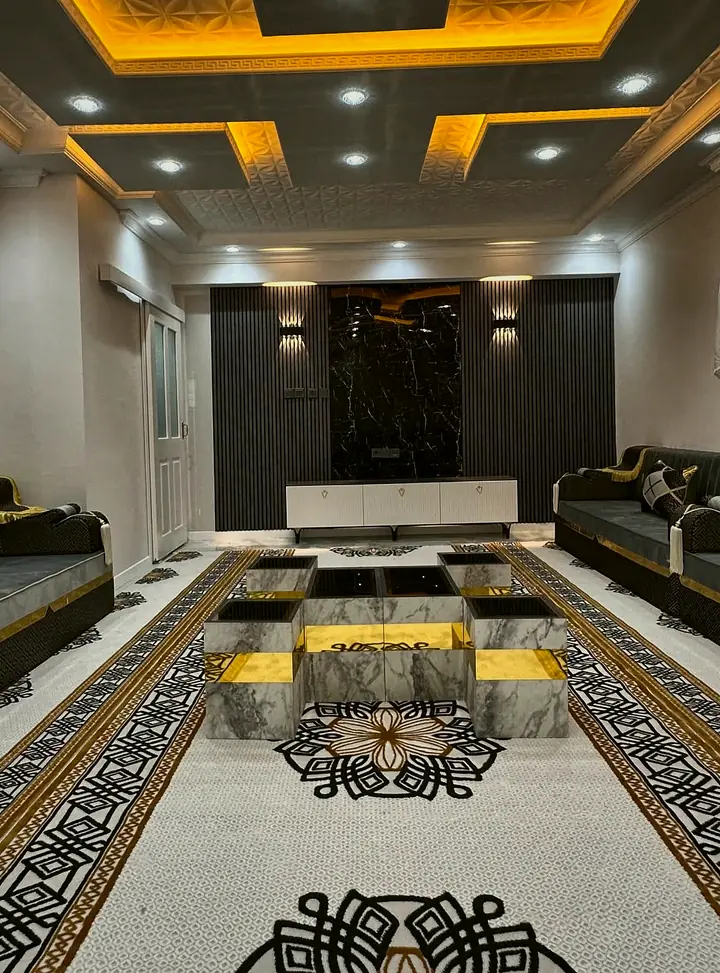
Personalized Arabic Jalsah in Gray Velvet
Arabic Majlis · L & U
For Business
Mosque majlis seating usually runs along the back and side walls, with firm backrests and a choice of seat heights for elders, so the qibla wall and the prayer rows stay clear. Every run is cut in our Istanbul atelier to the wall-to-wall measurements you send, and the committee receives a numbered layout and a written quote to review before anything is made.
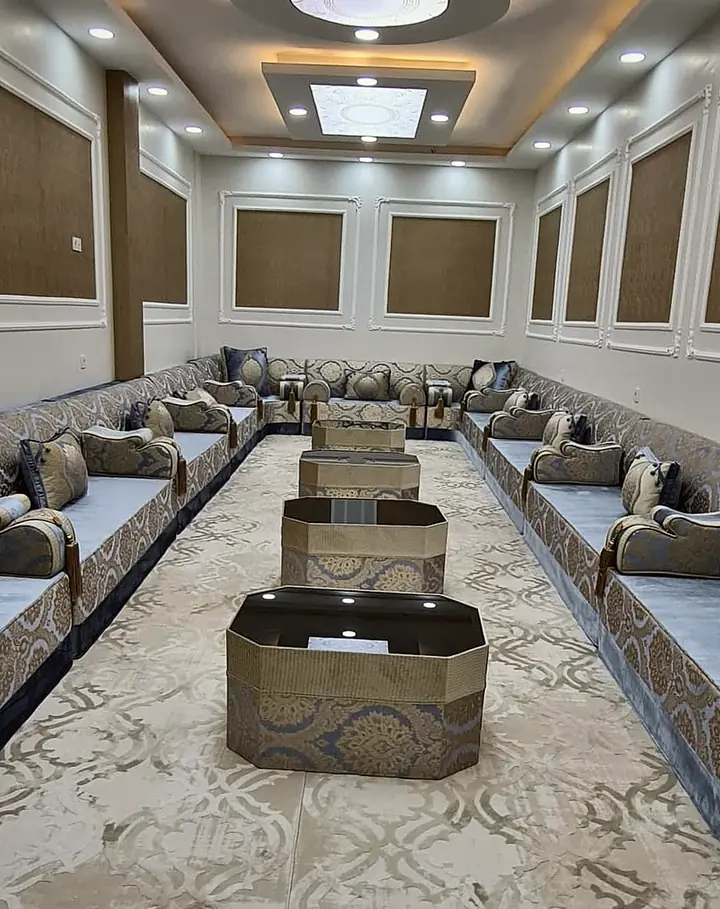
2 questions
Mosques, prayer halls and community centers are furnished with the same made-to-measure majlis and floor seating as homes, cut to the hall's walls. Common choices are straight runs of wooden benches along the walls, or full-foam floor seating with firm filling. Send the hall dimensions, roughly how many people you want to seat and a color preference; the team proposes a layout and issues the invoice in the mosque's name.
Seating on the qibla wall takes floor that the prayer rows need, so most prayer rooms keep that wall clear and run the seating along the side and back walls. In a small room of around 144 × 144 in (365 × 365 cm), a seat cut to about 19.5 in (50 cm) or 23.5 in (60 cm) deep, or backrests alone along the wall, keeps the floor open. Mark the qibla wall on your sketch and the layout is planned around it.
In English a mosque is also called a masjid, a smaller prayer hall a musalla, and a community building with classrooms an Islamic center. In all three the floor belongs to the prayer rows, so elders, speakers and guests sit along the walls on low seats with backrests, the seating our atelier cuts for commercial and community rooms.
| Zone | Seating | Typical build |
|---|---|---|
| Back and side walls | Floor seats with backrests, run corner to corner | Seats of 75 × 27.5 × 4 in (190 × 70 × 10 cm) with 37.5 × 16 × 4 in (95 × 40 × 10 cm) backrests |
| Qibla wall | Kept clear for the prayer rows | Marked on your sketch, with the layout drawn around it |
| Side room or musalla | A three-wall set around a clear floor | All-foam seats, backrests and armrests cut to the room |
| Imam's corner | A compact seat for the imam or a speaker | Made to order; ask for the size you need |
According to the ISPU US Mosque Survey, the United States had 2,769 mosques, about 31% more than ten years earlier, with more of them in suburban areas.
3 questions
The Sedir Bench line sits firmer than all-foam sets and suits heavy daily use, while a full-foam majlis can sit close to the floor and is cut to any wall. Seats use high-density polyurethane foam — ask us for the exact density for your build.
Framed designs use an MDF panel for the decorative backrest, while fully wooden models add a wooden base under the seat cushions; the Sedir Bench line sits on a solid pine frame. When comparing offers, ask every maker for the wood type and thickness, the foam density and the fabric of the exact model.
A home prayer room or classroom suits floor seating of 4 in (10 cm) to 8 in (20 cm), cut so the cushions run wall to wall. Many families skip the rug and ottoman as the room already has prayer carpets. Send each wall from corner to corner, and the designer draws a plan and confirms the color before production.
7 questions
Elders often arrive first and sit nearest the door, and weekly study circles, the halaqas, keep everyone seated for long stretches, so height is decided before fabric. In a classic floor-style prayer room a seat of 4 in (10 cm) or 8 in (20 cm) is the usual choice, while elders and anyone with sore knees sit more easily at 12 in (30 cm) or 16 in (40 cm), about sofa height. I would keep one wall raised for them and the rest at floor level, with both heights on one drawing.
One standard section runs 75 in (190 cm) long. Where columns split a wall into bays about 132 in (335 cm) wide, I would place one section in each bay and leave a walkway between neighbors; an unbroken wall is better served by one custom run. Pieces never exceed 75 in (190 cm), so a longer run is divided equally: a 177 in (450 cm) wall becomes three pieces of 59 in (150 cm), and on a U or an L the second wall gives way by one seat depth at the corner. For the count itself, see majlis layouts.
Take each wall from corner to corner, leaving doorways out, and tell us whether the numbers are in feet, inches or meters. A sketch with the qibla direction, doors, pillars and vents marked, plus a short video of the room, is enough for a first layout; the planning and measuring guides explain the steps.
For heavy weekly use, a plain, darker velvet or linen is a practical choice. The white-cloth test is simple: press a damp white cloth hard against a swatch and check the cloth for color. Ask us about fabric swatches and a foam sample before you order.
Next to a busy prayer-row carpet, a calm choice is one solid fabric in a single tone taken from the carpet. Send a daylight photo of the floor and the walls, and the team shortlists fabrics.
If the fire official, the insurer or the building committee asks for fabric documents, send that requirement with your first request; every document covers one specific fabric, and the team tells you at once whether any fabric on the shortlist qualifies.
Backrests are separate pieces, so a wall line of backrests without seats is possible: give the wall length, for example 115 in (292 cm), and the team counts the 37.5 × 16 × 4 in (95 × 40 × 10 cm) pieces that cover it. Pouf pillows come in one size, 27.5 × 19.5 in (70 × 50 cm), and can be filled firmer for back support. Stock rugs reach 79 × 118 in (200 × 300 cm), though not every size is made in every design.
Production time depends on your layout and the season — ask us for the current schedule. Give the date in your first request, and the team says plainly whether it can be met.
Planning around Ramadan, Eid or a wedding? Tell us your date when you ask for a quote and we'll confirm what's achievable.
For US deliveries we prepay import duties and the courier's customs fees, so there's nothing to pay at your door. If a courier ever asks you for a duty or fee on this order, send us the notice and we'll settle it.
For Canadian deliveries we prepay GST/HST, duty and the courier's customs fees, so there's nothing to pay at your door.
For UK deliveries we prepay import VAT and customs fees, so there's nothing to pay before or at delivery.
Import VAT applies to furniture shipped into the EU — ask us how it's handled for your order before you pay.
Import taxes depend on your country's rules — ask us how they apply to your order before you pay.
The customs note for your country is stated in your quote, so ask for it before you pay.
Arabic Majlis · L & U
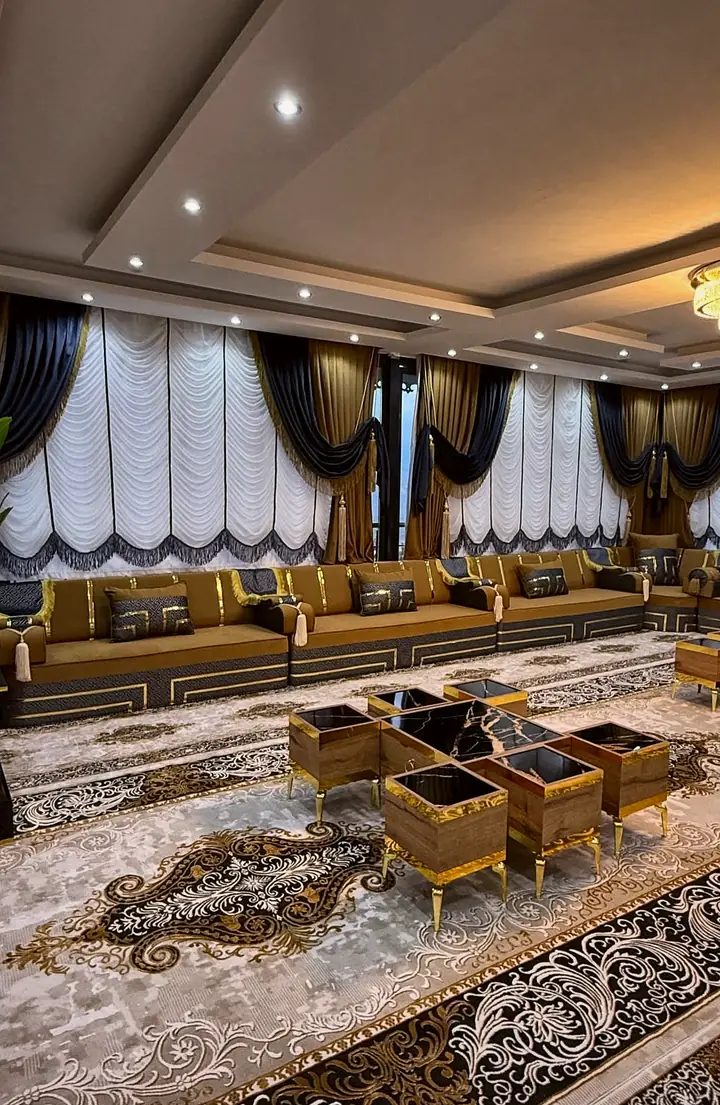
Arabic Majlis · L & U
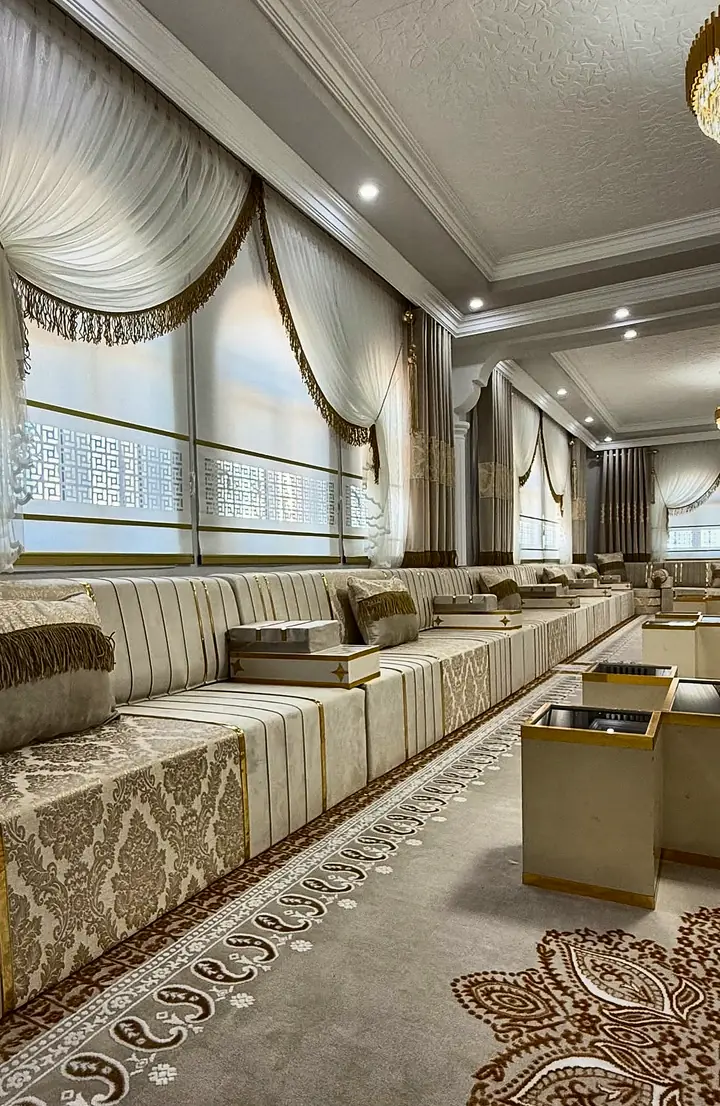
Arabic Majlis · L & U
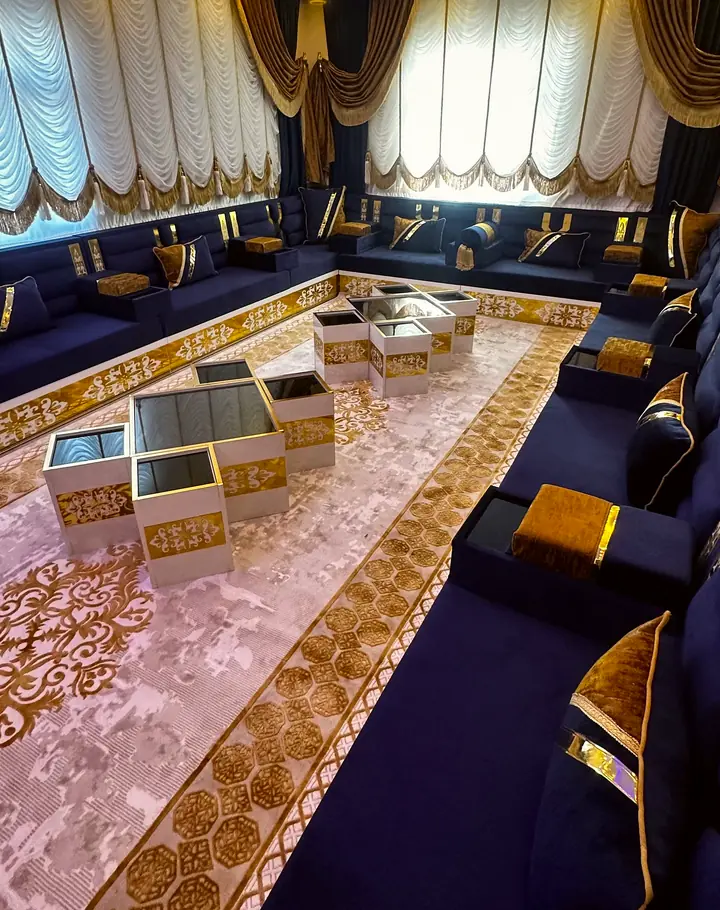
Arabic Majlis · L & U
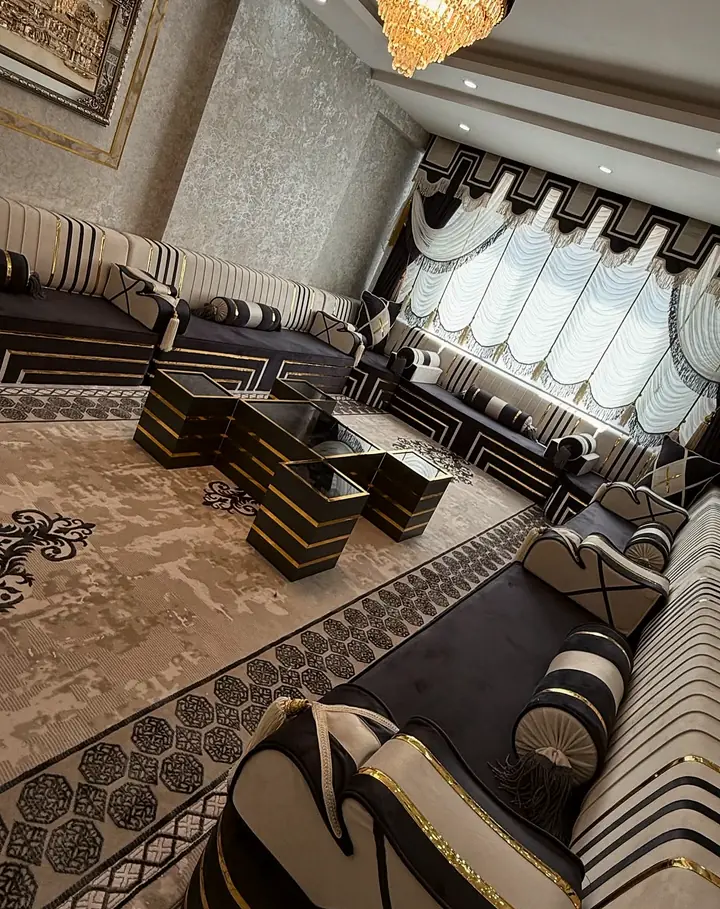
Arabic Majlis · L & U
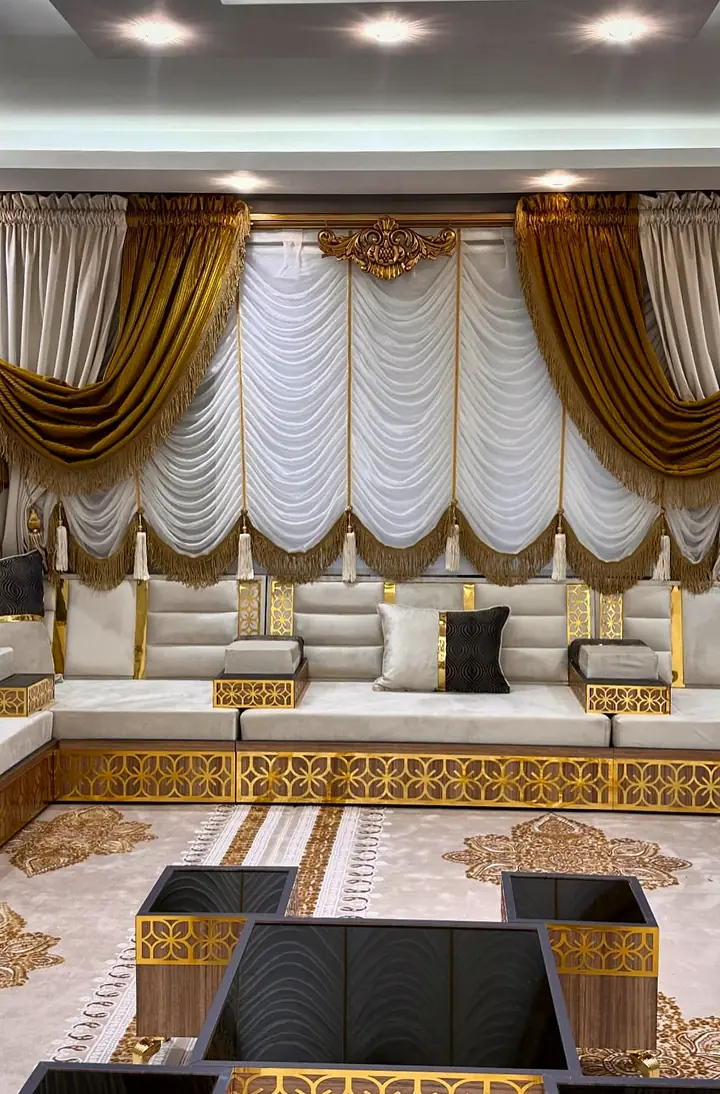
Arabic Majlis · L & U
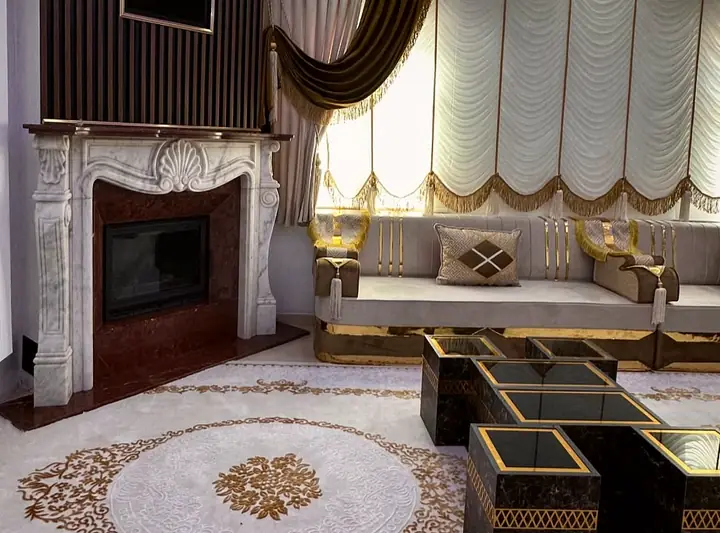
Arabic Majlis · L & U
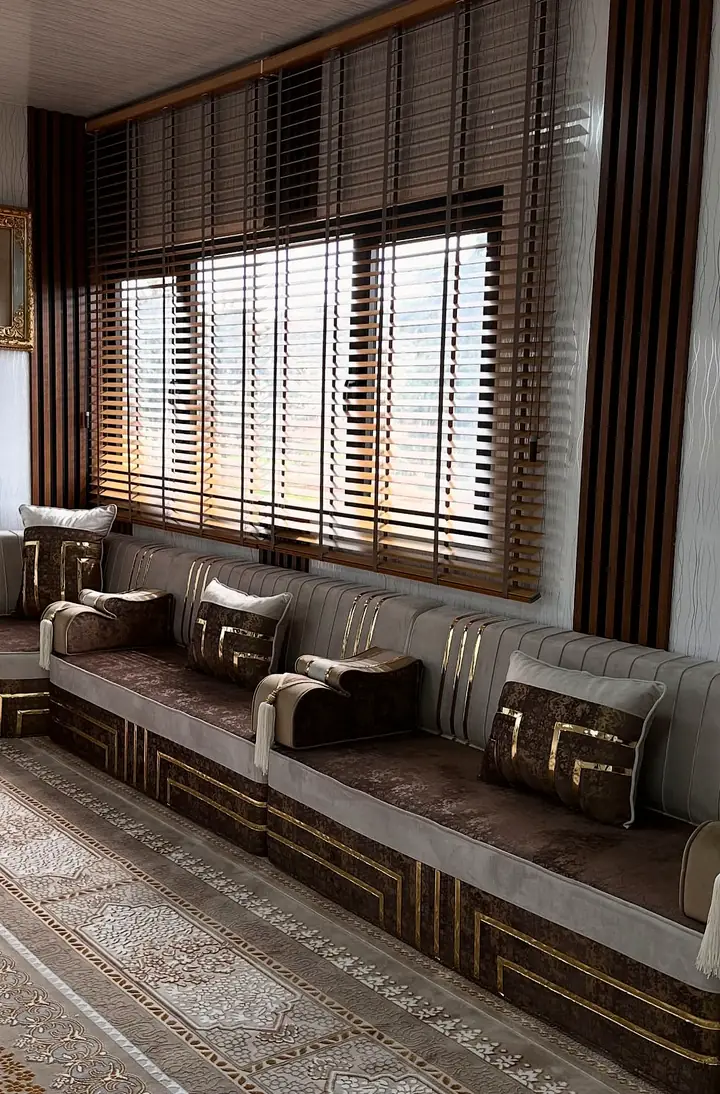
Arabic Majlis · L & U
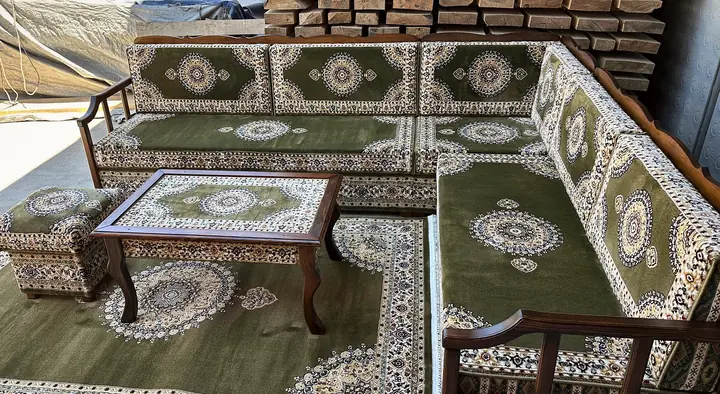
Turkish Majlis
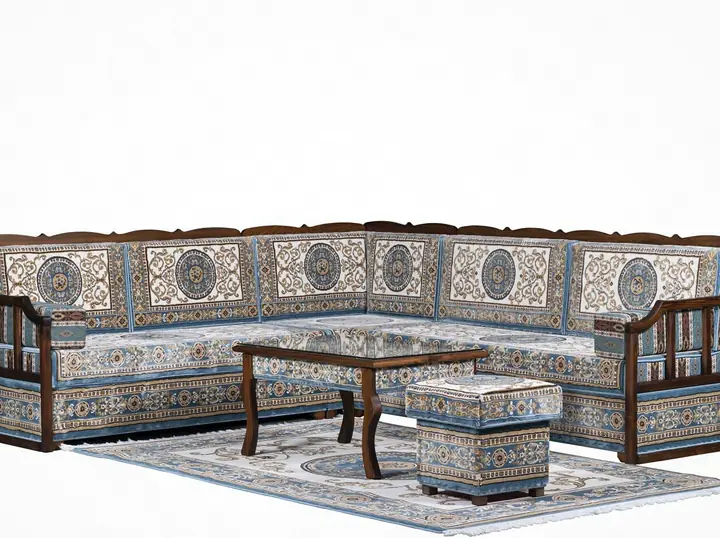
Turkish Majlis
Send that, dear reader, and the first reply is a numbered layout with a written quote for the committee to review.


